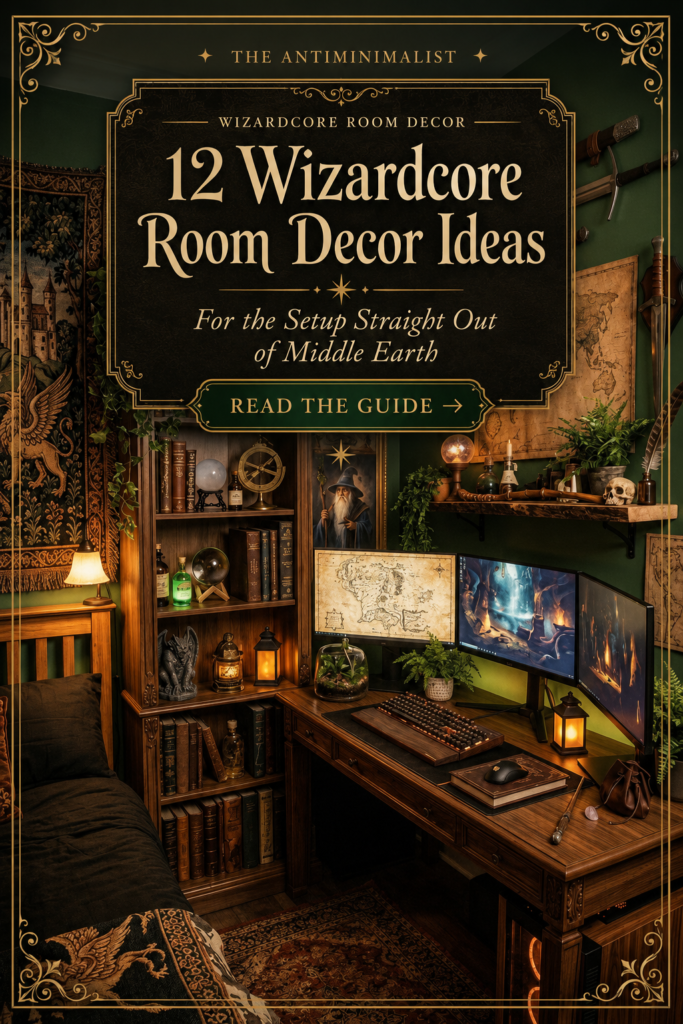
A wizardcore room is the study you’ve been picturing since you first wandered down the pages of Tolkien and into Rivendell. It belongs to the reader who has leatherbound books and an orb and who has rewatched the Lord of the Rings extended editions enough times to know the dialogue. The aesthetic builds off of the distant scholar’s smoke filled, leather-and-brass study and adds the layer of high fantasy — decorative swords on the wall, a dragon painting above the desk, an antique world map showing a place that never existed, the crystal ball you tell visitors is “decorative” but secretly hope works.
It’s an aesthetic built on magic, fantasy, and the taste for discovery and exploration — rooted in the fantasy canon that runs from Tolkien through Ursula K. Le Guin, through every RPG campaign that ever made someone wish the world they were playing in was the one they actually lived in. It is the aesthetic of someone who has been building their ideal study in their head since they were eleven years old and has finally decided to stop waiting for a stone tower to become available. It’s a place of escape.
The 12 ideas below are the exact objects that turn an ordinary room into the setup straight out of Middle Earth.
12 Wizardcore Room Decor Ideas
1. Lay a Dark Persian Rug in Deep Red, Burgundy, or Forest Green as the Foundation
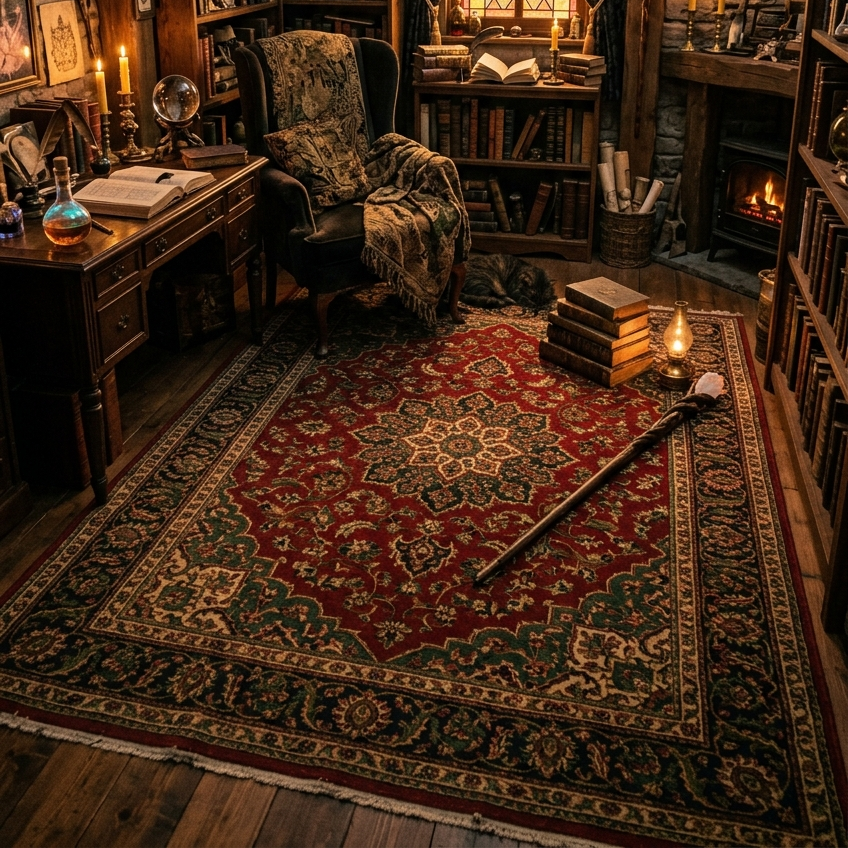
The rug is the floor of the wizard’s chamber and the first thing you should put down. A Persian in deep red, forest green, and burgundy — the kind that looks like it was woven somewhere far away and brought home by a traveler — anchors the entire room and sets the color temperature for everything you add on top. Larger is better here: an 8×10 that runs under the desk and out toward the bookcase makes the floor feel like a single deliberate surface rather than islands of furniture. Medieval-coded rugs with griffin, dragon, or knight motifs exist on Amazon if you want to lean fully into the fantasy palette, but a traditional Persian medallion works equally well. The wool absorbs the candlelight rather than reflecting it back, which is how the room develops the warm enclosed atmosphere the whole aesthetic depends on.
Copy this idea:

2. Anchor the Wall With a Hardwood, Dark Stain Bookcase
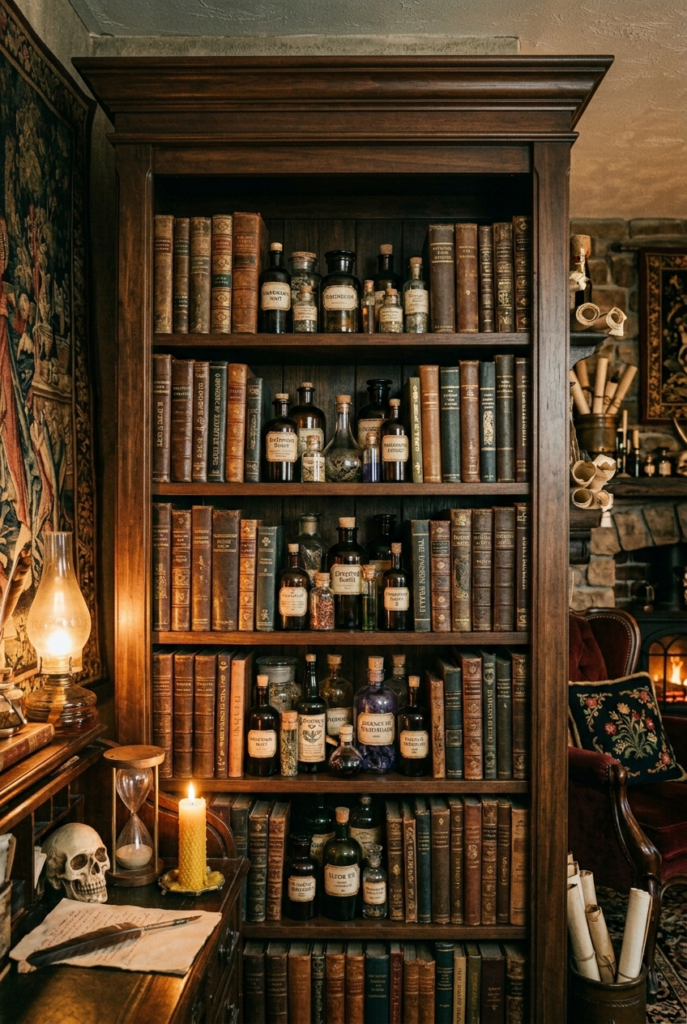
The bookcase is the architectural statement of the room and the single piece of furniture worth saving for. A tall carved bookcase in dark walnut — with arched detailing along the top, turned columns down the sides, and the kind of carving that suggests a craftsman spent real time on it — turns one wall of the room into the kind of library you’d find in a hidden chamber of a castle. Fill it with leather-bound books, but leave space for objects: an apothecary bottle on one shelf, a small dragon figurine on another, a brass candlestick on the third, a single skull on the highest visible shelf. The bookcase should look like it’s been collecting things for decades. A new bookcase with empty shelves doesn’t have the same effect — let the shelves fill in slowly over the months as you find the right objects. [Internal link: 12 Dark and Cozy Reading Nook Ideas]
Copy this idea:

3. Position an Antique-Style Writing Desk Where You’ll Actually Use It
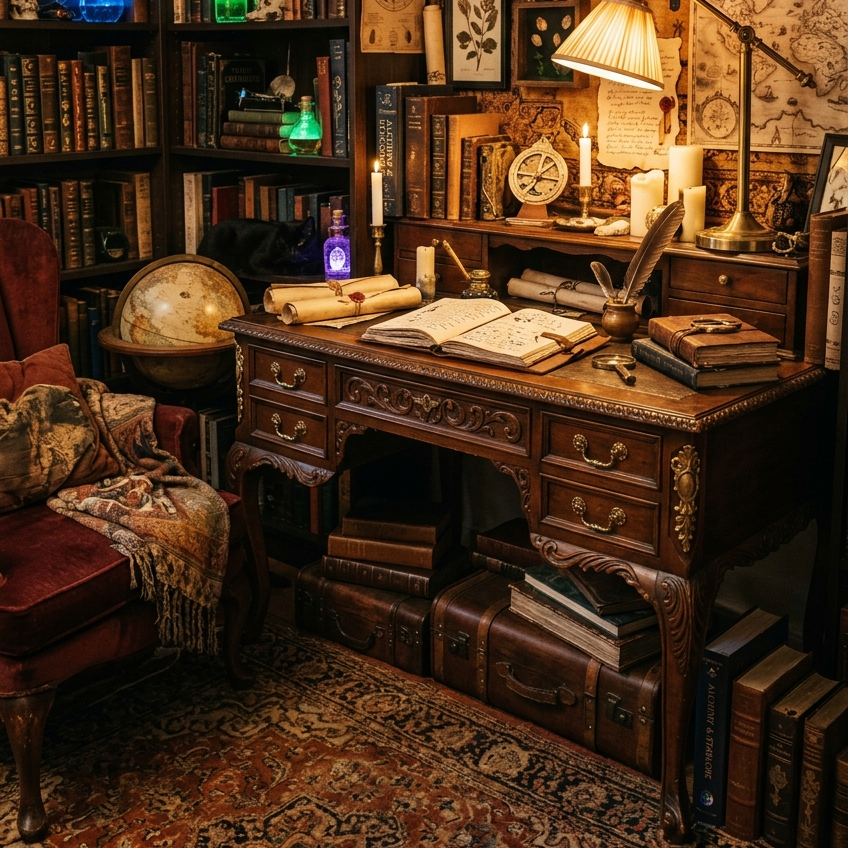
The desk is where the spells get written, which in practical terms means the novel, the screenplay, the work the day requires, the long emails you only write after sundown. A solid wood writing desk with carved detail, turned legs, and brass drawer pulls — partner’s desk if the room can hold one, a smaller writing desk if it can’t — turns the work itself into the kind of work a wizard does. Position it perpendicular to the bookcase so the wall behind the desk becomes the gallery wall for swords and maps. Leave room for the lamp, the keyboard, the leather journal, and the cup of tea you bring with you. The desk should feel substantial when you put your forearms on it. Flat-pack particleboard doesn’t carry the weight the rest of the room expects. [Internal link: 12 Cozy PC Setup Ideas For Gamers, Writers, and Anyone Who Lives at Their Desk]
Copy this idea:

4. Mount Decorative Swords on the Wall Above the Desk — The Wizardcore Signature
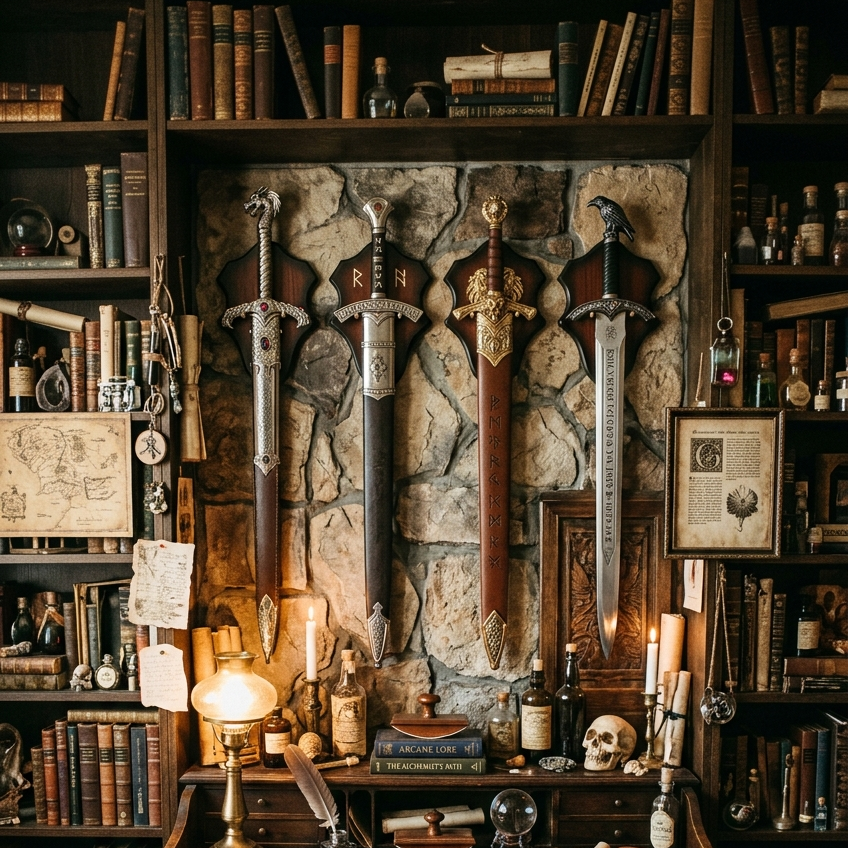
The swords are the single decorative element that takes the room from “dark academia with extra steps” to fully wizardcore. Two swords mounted crossed above the desk. Or three swords mounted vertically beside the bookcase. Or a single dramatic broadsword on its own wall plaque. The decorative replicas from Amazon — Lord of the Rings reproductions of Glamdring and Sting, Witcher silver swords, generic medieval longswords — read identically to museum pieces in photographs and on Pinterest. The sword on the wall is the room telling visitors exactly what kind of fantasy lives here. Mount them above eye level so they read as deliberate display rather than weapon storage. Two or three is the right number; one feels lonely, four crosses into theme-restaurant territory.
Copy this idea:


5. Hang a Wrought Iron Candle Chandelier as the Primary Overhead Lighting
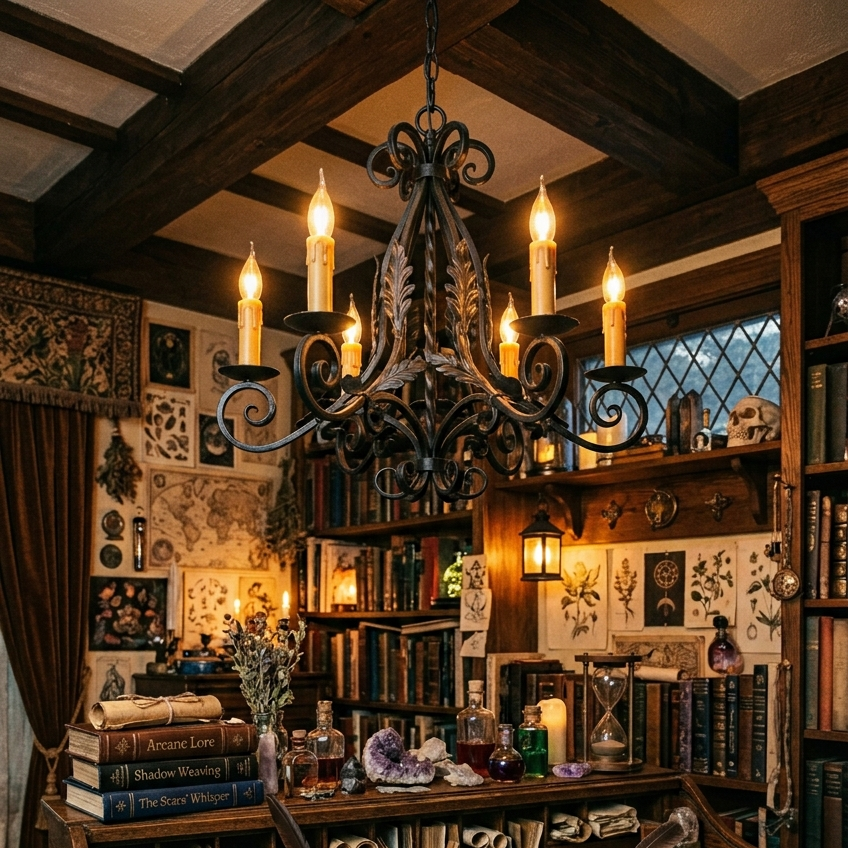
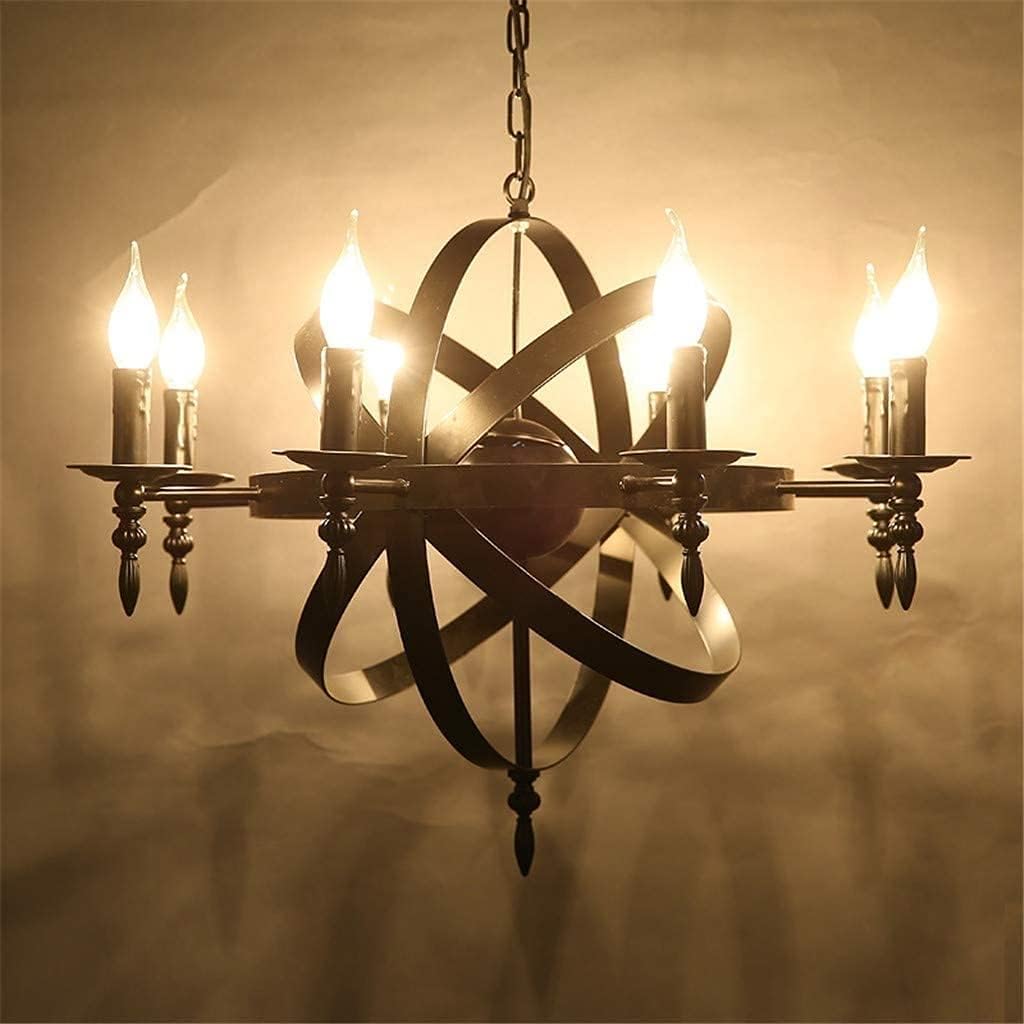
The chandelier is the room’s ceiling decision. A wrought iron candelabra-style chandelier — black, weathered, with five to seven candle-style bulbs on individual arms — hung above the desk or centered over the rug, turns the ceiling itself into part of the aesthetic. Run it on a dimmer at about 30% capacity so the bulbs flicker like real candles and the room develops the slightly-firelit atmosphere a wizard’s study calls for. The iron finish should look forged rather than spray-painted; the chains should hang heavily; the bulbs should be warm white (2700K), never cool. This is also the room’s main concession to electricity — the rest of the lighting plan leans into actual candles and lamplight, but the overhead handles the “see what you’re doing” function when you walk in at midnight.
Copy this idea:
6. Add a Brass Banker’s Lamp With a Green Glass Shade on the Desk
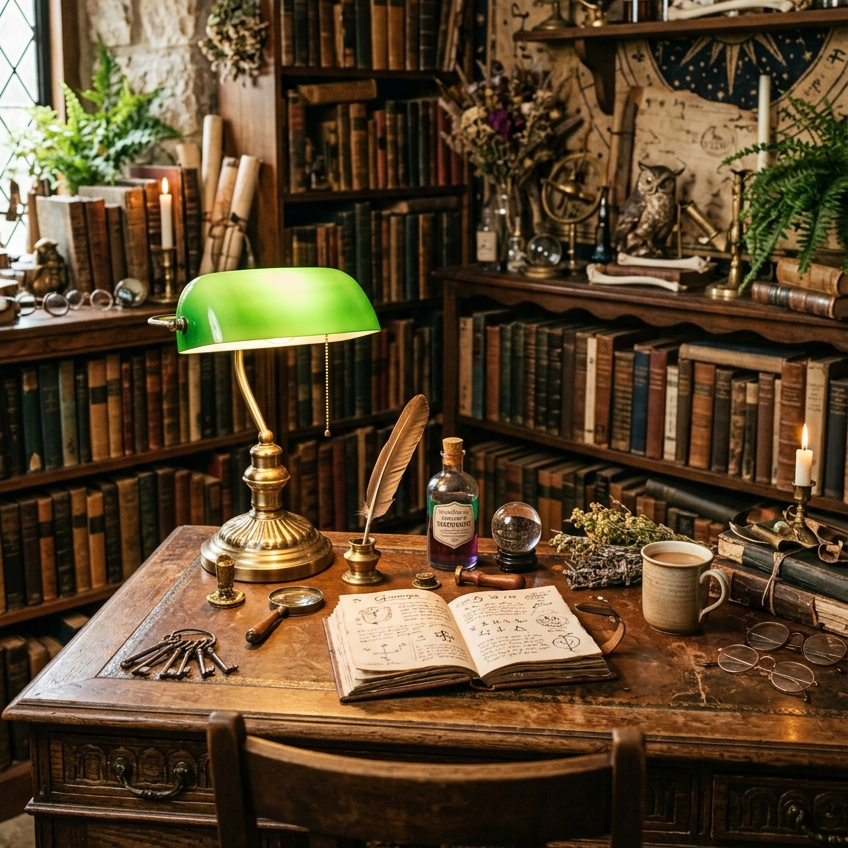
The brass banker’s lamp with the green glass shade has earned its place across half the dark aesthetics by now, and wizardcore is its most natural home. The green glass throws warm yellow-green light directly onto the desk surface where you’re writing, reading, or working, without spilling glare across whatever monitor you have on the desk. The brass base should look aged; the pull chain should make a small satisfying click when you turn the lamp on at sundown. Run a 2700K warm bulb inside it. The room shifts the moment the lamp comes on and the overhead goes off — the chandelier becomes a silhouette, the bookcase shadows deepen, and the desk becomes the small island of warm light you actually work inside. This is the lamp the rest of the post organizes around.
Copy this idea:

7. Hang a Large Antique World Map as the Cartographer’s Wall
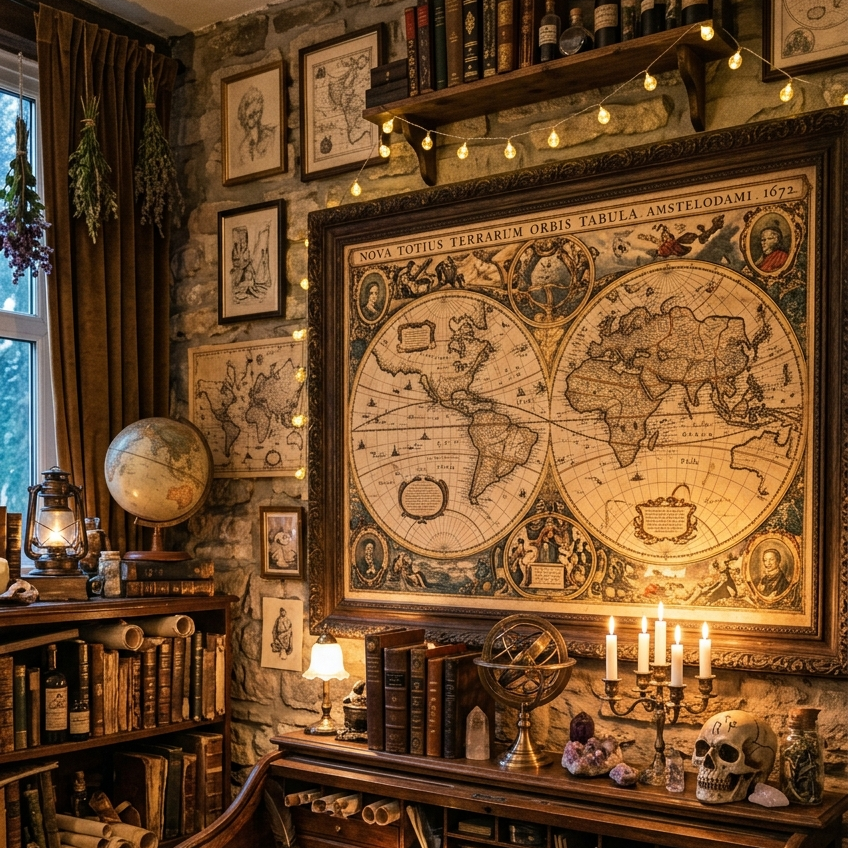
A wizard charts the territories. A large antique world map — 24 by 36 inches minimum, ideally larger — printed on aged-looking paper with sea monsters in the oceans, compass roses in the corners, and the decorative cartography of an old explorer’s chart, mounted on the wall above the desk or beside the bookcase. Mercator projections from the 16th and 17th centuries work beautifully. Maps of Middle Earth or Westeros from the fantasy canon work just as well if you want to lean explicitly into the fantasy reference; Amazon and Etsy both stock licensed and tribute prints in this category. Frame it in dark wood or aged brass — not gilt, which leans too dark-academia-Victorian. The map is half decoration and half the suggestion that the inhabitant of this room has been somewhere, even if only between the pages of a book.
Copy this idea:

8. Cluster a Crystal Ball, Apothecary Bottles, and a Wax Seal Kit on the Desk Shelf
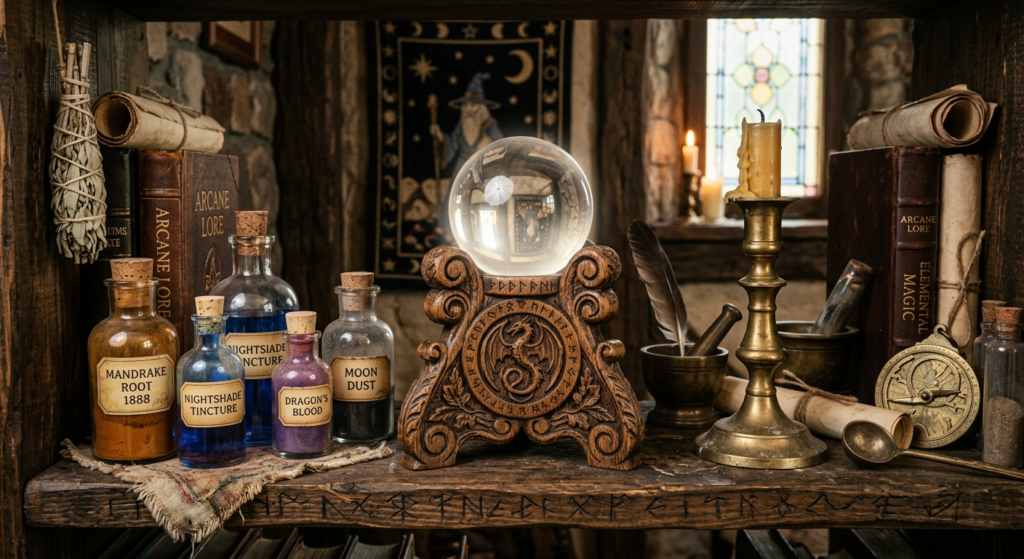
The desk shelf or the surface of the desk itself becomes the alchemist’s workbench. A crystal ball on a carved wooden stand — dragon claw or talon-style bases are wizardcore-coded; simple turned wood stands also work — sits at one corner where the lamp light catches it after dark. A small cluster of antique apothecary bottles, some sealed with red or black wax, filled with dried herbs or tinted water, sits beside it. A wax seal stamp kit in a small wooden box completes the trio. The wax seal is the detail that most reliably surprises visitors: actually using it to seal an envelope or a small note feels ceremonial in a way nothing else on the desk does. Choose a stamp with your initial, a dragon, a moon and stars, or whatever symbol the room is trying to claim. The wax seal is a $25 purchase that does $200 of aesthetic work.
Copy this idea:


9. Collect Antique Scholarly Instruments — Brass Telescope, Sextant, Astrolabe, and a Globe on a Stand
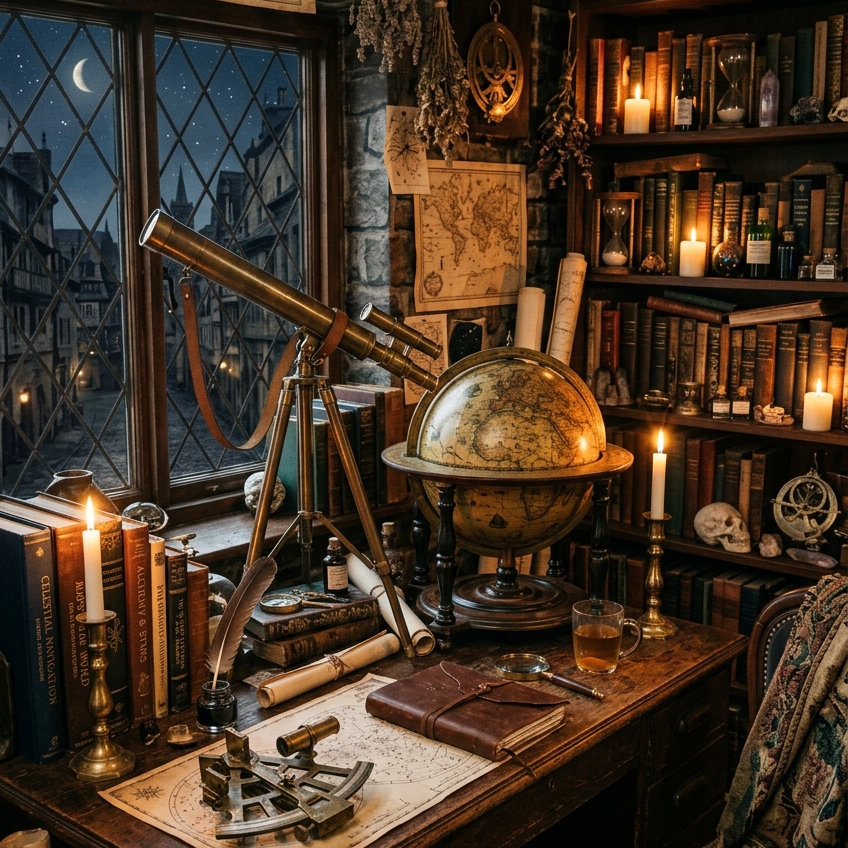
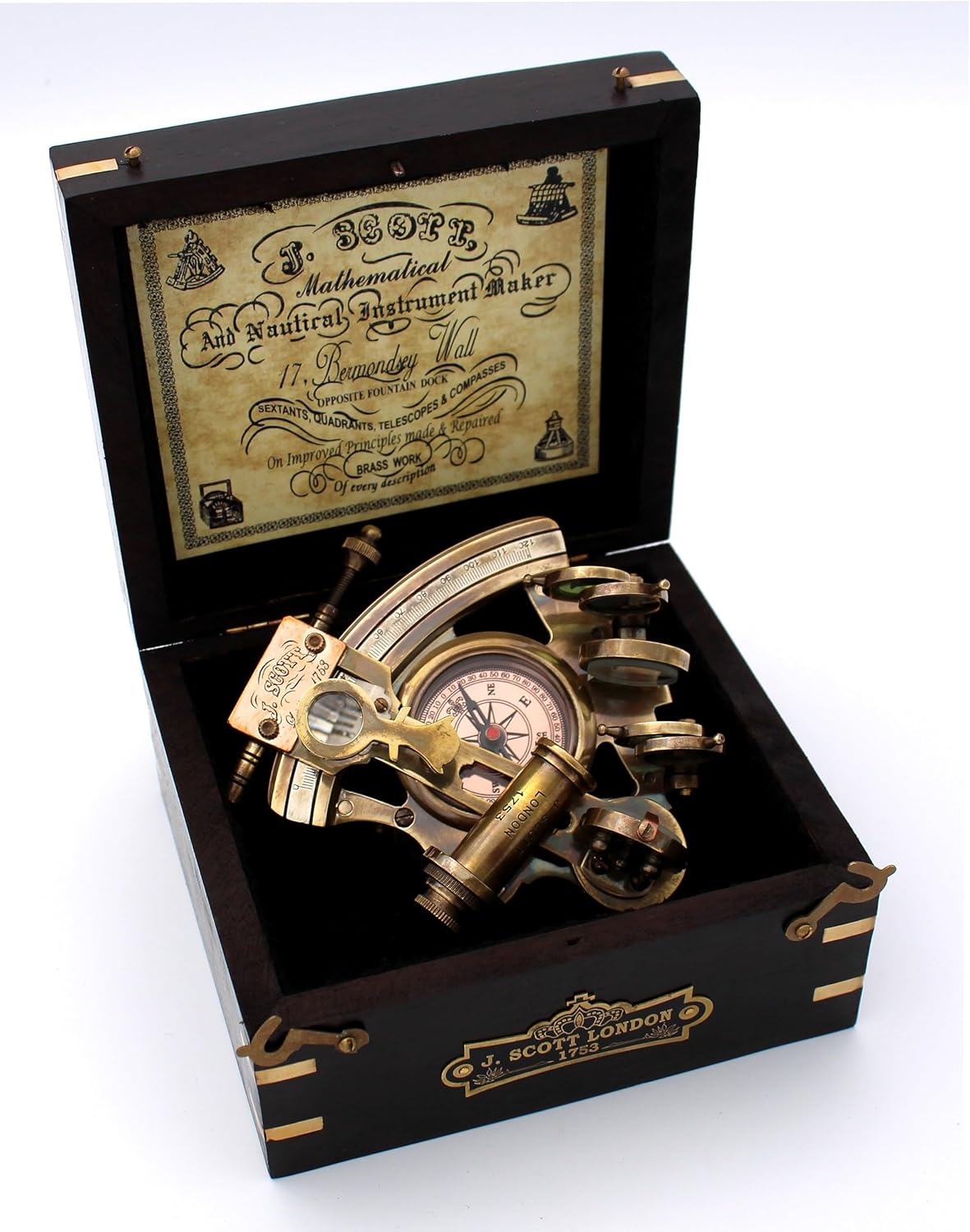
The scholar-explorer layer is what separates wizardcore from straight gothic or dark academia. A brass telescope on a small wooden tripod in the corner of the room, pointed vaguely toward the window even if you never use it. An antique-style terrestrial globe on a brass stand beside the bookcase, ideally a Mercator projection with the old country names rather than a modern one. A brass sextant or astrolabe on the desk shelf or hung from a small wall mount. These objects are doing the work of suggesting the inhabitant has navigated by stars, studied other continents, plotted journeys that may or may not have happened — the visual evidence of a mind that has gone places. None of them need to be functional. The convincing replicas on Amazon read identically to museum pieces from across a room.
Copy this idea:


10. Stack Leather-Bound Books and a Leather Grimoire-Style Journal on Every Flat Surface

The books are the bones of the room. Leather-bound classic sets — Tolkien, Le Guin, Dickens, Conan Doyle, Norse and Greek mythology, anything in matched embossed leather covers — stacked on the desk corner, on the chair, on the trunk, on the floor beside the bookcase. A single leather grimoire-style journal, the kind with a brass closure and an embossed cover that looks like it belongs in a tower library, propped open on the desk beside the lamp. The journal doesn’t have to be old; the new reproductions from Amazon in dark brown and burgundy leather with antique paper inside cost $20-40 and read as five-hundred-year-old in photographs. Add a single decorative quill or fountain pen to the open journal and the room becomes the kind of space a wizard might actually sit down to write in.
Copy this idea:


11. Hang a Medieval Tapestry on a Stretch of Forest Green Wall
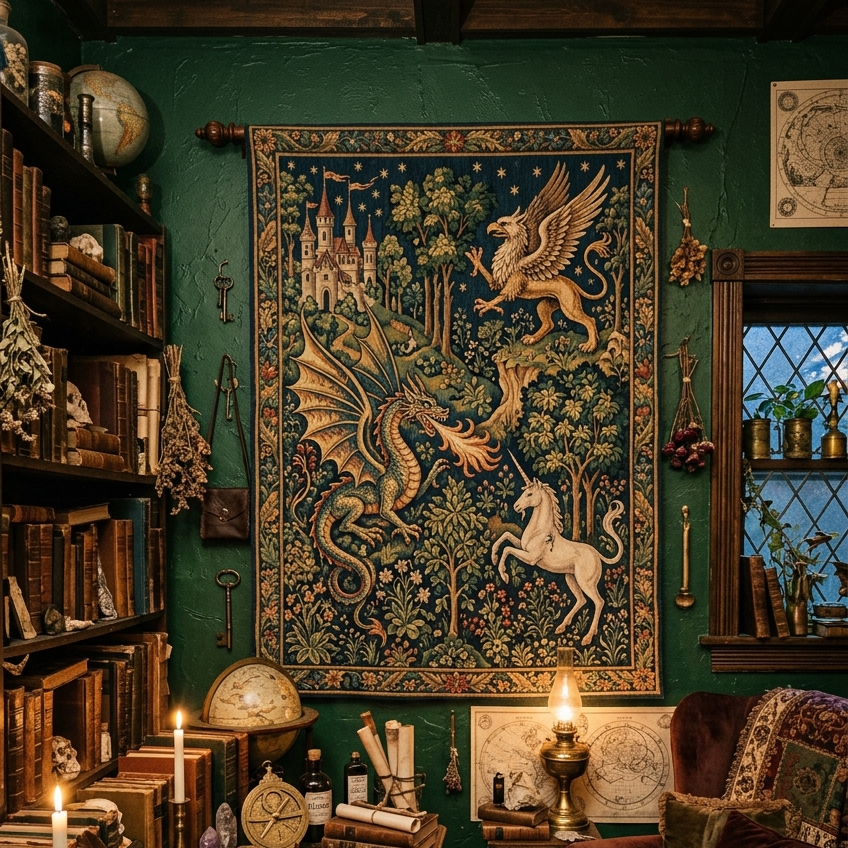
The wall behind the bookcase, or any uninterrupted stretch of forest green wall, asks for textile rather than more framed art. A medieval-style tapestry with a dragon, a griffin, a unicorn, a knight on horseback, or a tree of life scene — hung from a brass or wrought iron rod, with fringe or tassel trim at the bottom — adds a layer of texture and pattern that no flat print can deliver. The wall color matters here: forest green walls let the tapestry’s earthy tones stay grounded, and the tapestry’s pattern keeps the wall from feeling too monolithic. If you can paint, deep forest green is the wizardcore wall color and worth the weekend it takes to do. If you can’t, the tapestry alone against the existing wall still works — pick a tapestry large enough to dominate the wall, 30-48 inches wide minimum. The fabric softens the room acoustically too, which is the kind of detail you notice after a week of working in there.
Copy this idea:

12. Place Dragon, Gargoyle, and Small Fantasy Figurines Throughout the Bookshelf and Desk

The room is finished when the small fantasy creatures show up. A bronze or resin dragon figurine on the bookshelf — wings curled, guarding a small pile of coins or crystals at its feet. A small gargoyle on the desk or on a shelf above the bookcase, perched watching the room. A miniature wizard figurine tucked between two leather books, just visible if you look closely. A raven figurine on top of the bookcase, slightly hidden. These objects are doing the same work the apothecary bottles and the wax seal do — they signal that the room belongs to someone who notices these details, who’s been collecting them, who finds them and brings them home. Buy them slowly. The dragon you find next month should be different from the dragon you already have. The collection becomes one of the things visitors comment on first when they walk in. 12 Goblincore Decor Ideas For the Room That Looks Foraged Not Bought
Copy this idea:


Where To Start
The cheapest first moves are the ones that turn an ordinary room wizardcore overnight. A wax seal kit, a small dragon figurine, a single antique world map print, an apothecary bottle set, and a leather journal together cost under $100 and shift the desk into the aesthetic before any furniture changes hands. Start here while you wait for the bigger pieces.
The brass banker’s lamp does the most aesthetic work per dollar. A $60-120 brass lamp with a green glass shade transforms an existing desk into a wizard’s writing surface the moment you turn the overhead light off. If you only have $150 to spend on this project, spend it on the lamp and the wax seal kit.
The bookcase and the desk are the long-term anchors. Both significant purchases, both worth saving for. Used antique-style writing desks turn up regularly on Facebook Marketplace and estate sales for a fraction of new retail, and the patina on a real used desk fits the room better than any new reproduction. Same with the bookcase. Be patient — the right pieces appear.
The wall color decides everything else. Deep forest green is the wizardcore signature, and worth the weekend it takes to paint if you can. Test a four-foot section first and live with it for a week — staircase and study walls catch unusual angles of light, and a color that feels right in afternoon sun can feel wrong by lamplight. Stone gray, deep burgundy, and dark teal all work as alternatives if forest green doesn’t fit the existing house.Gaming setup integration is its own consideration. If you’re building a wizardcore room around a PC, the cross-aesthetic ideas in [our cozy pc setup post](INTERNAL LINK) layer cleanly over the foundation here. The carved bookshelf, the antique desk, the brass banker’s lamp, and the medieval tapestry all work whether you’re writing a novel or playing Elden Ring. The wizardcore room and the cozy PC setup are the same room from two different angles. [Internal link: 12 Cozy PC Setup Ideas For Gamers, Writers, and Anyone Who Lives at Their Desk]