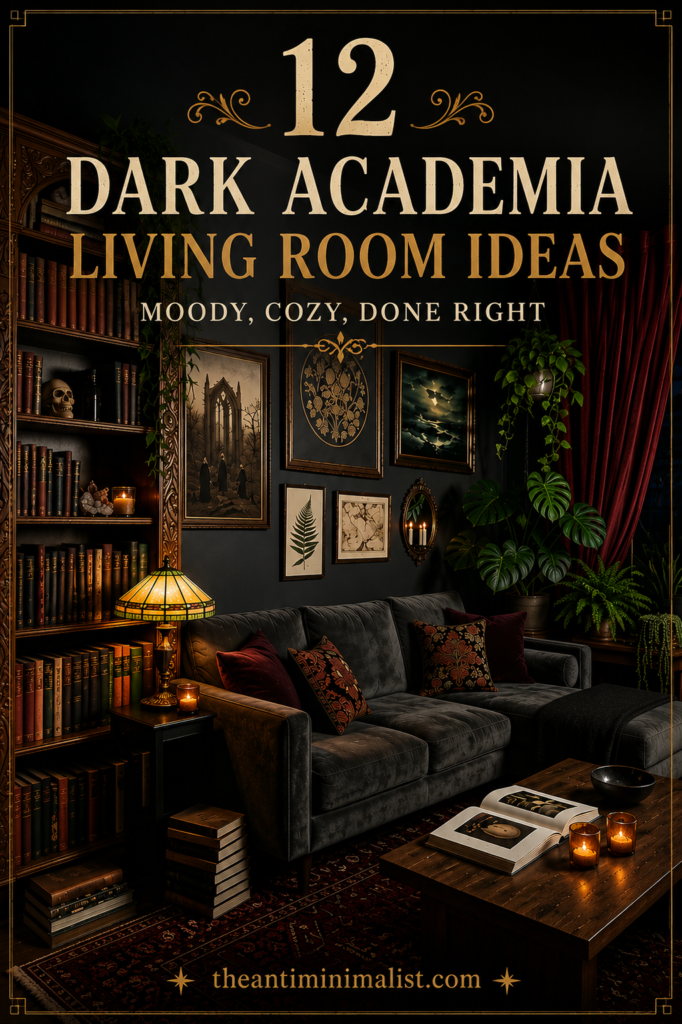
The dark academia living room is not a decorated room. It is a room that feels like it collected over time, or inherited from a distant relative, who themselves inherited it from a distant relative, and so on. As if several generations have placed their books, their pictures, and their plants on the same furniture. These dark academia living room ideas are the exact products, in the exact order of investment, that build that feeling of inheritance.
Here’s how to build it.
The Look
The dark academia colour palette is moody and muted — shades of brown, black, deep green, and burgundy. The furniture has a vintage look, preferably worn and lived-in. Adding candle holders, old maps, and framed vintage artwork enhances the scholarly atmosphere.
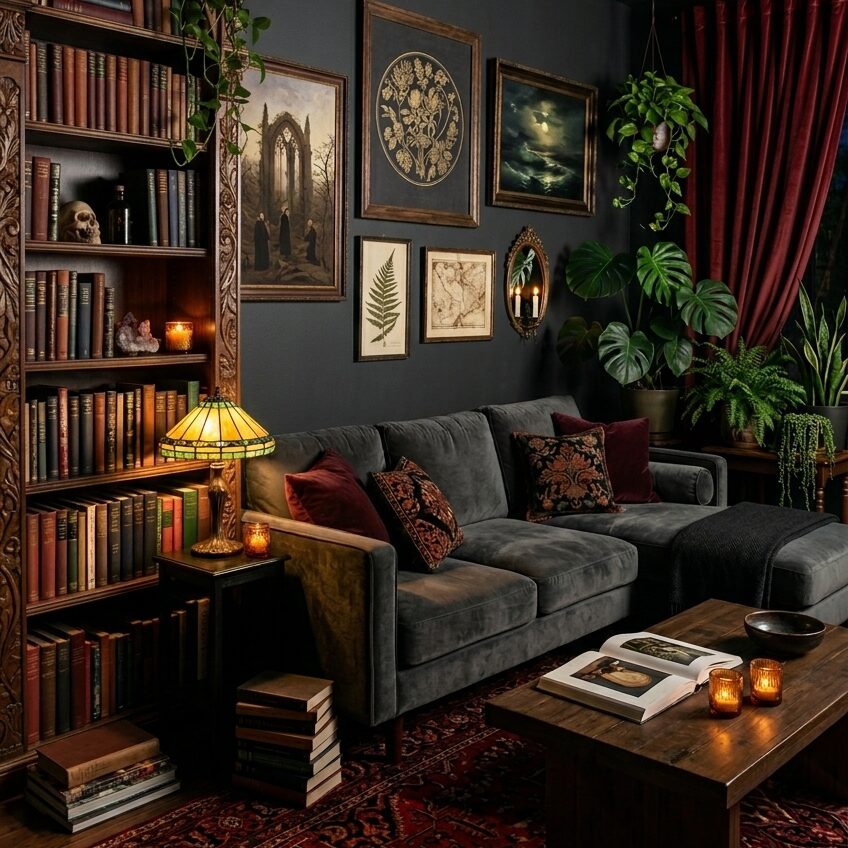
The walls are near-black charcoal — not dark grey, not slate, the colour that absorbs light rather than reflecting it and makes the room feel like it has been thinking about something for a very long time. Against them: a carved gothic arch bookshelf floor to ceiling, packed completely, leather-bound spines in burgundy and green and dark blue and brown. A grey velvet sofa with burgundy and brocade cushions. A Tiffany stained glass table lamp providing the primary desk-side light. A gallery wall of gothic ruins paintings, botanical circular prints, moonlit seascapes, fern studies, antique maps. Burgundy velvet floor-to-ceiling curtains. A Persian rug in deep red and navy. Plants — monstera, hanging pothos, fern — everywhere there is space for one.
The room looks like someone lives in it who reads seriously. That is because they do.
12 Dark Academia Living Room Ideas
1. Hang Botanical Prints in Dark Wood Frames — Under $30, Immediate Impact
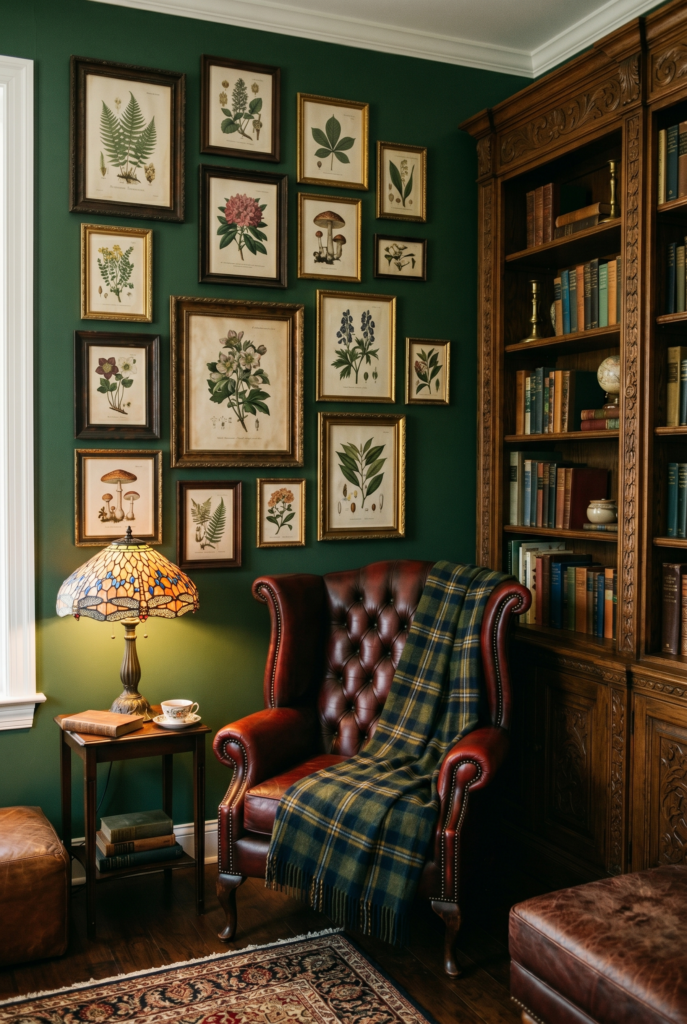
A set of four to six vintage botanical prints in dark wood frames — $20-30 on Amazon for a matched set — is the fastest single transformation available in this post. Hang them in a tight cluster on the wall above the sofa or beside the bookcase. The botanical prints do two things simultaneously: they bring the natural world indoors in a specific 19th-century-naturalist way that fits the dark academia register perfectly, and they immediately make the wall feel like it belongs to someone with a particular kind of intellectual curiosity. Choose prints with aged paper tones — cream and sepia backgrounds rather than white — and frames in dark walnut or antique bronze. The wall shifts from empty to inhabited in an afternoon and costs less than a dinner out.
Copy this idea:

2. Layer Trailing Plants Throughout — Faux Ivy on the Bookcase, Pothos on Every Surface
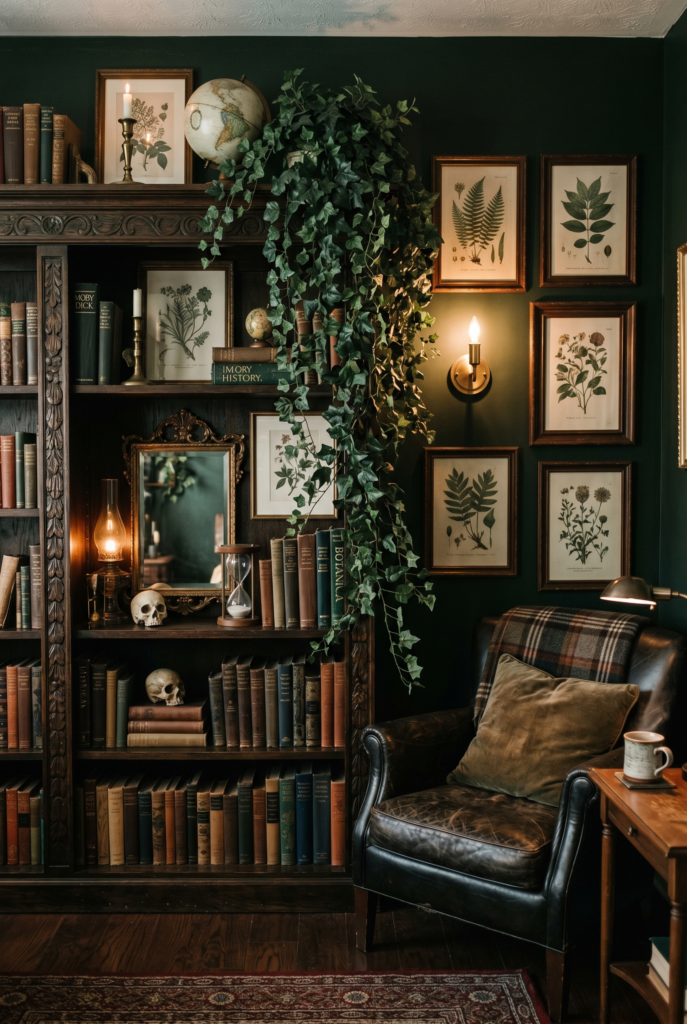
Plant layering is the detail that separates a dark academia living room from a dark living room. The distinction is that the scholar’s study has always had plants — trailing ivy falling from the top shelf of the bookcase, a small fern on the windowsill, a pothos working its way across the mantle. Faux trailing ivy and pothos in aged terracotta pots on Amazon run $15-25 each and are indistinguishable from the real thing at shelf height. Position them on top of the bookcase so the vines drape down over the book spines. A trailing plant at the edge of the mantle. A small fern on the side table beside the armchair. The plants are doing the same work as the botanical prints — bringing the natural world into the intellectual one — but in three dimensions.
Goblincore Decor Ideas For the Room That Looks Foraged Not Bought
Copy this idea:

3. Drape a Plaid or Tartan Throw Across the Armchair — The Scholar’s Coziest Object
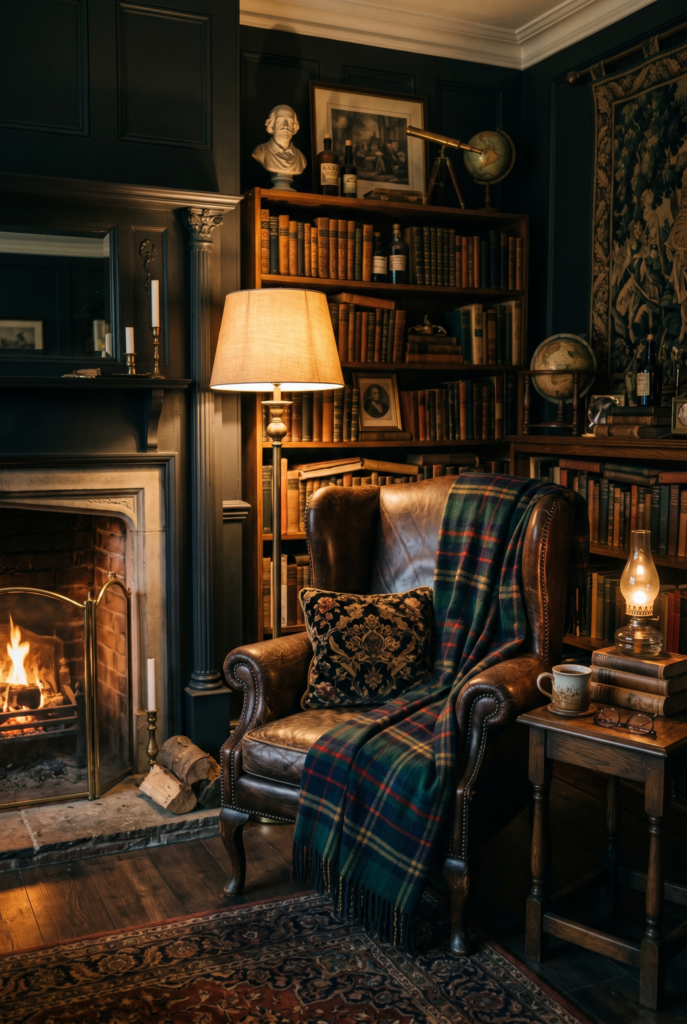
A plaid or tartan throw in olive, burgundy, or forest green — under $40 on Amazon — draped across the arm of the reading chair is the single cheapest object in this post and the one that most reliably makes visitors say the room looks like something. The throw signals that this chair is actually used: someone sits here in the evenings, pulls the blanket around their shoulders when the room cools, and doesn’t fold it up afterward because that would be beside the point. Wool-look blends perform identically to real wool in photographs and at room temperature. Toss it across the chair arm with two-thirds hanging toward the floor, not folded into a neat rectangle. The mess is the detail.
Copy this idea:

4. Set Brass Candlesticks on the Coffee Table and Every Bookcase Shelf
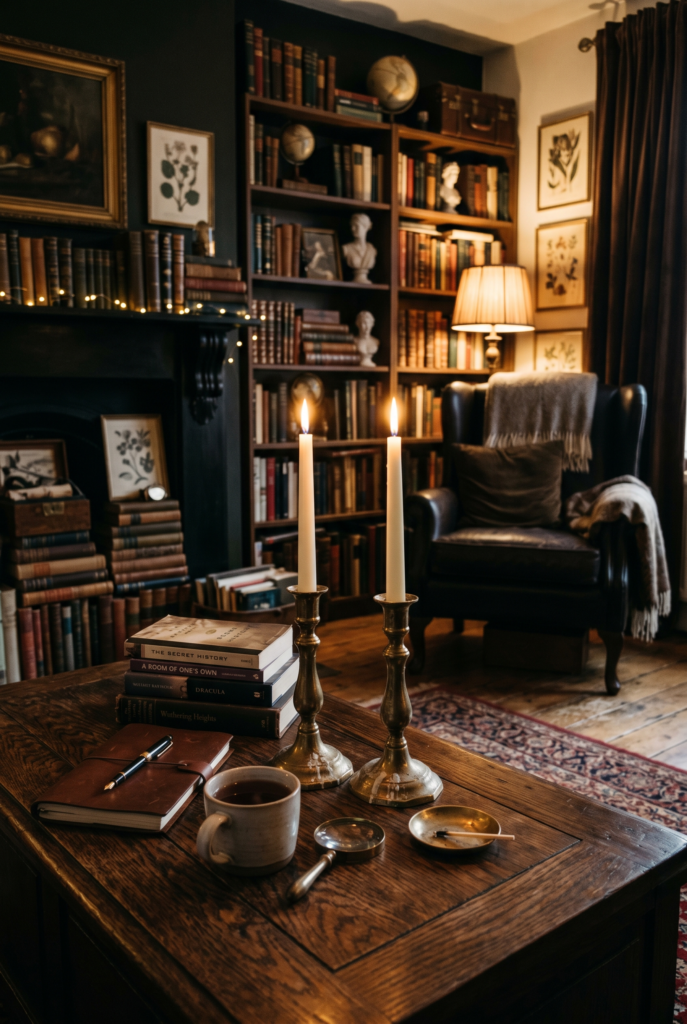
There is nothing as ambient as firelight. Brass candlesticks in varying heights — $15-30 on Amazon for a pair or trio — on the coffee table, on the bookcase shelves, on the mantle, and on the side table beside the armchair give the room its evening character. The living room should run on at least three sources of warm light after sundown: the Tiffany lamp, the banker’s lamp at the reading chair, and the candlelight from several points in the room. The candles don’t need to be lit to earn their place — they look correct when dark and they feel correct when lit. White unscented tapers only. Aged brass finishes only. Let the wax drip down the stems over months of use. The accumulated drip is the aesthetic evidence that the candlesticks have been in this room long enough to have a history.
Copy this idea:


5. Place an Antique Globe on the Bookcase or Coffee Table

An antique-style globe on a brass stand — $30-80 on Amazon depending on size — is the scholar’s object that says this room belongs to someone who pays attention to the world beyond their immediate circumstances. Position it on the bookcase beside the books, or on the coffee table as the conversation piece that anchors the room’s central surface. The vintage cartography finish matters: old country names, aged paper tones, faded relief markings. A modern political globe with primary colors and clean coastlines belongs in a classroom, not a dark academia living room. The antique globe belongs because it suggests the person who lives here has always found geography interesting, which is exactly the quality the room is trying to suggest about its inhabitant.
Copy this idea:

6. Stack Leather-Bound Books on Every Flat Surface
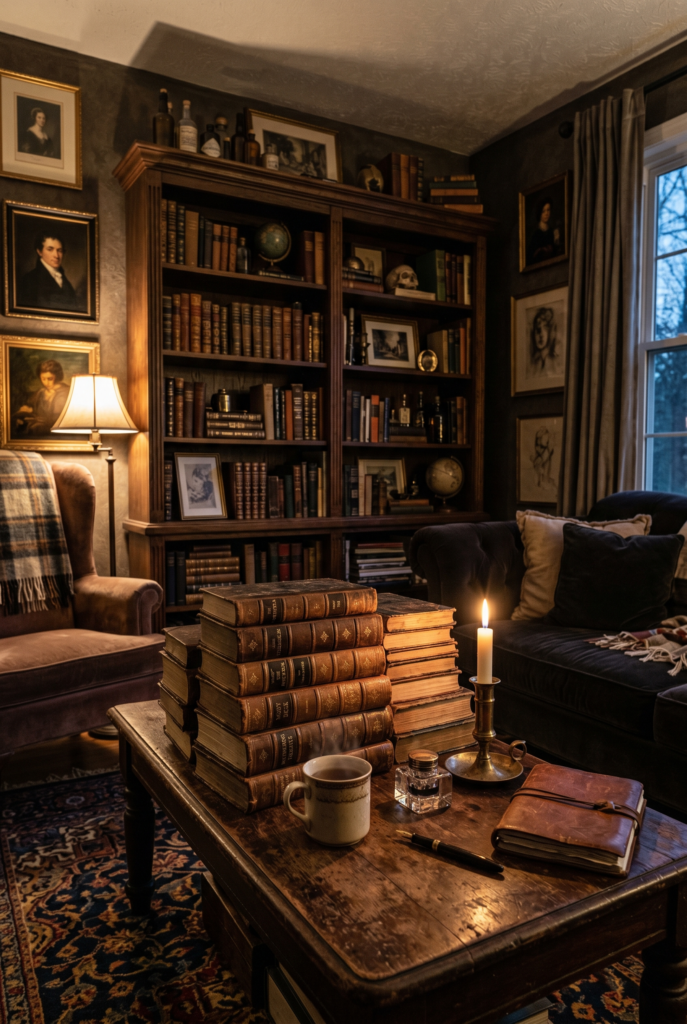
Leather-bound books on Amazon — sets of 6-12 in matched colors, $25-50 per set — stacked horizontally on the coffee table, arranged upright on the bookcase, piled beside the armchair, placed open and face-down on the side table as though someone just stood up from reading, give the room the specific inhabited quality that no single decorative object can deliver on its own. The books are the room’s dominant material. Two or three large-format coffee table books — art, architecture, natural history — stacked on the coffee table with a small object or a brass candlestick on top anchor the table as a surface that has been curated rather than cleared. The leather spines in dark green, burgundy, and brown read as a collection assembled over time.
Dark and Cozy Reading Nook Ideas Built For Lamplight Evenings
Copy this idea:


7. Lay a Persian-Style Rug in Deep Burgundy or Forest Green
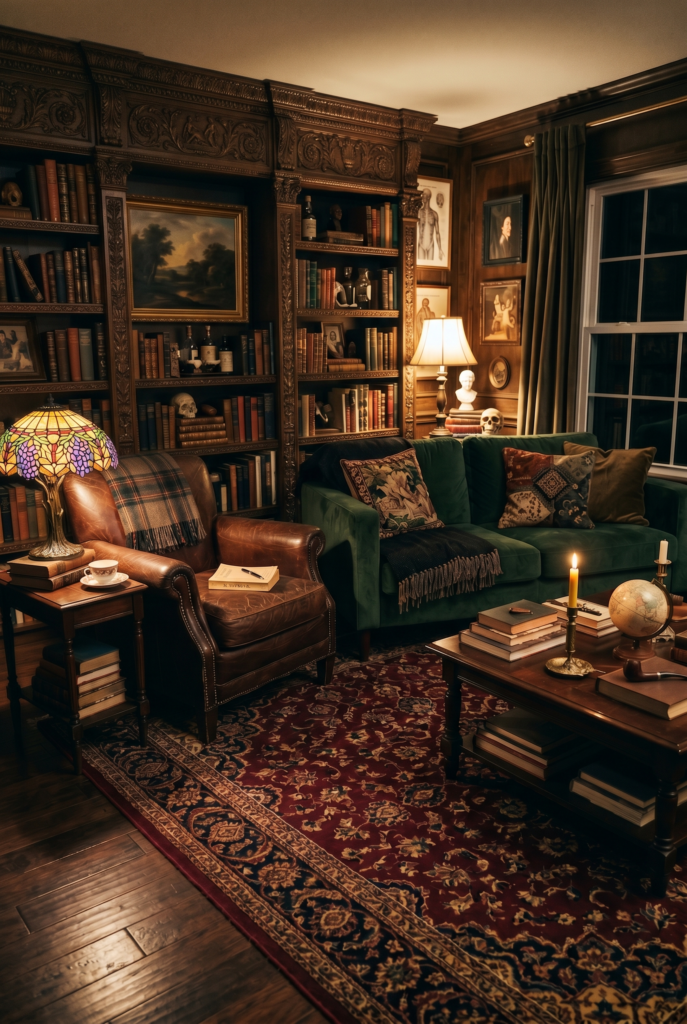
The Persian rug is an achor piece that the rest of the room is built around. A deep burgundy or forest green Persian-style rug in an 8×10 or larger — $80-250 on Amazon for the synthetic versions that photograph identically to wool — anchors the seating area and unifies the room’s entire color palette in a single decision. The rug absorbs the amber lamp light rather than reflecting it back, which is how the room develops its warm enclosed quality after sundown. Front legs of both the sofa and the armchair should sit on the rug — this is the sizing principle that makes a living room feel considered rather than furnished. A rug that’s too small floats the furniture on a sea of bare floor. Size up if uncertain. The rug should feel like it was here before the furniture.
Copy this idea:

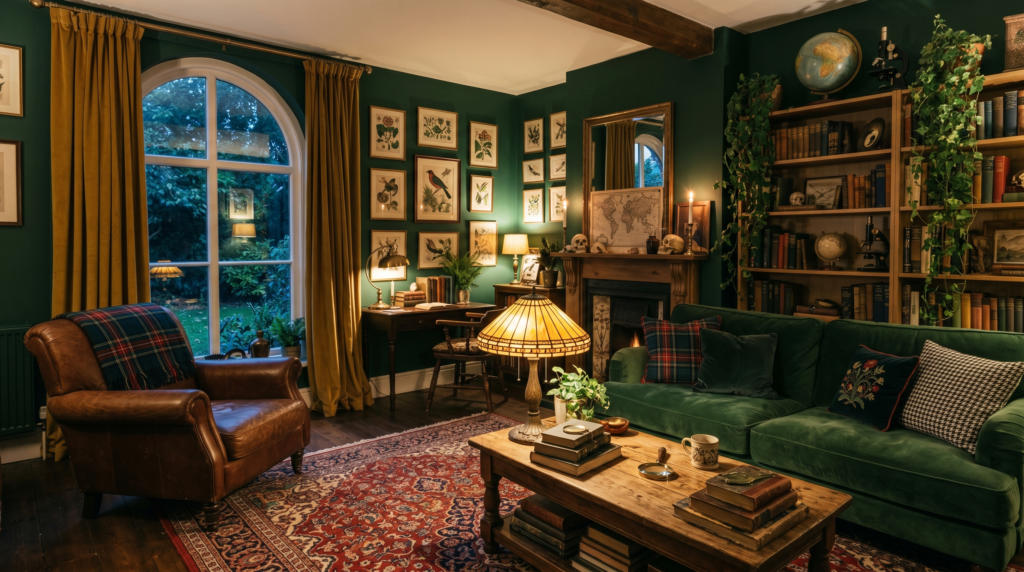
8. Hang Velvet Curtain Panels in Mustard Gold or Deep Forest Green
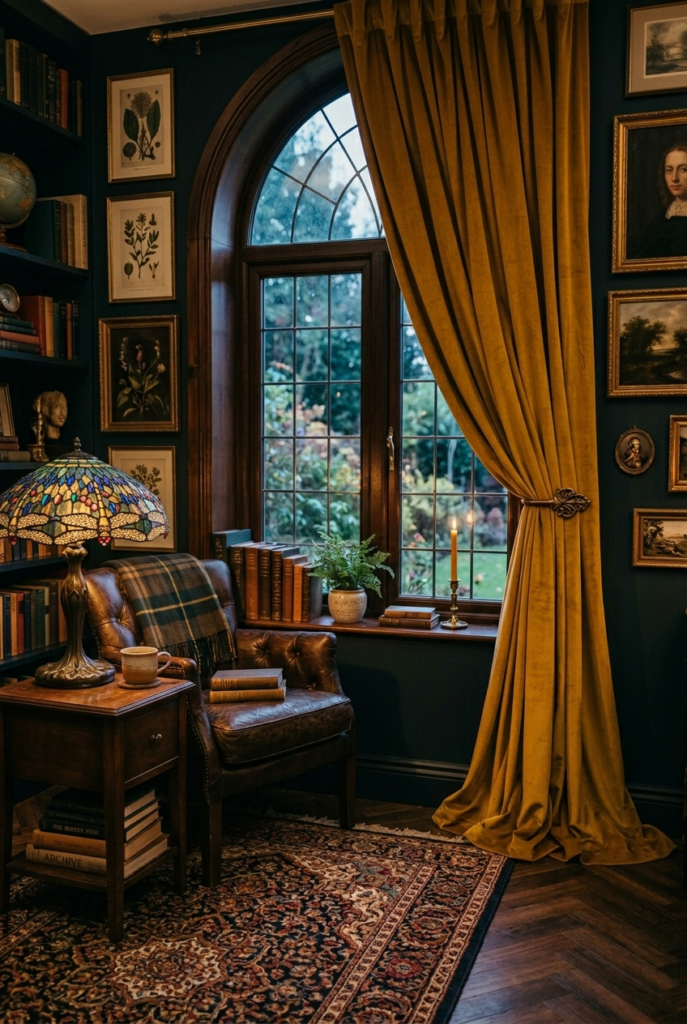
Velvet curtain panels in mustard gold or deep forest green — $60-100 per pair on Amazon — hung floor to ceiling with a slight pool at the floor change the window from an architectural opening into a deliberate framing device. The mustard gold is the warmer choice: it feels like old money, academic, the drawing room of a Victorian professor. The forest green is the earthier choice: it feels like the private library of someone who keeps plants and reads natural history. Either is correct depending on the room’s existing palette. The velvet catches the lamp light and deepens the amber quality of the room after sundown. The floor-length drape signals that whoever chose these curtains was not thinking about practicality, which is the correct attitude for a dark academia living room. If you have an extra curtain rod, then white or dark linens underneath the velvet curtains adds great layering and reflects light very well.
Copy this idea:


9. Put a Brass Banker’s Lamp at the Reading Chair — The Task Light That Sets the Tone
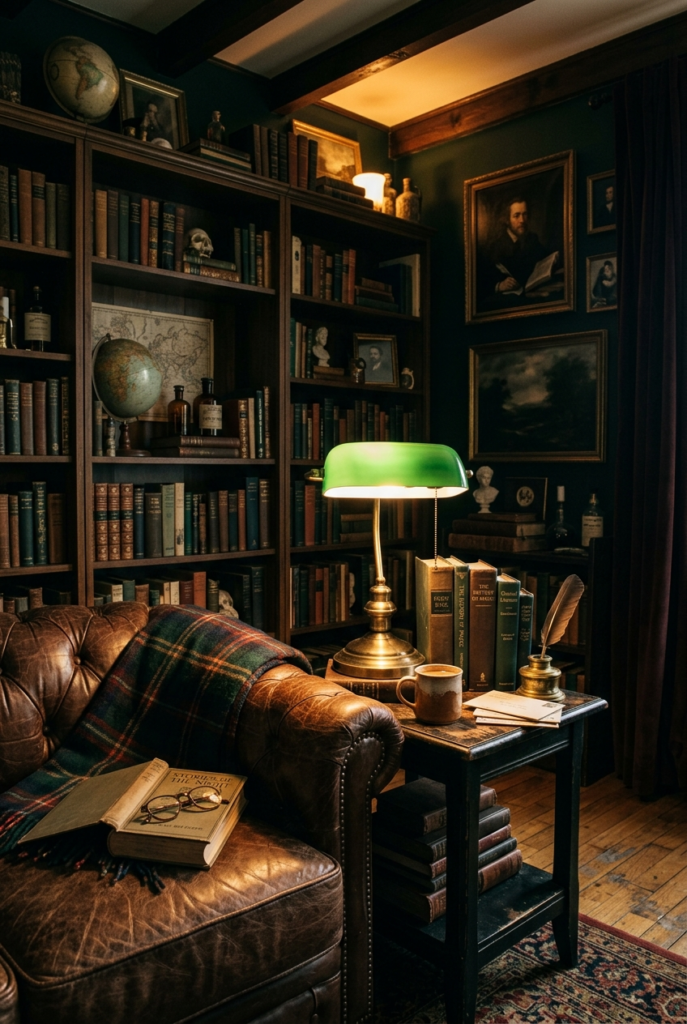
A brass banker’s lamp with a green glass shade — $60-120 on Amazon — on the side table beside the reading chair is the task light that does the room’s most specific work. The green glass throws warm yellow-green light directly onto the book or the laptop or the letters in front of whoever is sitting in the armchair, without flooding the rest of the room. Pull it on at the start of the reading hour and off comes the overhead. The room shifts into a different register when the banker’s lamp is the brightest thing in it. Choose aged brass over polished. Choose the pull-chain version over a rotary switch. The pull-chain has the right sound and the right gesture for a room that takes its rituals seriously.
Cozy PC Setup Ideas For Gamers, Writers, and Anyone Who Lives at Their Desk
Copy this idea:

10. Set a Tiffany-Style Stained Glass Floor Lamp Beside the Sofa — The Room’s Soul
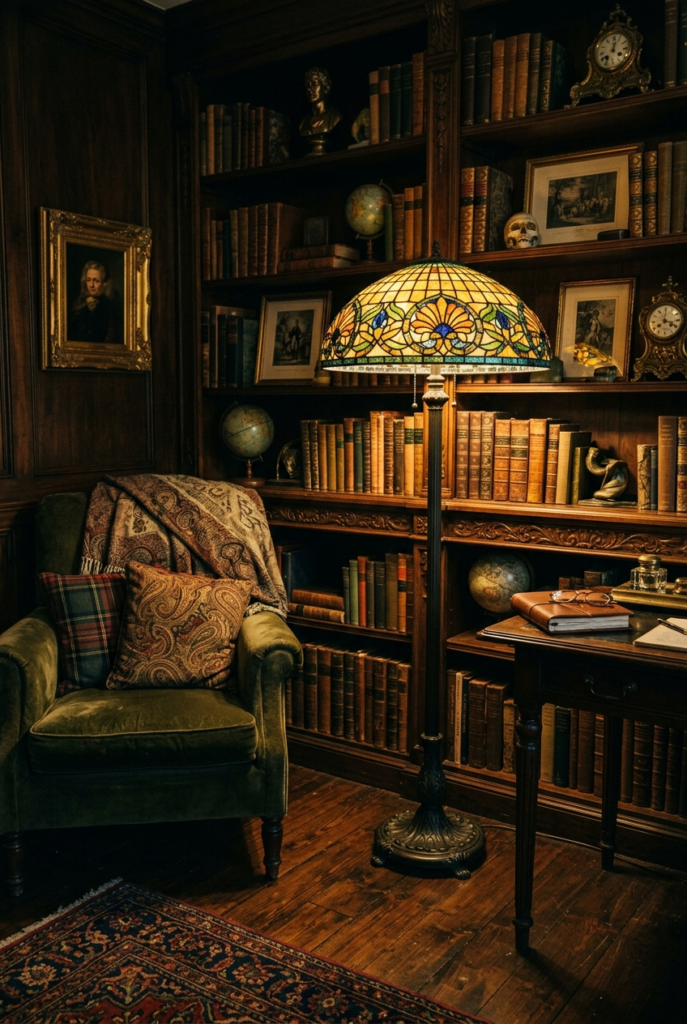
The Tiffany-style stained glass floor lamp is the single most important purchase in the dark academia living room. Everything else in this post supports it; this lamp is what the room is organized around. A tall floor lamp with an amber and green dome shade — $80-200 on Amazon, Capulina and Robert Louis Tiffany are the leading sellers — positioned beside the sofa or behind the armchair throws colored light onto the walls and ceiling in a way no other fixture can replicate. The stained glass casts pools of amber and green across the room. The ceiling catches the glow. The books pick up the warm color on their spines. The room stops being a living room and starts feeling like the kind of private library that people describe as their favorite room in the house. Run it on a dimmer at 40-60% capacity so the light pools rather than floods. This lamp earns its place the first evening it’s switched on.
Copy this idea:

11. Choose a Leather Wingback Armchair — The Room’s Anchor and Its Reason
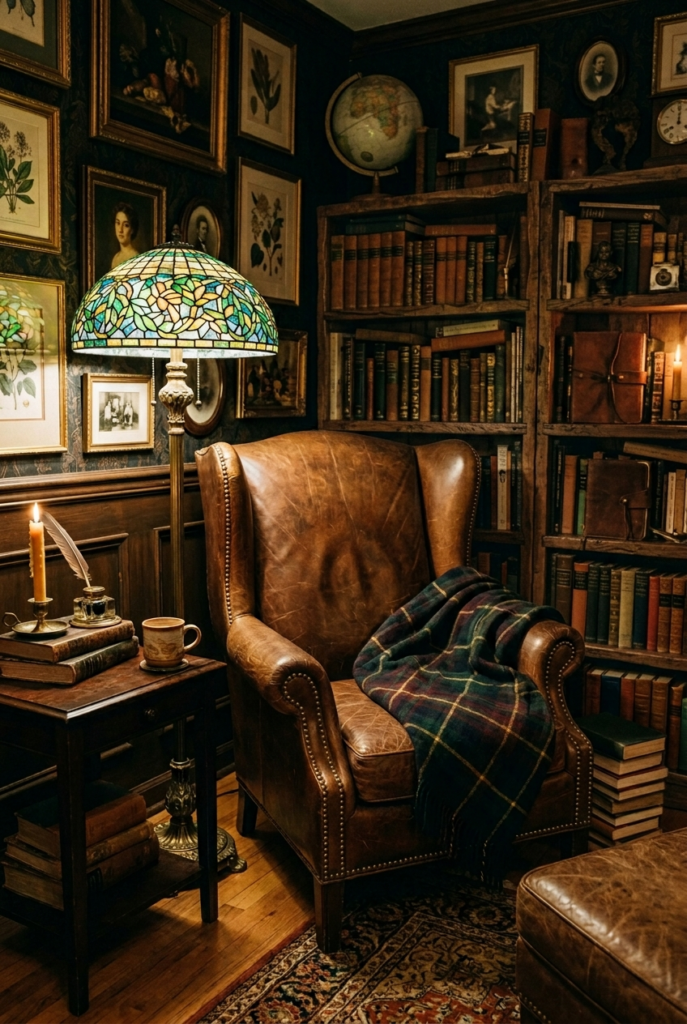
The leather wingback armchair in dark brown or cognac — $200-400 on Amazon for the right silhouette — is the room’s anchor piece and the object every other decision in this list leads toward. The high back, the rolled arms, the nailhead trim: these are the details that make the chair feel like it was built to be sat in for long stretches, which is exactly what it was built for. Position it beside the Tiffany lamp with the banker’s lamp on the side table behind it and the plaid throw across the arm. The reading corner is now complete. The rest of the room exists to justify this corner. Choose top-grain leather or a convincing bonded leather over faux vinyl — the difference in how the material responds to lamplight is significant. A leather chair in amber light has a specific warmth that vinyl in amber light cannot match.
Copy this idea:

12. Fill a Dark Wood Bookcase From Floor to Ceiling — The Room’s Architecture
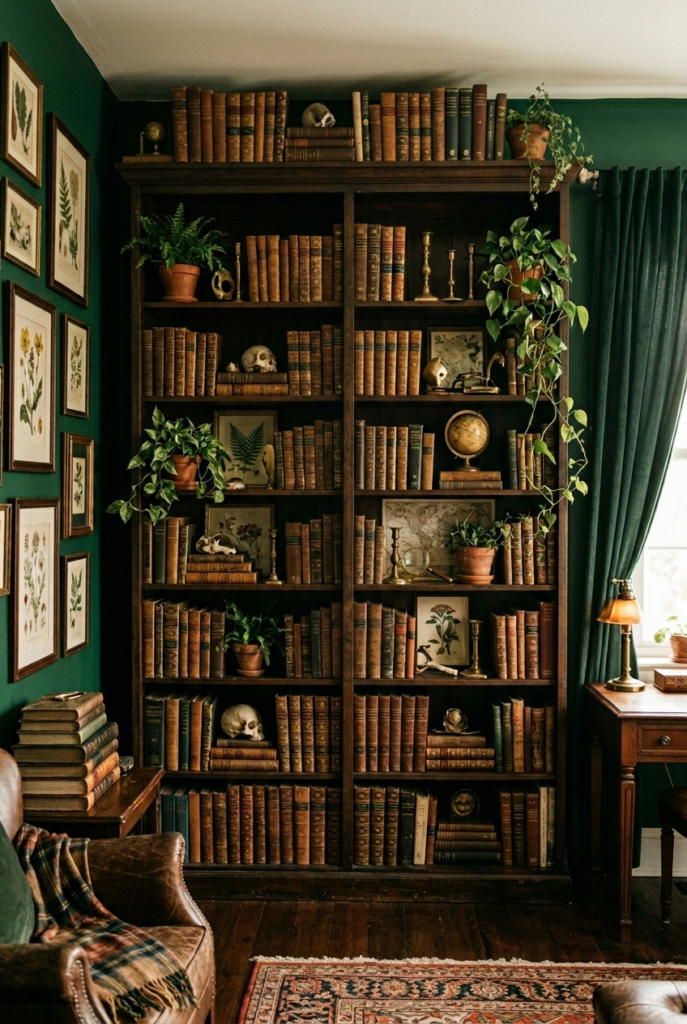
A tall dark wood bookcase — $200-400 on Amazon for the better standing options, more on Wayfair when that approval comes through — fills the wall behind the sofa or beside the armchair and turns the living room into a room that takes its books seriously. The shelves should not be styled like a showroom: leather-bound books organized by color, then by subject, then by size, then broken up by objects — a small plant, the globe, a brass candlestick, a framed photo, a small sculpture, a bottle of something interesting. The bookcase is not a storage solution. It is the room’s autobiography, the accumulated visual evidence of a life spent reading. Leave some shelves with books facing inward so only the pages show rather than the spines — the white page faces in a row add texture and depth against the dark wood. The room is not complete without the bookcase and the bookcase is not complete without the books. Both are the point.
Copy this idea:

Where To Start
The botanical prints and the plaid throw cost under $70 combined and shift the room immediately. Start here before any furniture decision. Hang the prints in a tight cluster, drape the throw over whatever chair you already own. The room begins to feel like the right direction before a single large purchase is made.
The Tiffany lamp is the one piece worth prioritizing over everything else. It arrives on Amazon in two days, costs $80-200, and changes the room’s entire light quality the first evening it’s switched on. The leather chair and the bookcase are the long-term anchors. The Tiffany lamp is the short-term transformation that makes the room feel like the room you’ve been building toward.
The Persian rug goes down before the furniture is arranged. Rug first, then position the seating on top of it. A rug laid after the furniture is already in place almost always ends up too small. Size up and lay it first.
The bookcase fills slowly — let it. The books and objects that accumulate on the bookcase over the first year of building this room will be more specifically yours than anything ordered in a single session. The globe, the brass candlestick, the plant that climbs the edge, the framed photo that arrived from somewhere important — these appear gradually and the bookcase becomes more itself with each addition. Start with the structure. Let the shelves fill over time.
Maximalist Staircase Decor Ideas That Immediately Add Character