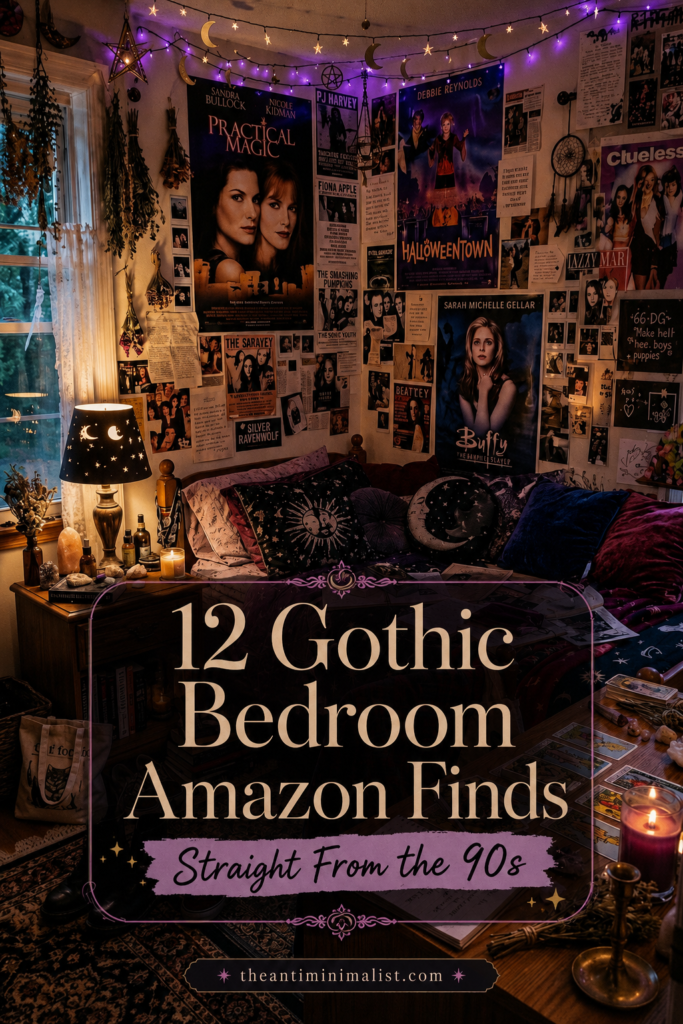
We all remember that first introduction to the dark and macabre. For me it was The Little Vampire — for you it may have been Twilight, Dracula, The Craft, Buffy the Vampire Slayer, or even Halloweentown. The moodiness of the Pacific Northwest, the candlelit bedroom, the velvet and the rain and the feeling that certain people were simply built for darker rooms. Whatever found you first, it stuck. You never stopped chasing that feeling. Now we’re adults, with adult money — which means you can finally build it. These 12 Amazon finds are where to start without exorcising all the money from your bank account.
12 Gothic Bedroom Amazon Finds
1. Start With Velvet Bedding in Deep Purple, Burgundy, or Near-Black — Everything Else Follows From Here
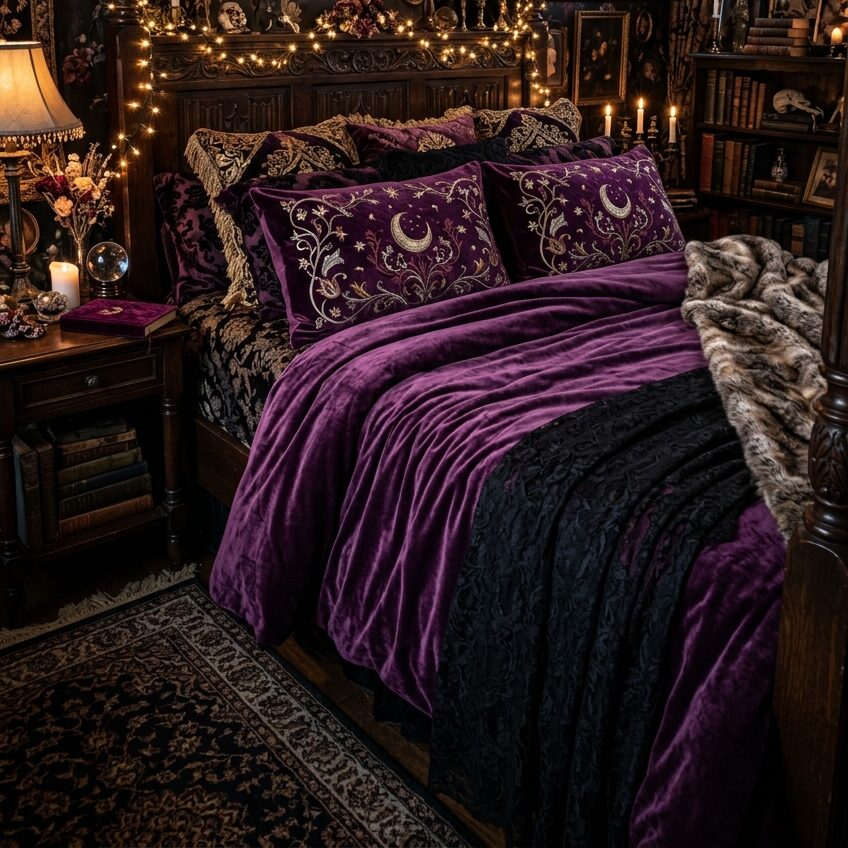
The bed is the room, and the bed wants velvet. A velvet duvet cover in deep purple, dark burgundy, or near-black — around $60-90 on Amazon for a full set with pillow shams — changes everything about how the room feels before you add a single other item. Velvet absorbs the fairy light rather than reflecting it back, which is how the bed develops the warm glow-from-within quality you’ve been picturing. Gothic embroidered shams if you want the pattern layer; solid velvet if you want the depth. Both are correct. Pull it over the bed tonight and the room shifts into a different register before morning.
Copy this idea:


2. Hang Warm Amber Fairy Lights Everywhere — Not the Cool White Kind, the Amber Kind
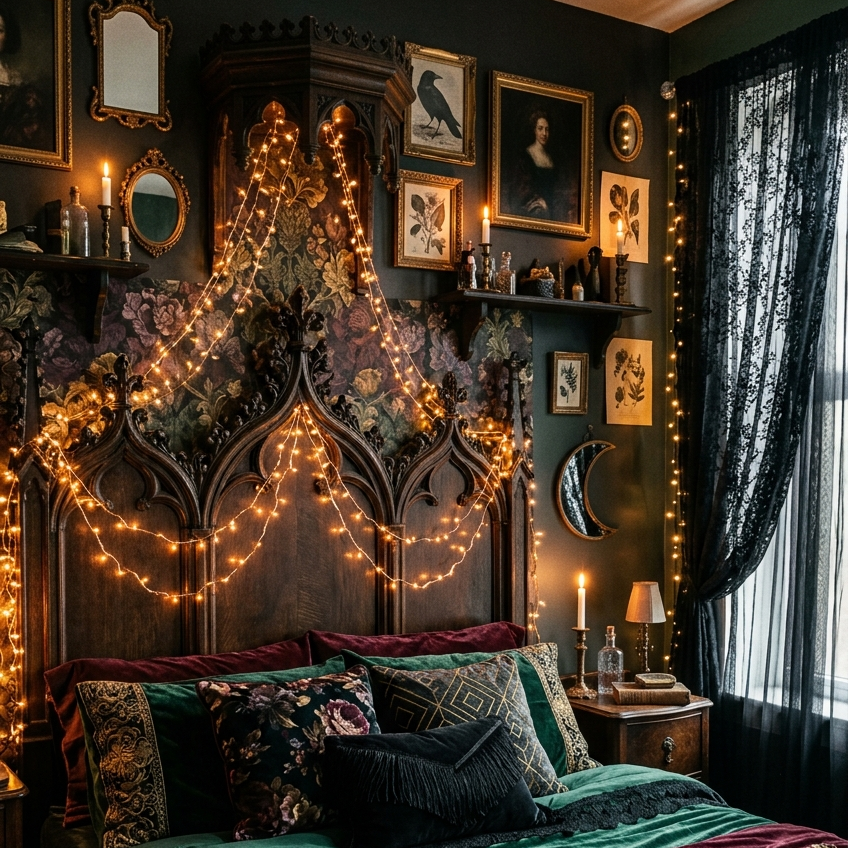
This is the most important purchase in the post. Not because it costs the most — a 100-light copper wire set runs under $15 on Amazon — but because the color temperature of the lights determines the entire atmosphere of the room. You want 2200K to 2700K, labeled “warm white” or “soft white,” the amber-orange quality that feels like candlelight. Not the cool white that feels like a convenience store. Bella Swan’s bedroom ran on this exact light. Every Twilight scene set in her room used this quality of warmth specifically because it makes whatever is inside the frame feel enclosed and deliberate and safe. Run the lights across the headboard wall, around the window, along the top of the dresser, inside a glass jar on the bedside table. Buy two sets. You’ll use both.
Copy this idea:

3. Hang Black Lace Curtain Panels for the Bedroom That Filters Light Like It Means Something
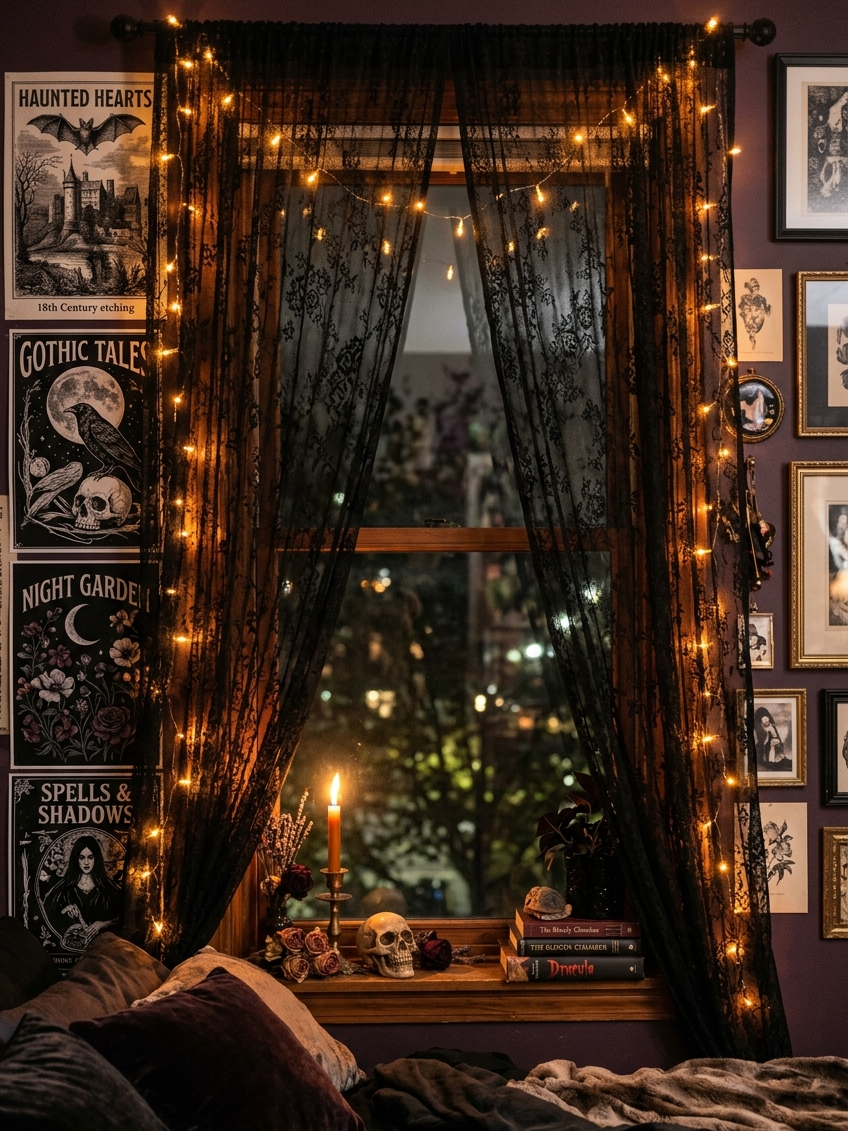
Sheer black lace panels — under $25 for a pair on Amazon — hung either alone at the window or layered over existing curtains, filter afternoon light into something textured and dim that the room actually wants. The lace pattern throws small shadows across the wall when the sun is at the right angle, and after sundown it disappears into the dark so completely that the window becomes a dark mirror instead. This is very The Craft, very Pacific Northwest, very correct for a room that takes the gothic aesthetic seriously without trying too hard. They also work in rentals — tension rods, no drilling, down in twenty minutes if you ever have to move.
Copy this idea:
4. Build the Vampire Film Poster Wall — Framed, Not Taped
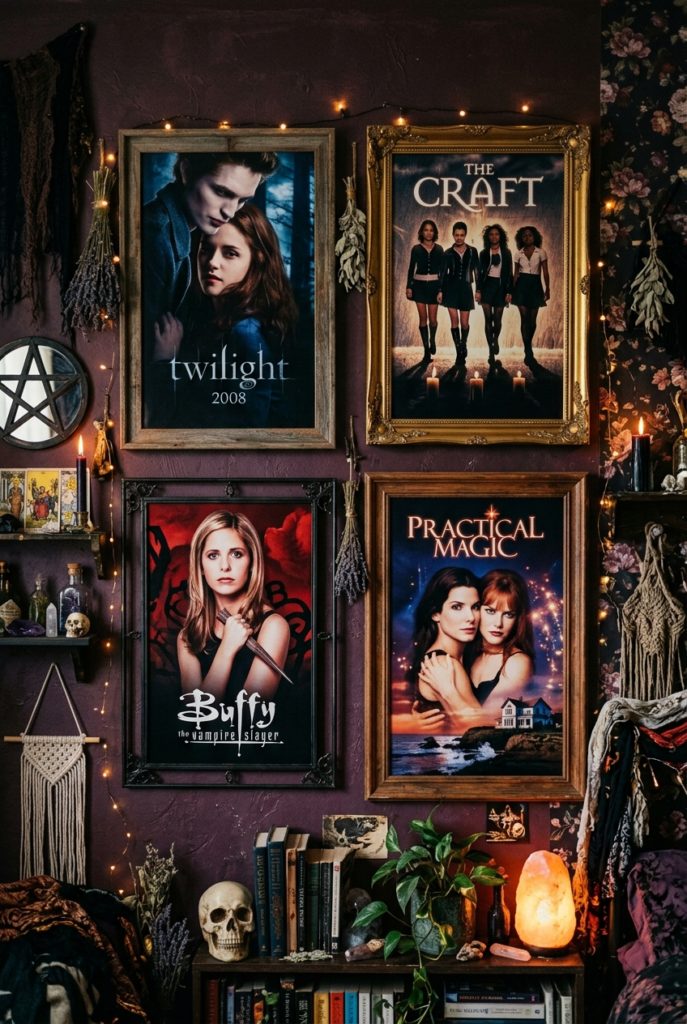
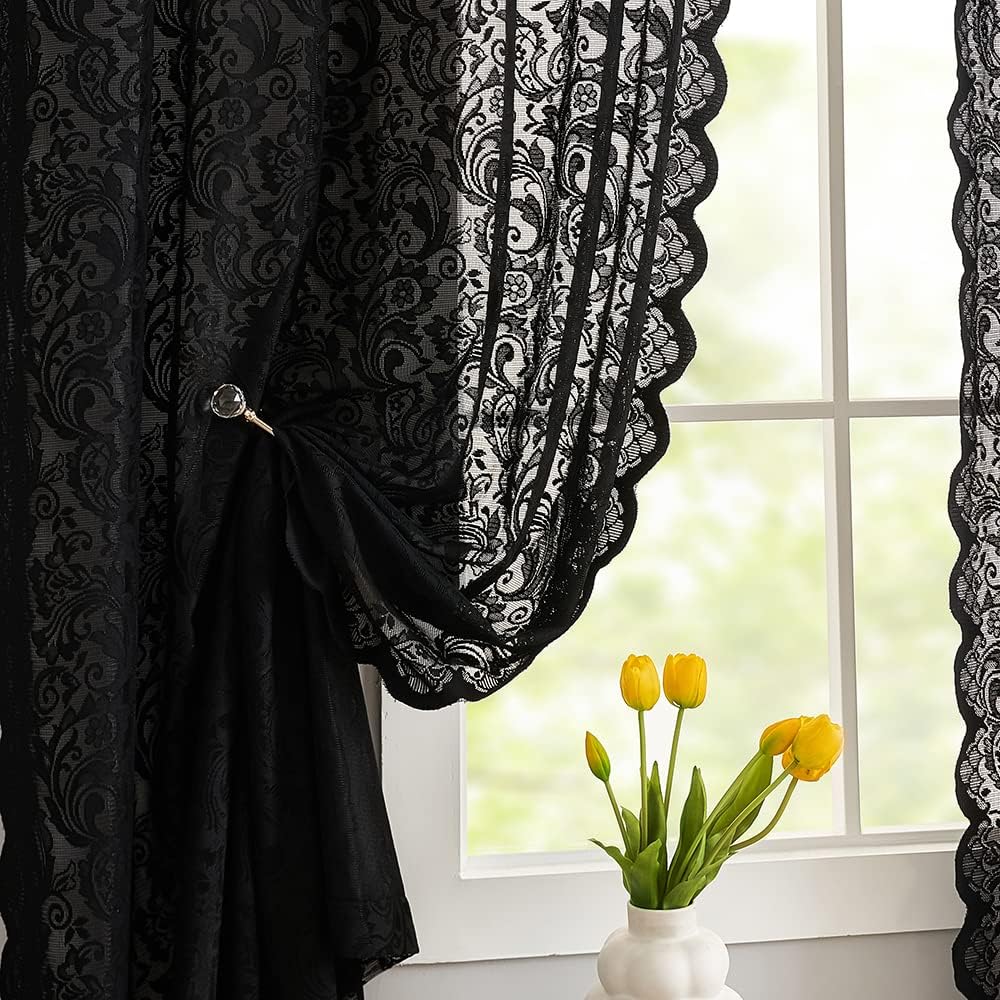
The poster wall is what makes the room a statement about who you are rather than just a dark bedroom. The difference between fourteen and twenty-seven is that at twenty-seven the posters get frames. Amazon carries framed art prints across the full vampire/witch film canon — Twilight, The Craft, Buffy the Vampire Slayer, Practical Magic, Interview with the Vampire — at $20-35 each, in black or dark wood frames that make the collection feel curated rather than accumulated. Cluster four to six on the wall beside the bed or above the desk. Tight grouping, mixed sizes. The poster wall should look like it grew over time, one film at a time, which is exactly how it did. [Internal link → Maximalist Staircase Decor Ideas for gallery wall hanging technique]
Copy this idea:


5. Hang a Dark Celestial Tapestry Above the Headboard — Under $20
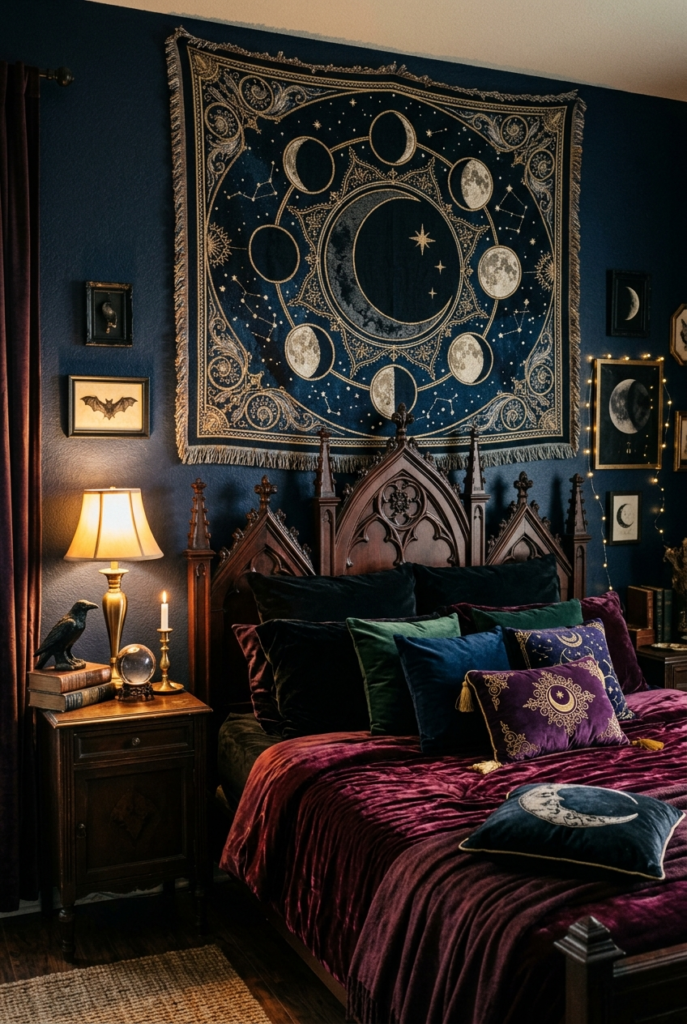
A moon phase tapestry in deep navy or near-black — under $20 on Amazon — hung above the headboard or on the large wall behind the bed, is one of those Amazon finds that costs almost nothing and delivers more than its price point has any right to suggest. The moon phase sequence has appeared in every witch and vampire bedroom aesthetic from 1996 to the present and it remains correct because the moon is always correct. This is not a trend. This is a permanent fixture. Hang it with command strips, center it above the headboard, and it instantly gives the wall above the bed the visual anchor the whole room has been waiting for.
Copy this idea:

6. Arrange a Crystal and Tarot Collection on the Dresser — Under $50 Combined
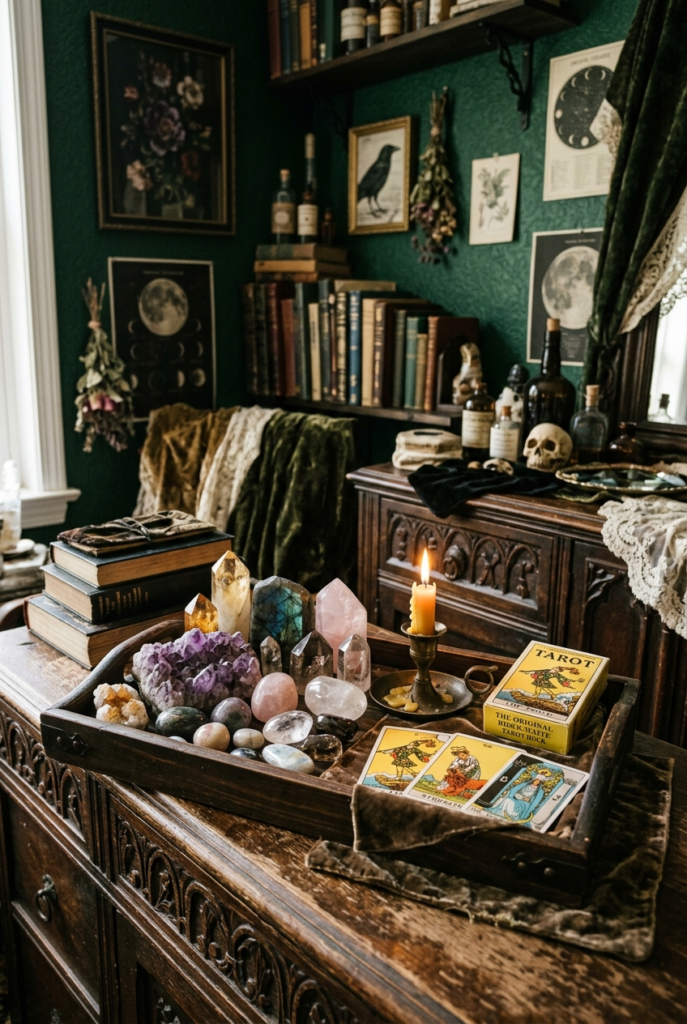
A crystal starter set — amethyst, clear quartz, rose quartz, black tourmaline — on a small wooden tray beside the tarot deck is one of the most affordable finds in this entire post. The crystals run under $25 on Amazon. The tarot deck runs $20-30. The Rider-Waite is the foundational text. The Modern Witch Tarot is the one that came out looking like it was designed for this exact room. Both are on Amazon. The crystal tray goes on the dresser or the bedside table, the tarot deck beside it, and the dresser becomes the room’s quiet altar — the surface that holds the daily ritual whether you practice or not. The objects are the intention.
Copy this idea:


7. Add a Gothic Retro Boombox With CD Player and Bluetooth — Because Some Music Still Lives on Disc
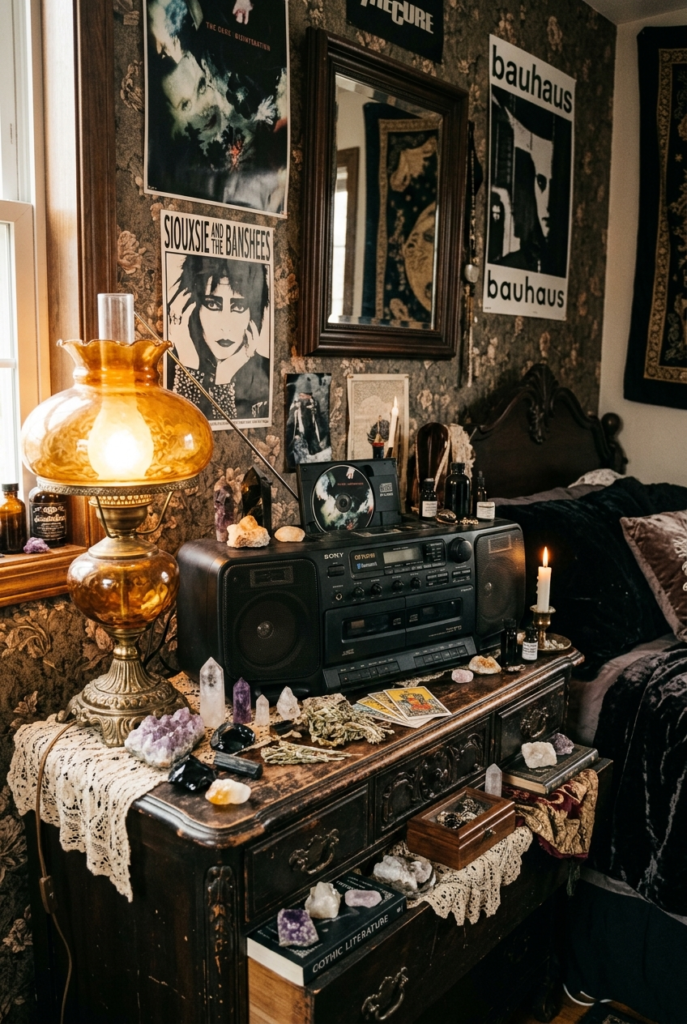
This might be my favorite product on this list. A retro boombox with a built-in CD player and Bluetooth — matte black, industrial finish, the kind that looks like it belongs on a shelf in a 1998 vampire film — runs $60-$280 on Amazon and does something a record player can’t: it plays the CDs that are still in the case from 2004. The Evanescence Fallen disc. The Twilight soundtrack. The Crow. The Cranberries. CDs are the correct physical format for the 90s gothic bedroom because they’re what actually existed in that room the first time around, and loading one still feels deliberate in a way streaming never does. The Bluetooth means it connects to your phone when the mood shifts and you can’t find the Paramore disc. Get a model with FM radio included — late night FM at low volume, the dial lit faintly in the dark room, is the one detail that makes the stereo feel like 1998 rather than a replica of it.
Another option is this great retro Bluetooth speaker that looks like it was ripped straight out of the 1930s. Yes, I know this is a 90s post, but it looks too cool and is compact enough to adorn a small shelf. It also comes in at a sweet $37 bucks at the time of writing.
Copy this idea:


8. Layer a Chunky Knit Throw and Velvet Pillows Across the Bed
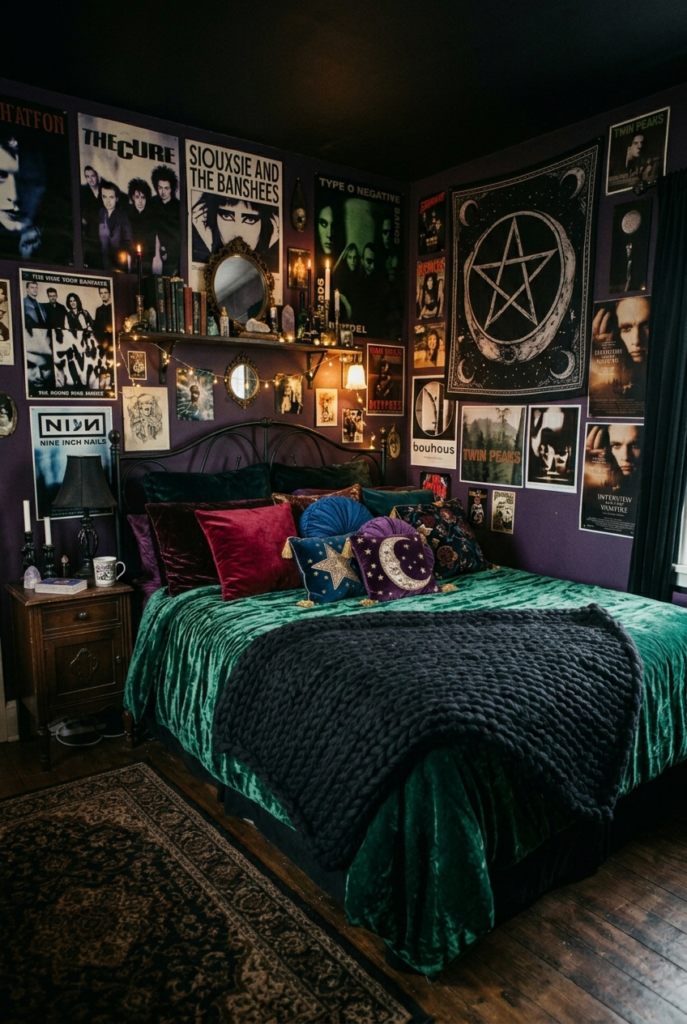
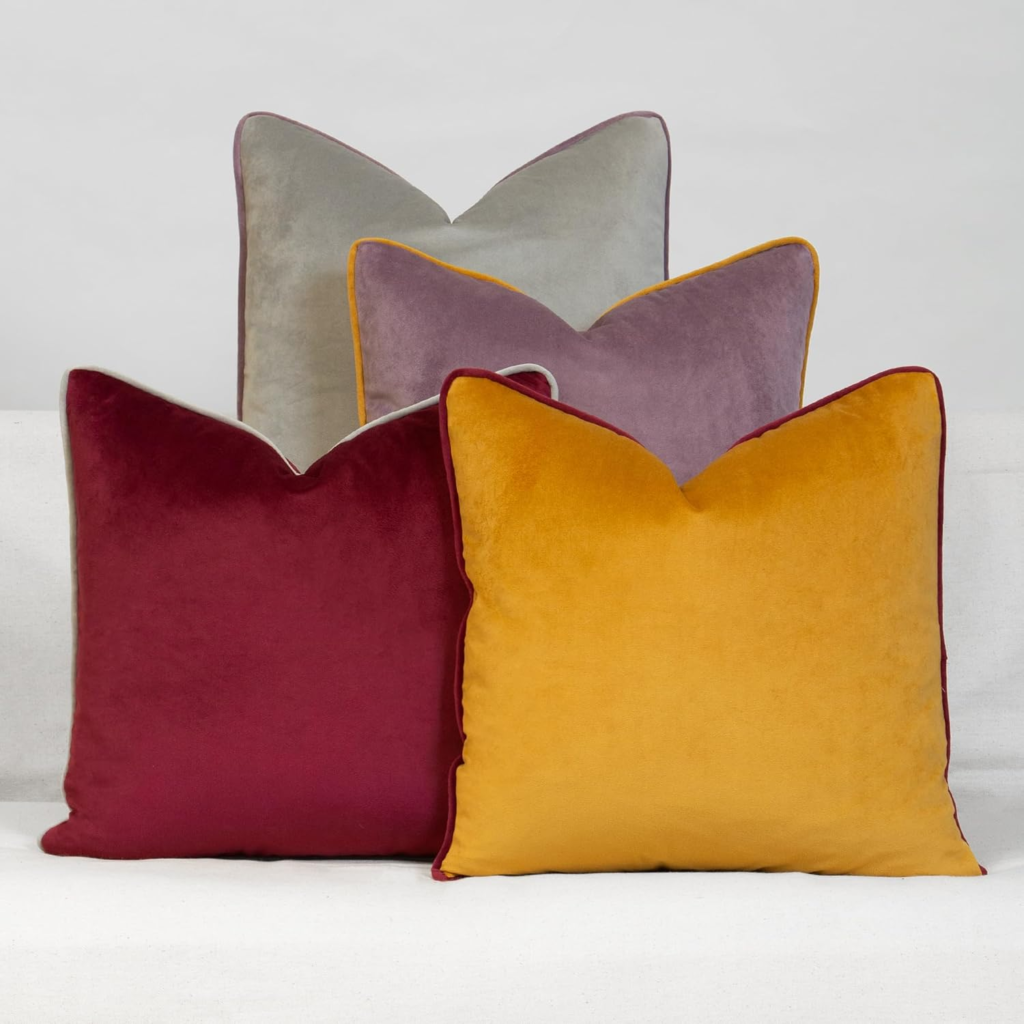
A chunky knit throw in near-black, burgundy, or deep purple — under $40 on Amazon — draped across the foot of the bed, and four velvet throw pillows in mixed jewel tones stacked against the headboard, give the bed the layered cozy-dark quality that defines the Pacific Northwest vampire aesthetic. Bella Swan’s bedroom always had this quality: the room felt simultaneously dark and warm, gothic and livable, like somewhere you would actually want to spend an entire rainy Saturday. The chunky knit is the rainy Saturday layer. Pull it around your shoulders while you read. Leave it slightly rumpled. The bed should look like someone has been in it.
Copy this idea:

9. Run Photo String Lights Across a Wall With Polaroid-Style Prints
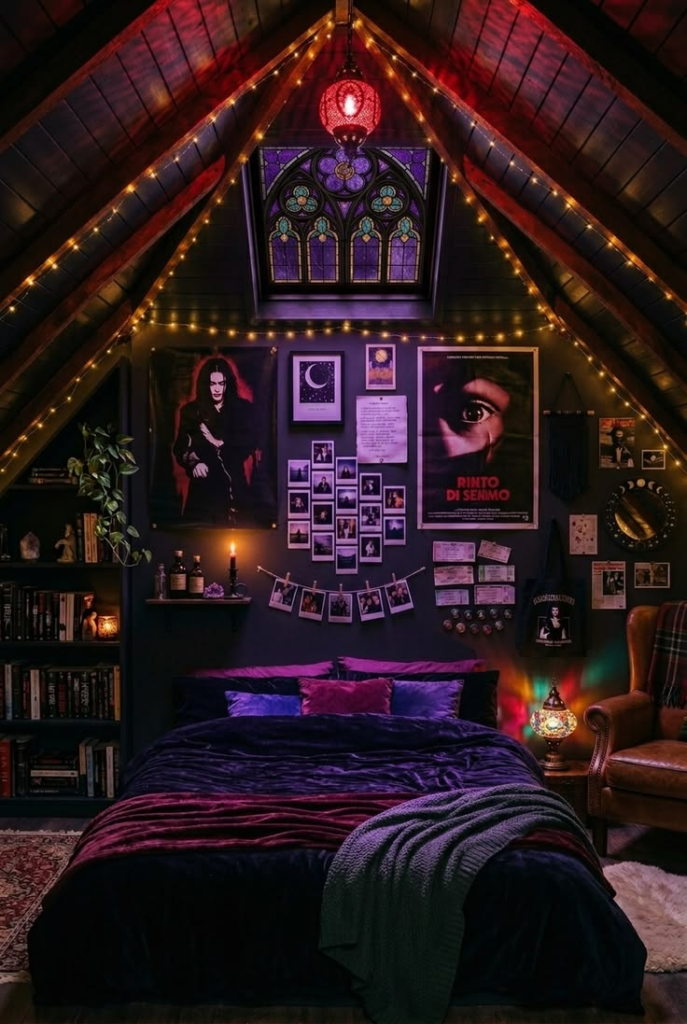
Photo string lights designed to clip Polaroid-style prints are under $20 on Amazon and they are the detail that makes the poster wall feel lived in rather than decorated. Run the string across a wall or above the desk, clip fifteen to twenty prints along it — film stills, photos from places you’ve been, aesthetic images you saved specifically for this wall, a screenshot of Bella Swan’s bedroom from 2008 that you have saved to your phone more times than you’d admit. Print them through a pharmacy photo center or a small Amazon instant-print device. The photo wall is the room’s personality layer and the only part of the room that can’t be replicated by anyone else, because nobody has the same fifteen photos you do.
Copy this idea:

10. Style the Dresser With a Black Cat, an Hourglass, and a Mini Skull Bookend
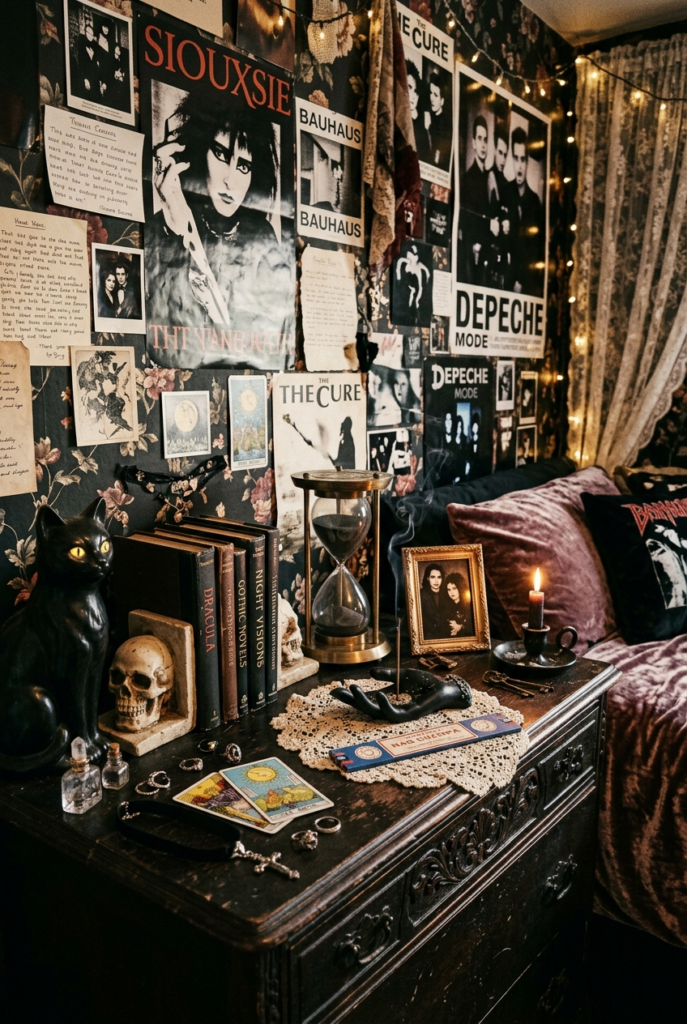
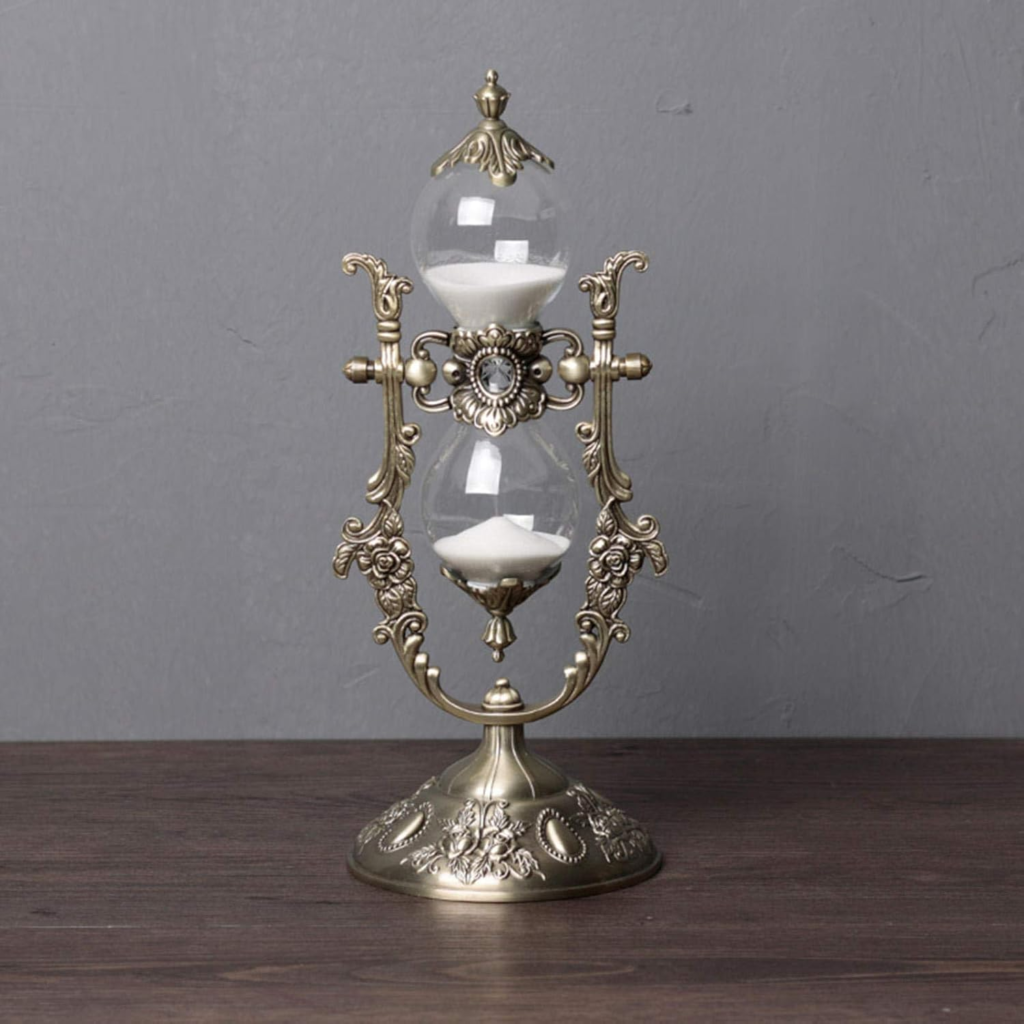
The dresser becomes the room’s curiosity collection: a ceramic black cat (under $20 on Amazon), a vintage-style hourglass in dark metal or brass (under $25), a mini skull bookend in aged resin — the elegant version, not the Spirit Halloween version — holding the leather books upright at one end of the dresser surface. Each object is under $30 on Amazon. Together they create the surface that says something specific about the person who lives in this room: someone who notices these objects, collects them slowly, and arranges them with more intention than she would admit to. The dresser is the room’s biography in miniature.
Copy this idea:


11. Add Incense, Dried Dark Botanicals, and a Small Ornate Mirror to the Dresser
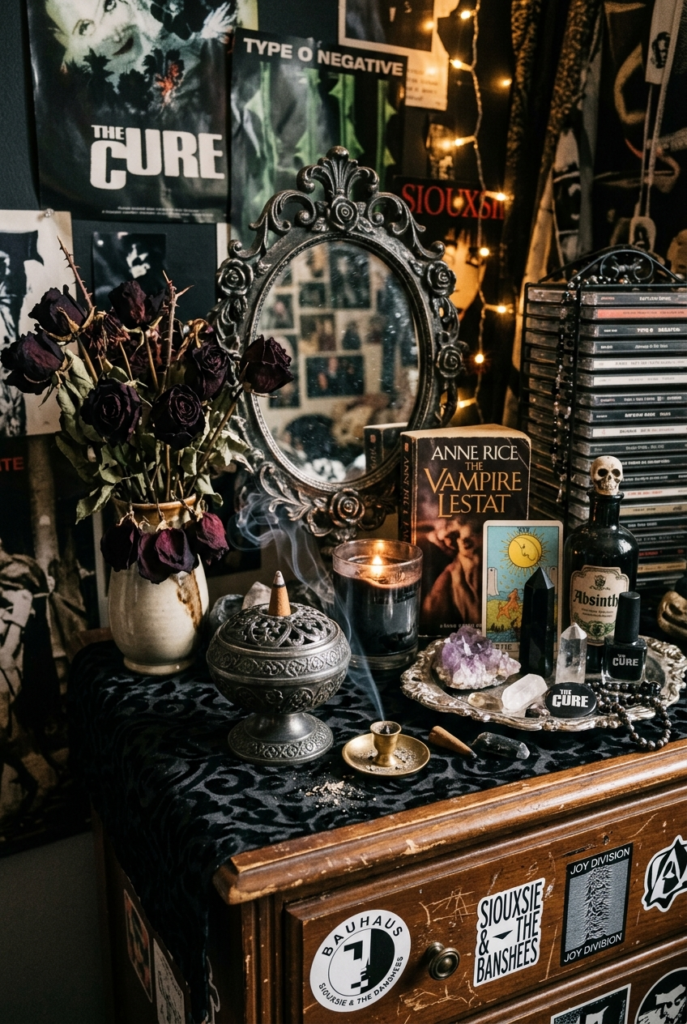
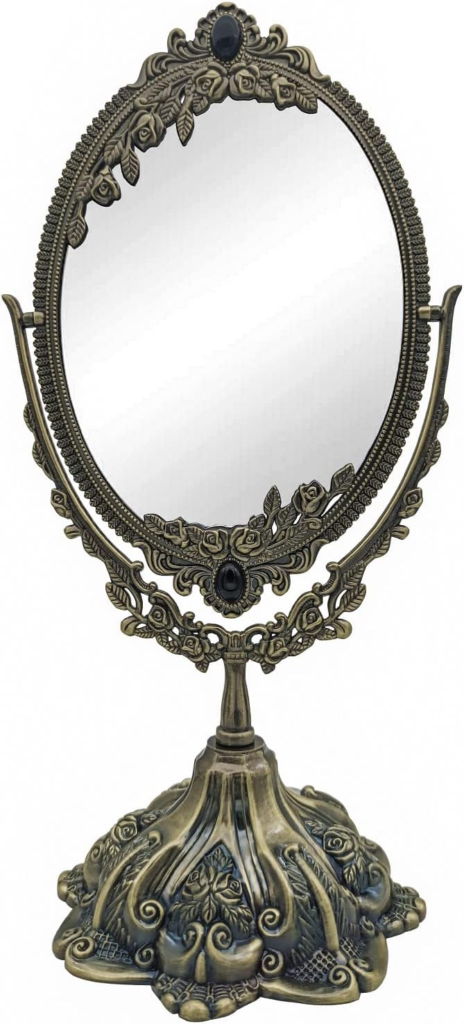
The scent layer is the one most people forget and the one the room misses most when it’s absent. An incense holder with sandalwood, cedar, or dark amber incense sticks — under $20 on Amazon — running in the evenings gives the room a specific quality that fairy lights and velvet alone cannot produce. Pair it with dried dark botanicals in a small ceramic vase: black or burgundy dried roses, dried thistle, whatever dried thing feels correct. And a small ornate mirror — tabletop version propped against the wall or a small hung version — for the dresser surface. The mirror catches the fairy light. The incense smoke curls past it. The dried roses don’t die because they’re already done. This corner of the dresser becomes the altar the room has been quietly asking for. → Witchcore Room Decor
Copy this idea:


12. Get a Lava Lamp and a Black Light Poster — The Two Most 90s Things You Can Put in This Room
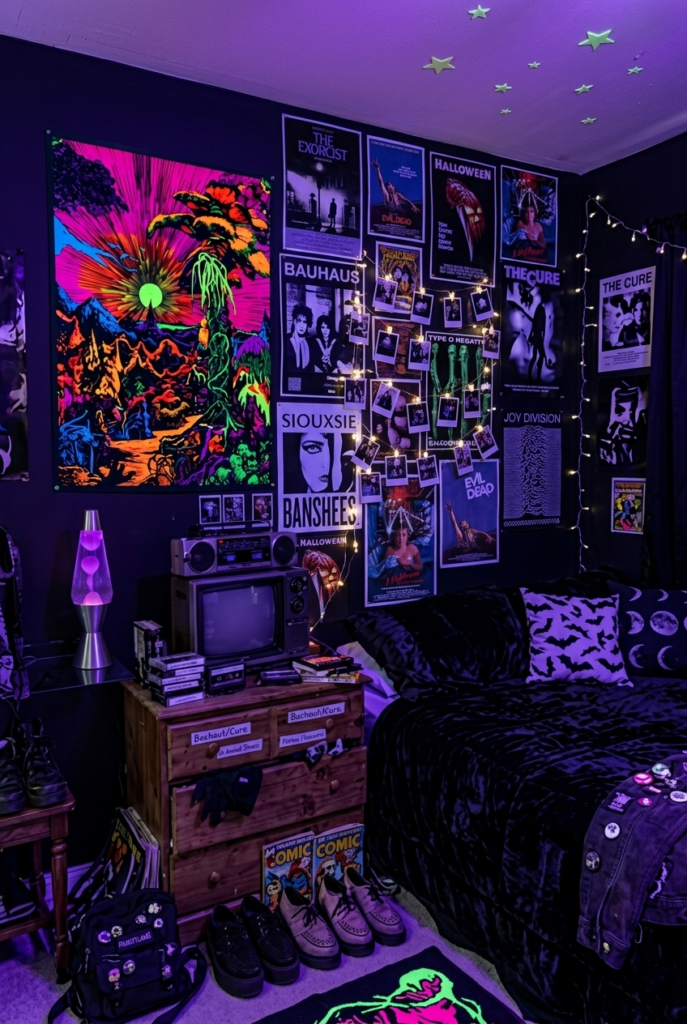
A lava lamp in deep purple, black, or dark red — $20-50 on Amazon — running on the dresser beside the boombox is the single most authentically 90s object you can put in this room. The slow movement of the wax in the low light does something ambient and hypnotic that no other light source in this post replicates, and it was sitting on a shelf in every gothic bedroom from 1994 to 2003 for exactly that reason. Pair it with a UV black light lamp and a fluorescent poster or two — gothic celestial designs, The Craft-era imagery, dark florals that glow under the light — and the room develops a second life after everything else goes off. The black light was the 90s bedroom’s version of mood lighting: cheap, strange, and completely correct. Both the lava lamp and the UV lamp are under $30 on Amazon. Run them together after dark and the room stops feeling like a decorated space and starts feeling like somewhere the 90s never actually ended.
Copy this idea:


Where To Start
The fairy lights first, tonight. Under $15, on Amazon, arrive in two days. Plug them in and turn everything else off. The room will immediately feel closer to what you’ve been picturing. This is the fastest possible transformation available in this post and it costs less than any other single item on the list.
The velvet bedding second. The bed is the room, and the velvet duvet changes how the entire space feels before you add anything else. If you only buy two things from this list, buy these two things.
The poster wall takes an afternoon and costs under $150 for four framed prints. Print, frame, hang, done. The poster wall is the part of the room that makes visitors understand immediately who lives here. It’s also the part that takes the longest because you’ll keep adjusting the arrangement. Start with the Twilight print centered and build outward from there.
The record player is the one purchase worth saving for. It’s the most expensive item in this post at $70-120, and it’s the one that changes what the room sounds like rather than what it looks like. The visual layer builds fast. The sonic layer is what makes the room feel complete on a rainy evening when nothing else is happening and you have nowhere to be.
None of this requires a big room. Bella Swan’s bedroom was small. The Craft girls’ rooms were small. The gothic bedroom aesthetic is specifically not about space — it’s about density and warmth and the specific quality of a room that holds you. A 150-square-foot bedroom with velvet, fairy lights, poster art, and incense feels larger and more deliberate than a 400-square-foot room with none of those things. Build the atmosphere first. The space follows.