I think about kitchens the way I think about gardens — the ones worth spending time in are the ones that look like something is always happening in them. Herbs in terracotta pots on the windowsill that get used before they get dusty. Mason jars on open shelves that are full because things were put in them. A butcher block counter that is marked from actual use. A cast iron pan that has been seasoned so many times it is effectively a family heirloom.
Dark cottagecore is rooted in natural elements, rich colors, and a sense of practical simplicity rooted in agricultural history — it takes the light and airy feeling of spring cottagecore and shifts it into something darker and more serious. Sunlight is replaced with candlelight, coarse linen replaces sheer cotton, and the kitchen becomes less about looking charming and more about actually cooking in it.
The dark cottagecore kitchen is the kitchen of someone who knows what they are doing and has the equipment to prove it. Forest green cabinets that hide nothing. Open shelves with everything on them. Herbs growing in every available window. Copper pots that have been used enough to develop a patina. This is how to build it.
The Look
Dark cottagecore goes for the bolder shades found in nature — hunter green, indigo, cobalt blue, and burgundy are all fair game. Even wine-hued cabinets work, adding a romantic vibe. For fixtures, swap out industrial or stainless steel elements for vintage curves, wrought iron, and worn copper.
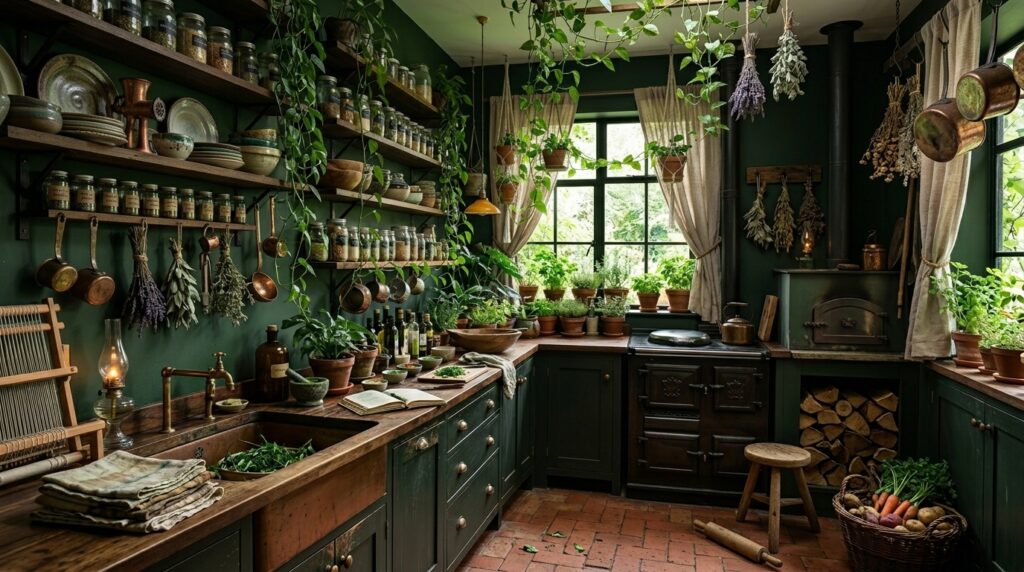
The cabinets are deep forest green — not the cautious, tasteful green of a Farrow and Ball paint card sitting on a kitchen showroom counter, the green of somewhere that has been growing things for a long time. Below them: a butcher block countertop in dark walnut, marked from use, warm and specific in a way that stone never quite manages. Above them: open shelves lined with glass mason jars filled with dried herbs, seeds, spices, and things harvested from the garden before the season ended.
The windowsill is covered in fresh herb pots in terracotta — rosemary, thyme, sage, basil, whatever is in season — growing in the light. Trailing pothos and ivy hang from the ceiling on macramé plant hangers, growing because nobody stopped them. The floor is terracotta tile or dark stone. The light is amber. The room smells like herbs and something simmering and wood and old copper.
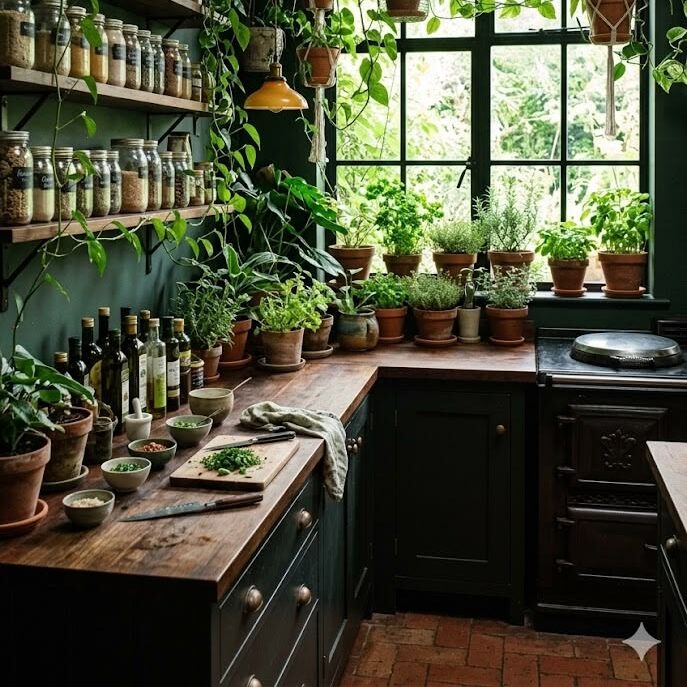
10 Dark Cottagecore Kitchen Ideas
1. The cabinet colour is the decision that makes everything else possible
Deep hues are key in a dark cottagecore kitchen — forest green, rich burgundy, deep navy, near-black — colours that create a sense of intimacy and depth that lighter palettes simply cannot achieve. They are forgiving of everyday cooking splatters and wear in a way that cream and white never are, and they create a richly layered space that feels grounded and enchanting rather than clinical.
Forest green is the correct choice for a kitchen that belongs to someone who grows things — it connects the room to the garden outside it in a way that no other colour does. Deep navy is the correct choice for a kitchen that belongs to someone who takes the evening seriously. Near-black is the choice for someone who has committed entirely and has no interest in being talked out of it.
For renters who cannot repaint: a dark botanical peel-and-stick wallpaper on the wall behind the open shelves, or dark contact paper on cabinet doors, changes the kitchen without a lease conversation. The result is not identical to painted cabinets but it is significantly better than nothing.
2. The open shelves hold everything worth showing
In a moody cottagecore kitchen, practicality and beauty go hand in hand. Instead of hiding everything behind sleek cabinets, celebrate your everyday objects by putting them on display. Open shelves, peg rails, and hooks provide a home for essentials while turning them into visual features. A row of stoneware mugs, a stack of linen napkins, or even a cast iron pan hung on the wall tells a story of daily rituals and quiet routines.
The open shelf is the dark cottagecore kitchen’s equivalent of the apothecary shelf in a witchcore room — a surface that is both inventory and portrait of the person who keeps it. Dark wood floating shelves lined with glass mason jars in graduated heights, filled with dried herbs, whole spices, seeds, and grains. Dark ceramic crocks holding wooden spoons and spatulas. A mortar and pestle in dark stone at one end. A small cast iron pot at the other.
Mix storage containers made of glass, clay, or tin, and label them with handwritten tags or vintage-style labels to add authenticity. The shelf should look like it is used every day, because it is.
3. Dried herbs hang from everything they can hang from
The dried herb bundle is the single most affordable and highest atmospheric return purchase in a dark cottagecore kitchen. A dried herb bundle set — lavender, sage, rosemary, thyme, dried roses — hung from ceiling hooks, shelf brackets, pot rails, and exposed beams in clusters of two and three costs $15–40 and transforms the kitchen’s relationship with its own ceiling.
Incorporating dried herb bundles hung from ceiling beams not only infuses the space with earthy aromatics but also provides convenient access to cooking essentials while reinforcing the kitchen’s connection to traditional homesteading and self-sufficiency.
The dried herbs also do something that no candle or diffuser quite replicates — they scent the room with the specific smell of preserved growing things, which is the smell of a kitchen that knows what it is for. Hang them while they are still slightly fresh and they will dry in place over the following weeks. The room will smell different within days.
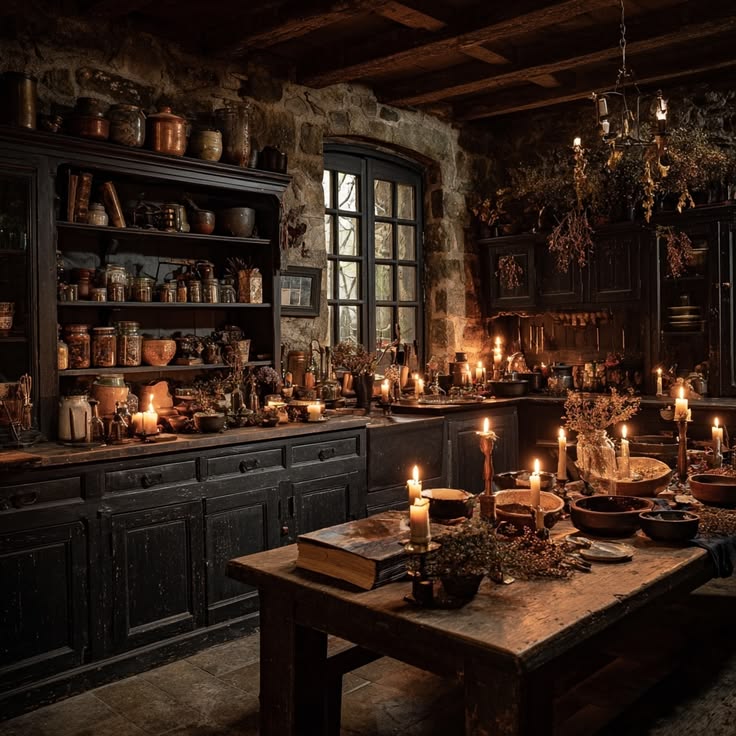
4. The hardware is the kitchen’s jewellery
Hardware is the jewellery of a kitchen, and in a dark cottagecore space, the right metal finishes transform the entire mood. Copper and brass tones are the go-to choices because they introduce warmth, patina, and a sense of history that polished chrome cannot deliver. Unlacquered brass ages gracefully — over time it develops a living patina that deepens with use. This imperfect quality is central to the cottagecore philosophy of embracing beauty in age and wear.
Unlacquered brass cup pulls on dark green cabinets are the most immediately recognisable visual signature of the dark cottagecore kitchen. They are also one of the lowest-cost highest-impact changes in any kitchen — a full set of cabinet hardware costs $40–80 and can be installed in an afternoon without specialist knowledge.
Mix metals with confidence — pair brass cabinet pulls with a copper faucet or aged bronze light fixtures. The cottagecore look thrives on collected, not matched, elements. As long as the metals share a warm undertone they will feel cohesive.
5. The plants are growing in every available window
Instead of tropical houseplants, think herbs in terracotta pots, trailing ivy, or dried flowers in ceramic pitchers. Even in the darkest kitchens, nature still plays a key role — cottagecore celebrates the quiet beauty of the outdoors, and integrating botanical elements softens the space, adding freshness and life to the moody palette.
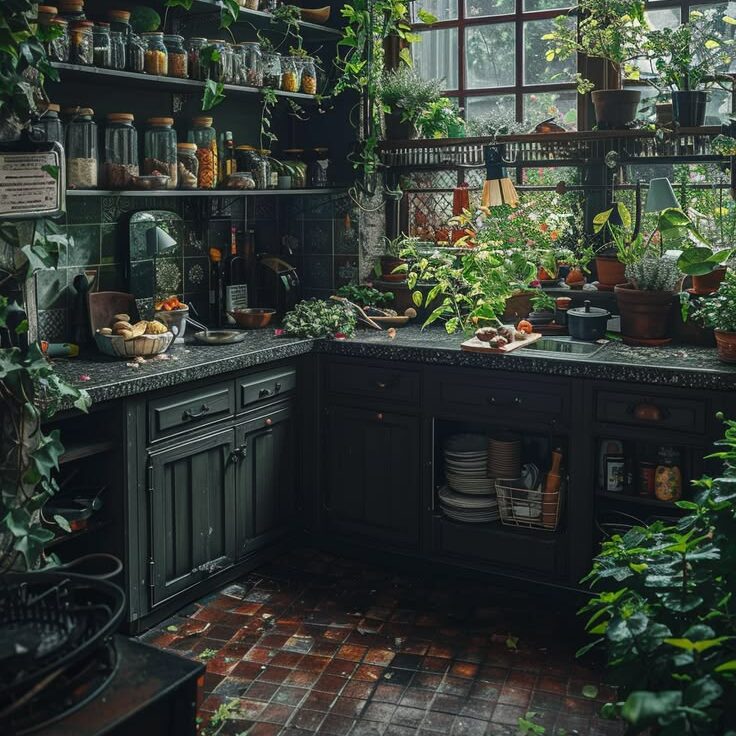
The windowsill in a dark cottagecore kitchen is a working herb garden. Fresh herb plants in terracotta pots — rosemary, thyme, sage, basil, mint — lined up along the sill in the light, within reach of the counter, used regularly enough that they need to be replaced every few months. This is not decoration. This is where the cooking starts.
Above the counter and hanging from ceiling hooks: trailing pothos and ivy in macramé plant hangers. On the counter beside the chopping board: a small terracotta pot of fresh herbs that got moved there during the last meal and never moved back. The kitchen has more plants than was originally planned and this is not a problem.
6. Copper cookware hangs from the ceiling
A copper cookware set hung from a ceiling-mounted pot rack above the kitchen island or above the stove is the dark cottagecore kitchen’s equivalent of the chandelier — the object that catches the light from every direction, that makes the room look like it belongs to someone who cooks seriously, that develops character with every use.
Aged copper, brass, and pewter are easier to work into the dark cottagecore colour scheme than bright silvers and golds. Cast iron, aged wood, and coarse or textured fabric add depth — these are materials that get better with use rather than worse.
The copper pot rack does not require a major installation in most kitchens — a wall-mounted pot rail with S hooks achieves the same visual effect without ceiling anchoring. Hang the copper pots on it along with a cast iron skillet and the room immediately looks like the kitchen of someone who has been cooking in it for a long time.
7. The cast iron is on the stove or it is hung on the wall
Cast iron in a dark cottagecore kitchen is not stored in a cabinet. It is on the stove, or it is hung on the wall on a cast iron pot rack or wall-mounted hook rail, visible and accessible because it is used regularly. A cast iron Dutch oven on the stove with a lid slightly ajar. A cast iron skillet on the back burner that has been there since this morning. A cast iron grill pan hung on the wall beside the stove.
Cast iron that is used regularly develops a seasoning that makes it look genuinely old in a way that new cookware never does. It also cooks differently from anything else — the heat retention, the way things brown, the way it handles the transition from stove to oven — and the dark cottagecore kitchen is a kitchen where how things cook matters as much as how things look.
8. The lighting is amber and layered
Start with warm-toned pendant lights or vintage-inspired sconces over key work areas. Wall-mounted fixtures or lantern-style lights provide a gentle glow. Dimmers are essential — they allow you to shift the mood from bright prep time to soft, intimate evenings. Taper candles in brass holders or tea lights in mason jars bring flickering warmth that fits perfectly with the aesthetic.
A wrought iron or aged brass pendant light above the prep area — not a contemporary pendant, a lantern-style fixture that looks like it was converted from something that burned oil. Brass wall sconces on either side of the window. LED strip lights in warm amber tucked behind the open shelf bracket, lighting the jars from below. Candles on the counter and the table — a brass candlestick with a taper, a glass votive holder beside the herb pots.
The overhead kitchen light is for cleaning. Everything else is for cooking and for sitting in the kitchen after the cooking is done, which is a thing that happens more often in a dark cottagecore kitchen than in any other kind.
9. The floor is terracotta or dark stone
Terracotta flooring is the quintessential cottagecore kitchen floor — its warm reddish-brown tones, natural imperfections, and handmade quality add an immediate sense of history and authenticity. Dark stone tile in charcoal or near-black provides the moodier alternative while maintaining the same aged, grounded quality.
For renters or those who cannot change their floor: a large jute or natural fibre rug in the kitchen, positioned in front of the prep area and the sink, covers whatever floor exists and grounds the room in the organic material palette the aesthetic requires. A terracotta-patterned tile vinyl rug achieves the look of terracotta tile without installation. Neither is identical to the real thing. Both are significantly better than a bare linoleum floor in a dark cottagecore kitchen.
10. The hearth kitchen — the aspirational version
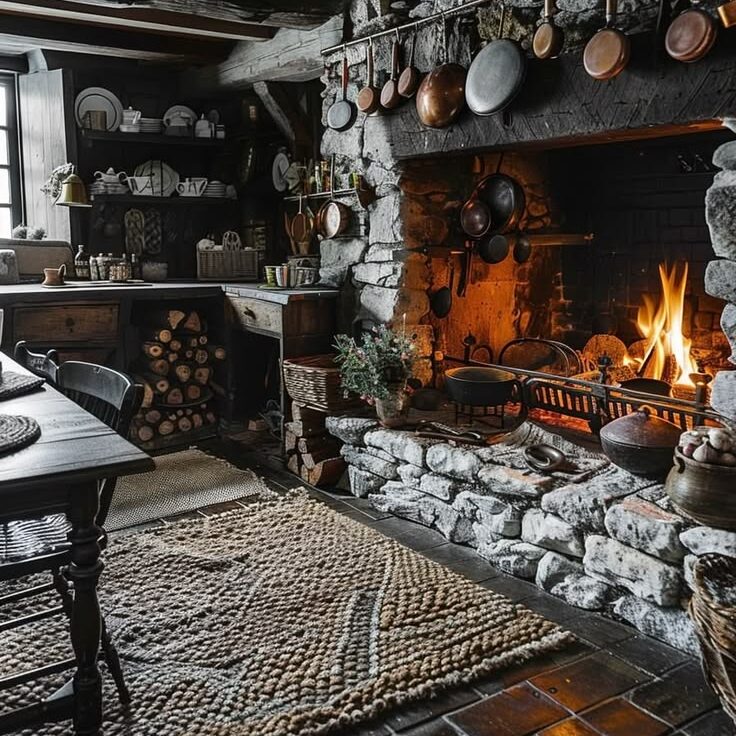
The wood-fired hearth kitchen is the dark cottagecore kitchen taken to its logical conclusion — a stone fireplace where the cooking actually happens, copper pots hanging from a rack above the fire, cast iron over the flame, wicker baskets of firewood beside the hearth, the whole room lit by fire and candle and nothing else.
Most people cannot build a hearth kitchen. But they can build toward its emotional register. A long fireplace match holder in brass on the counter beside a pillar candle in a dark ceramic holder. A wrought iron trivet on the stove surface. A wicker log basket in the corner that may or may not contain wood. A cast iron cauldron or Dutch oven on the back burner with something slow-cooking in it.
The hearth kitchen feeling is not primarily about the fireplace. It is about a room where time moves differently — where cooking takes as long as it takes, where the meal is the point of the evening, where the kitchen is warm and lit from within and smells like something that has been tended all day.
The Counter Still Life
The prep counter in a dark cottagecore kitchen is not cleared between uses. It is the room’s most honest surface — the place where the morning’s bread dough left a dusting of flour that was not entirely wiped away, where the herbs from the garden are sitting in a small glass of water until they get used, where the cookbook is open to a page that has been visited enough times the spine has memorized it.
A dark wooden table, possibly with signs of wear and tear, becomes the centerpiece where family and friends gather. Each piece should feel handpicked and special, adding to the narrative of the kitchen. Incorporate dark patterned rugs or vintage linens to add texture and warmth.
On the counter: a vintage kitchen scale that gets used for baking because cup measurements are approximate and some things require more precision than that. A ceramic crock of wooden spoons and copper spatulas. A linen dish towel folded over the oven handle that has been washed enough times to go properly soft. A bread bin in dark wood or dark enamel that is being used. The counter should look like someone was just in here and will be back.
How To Start
Start with the hardware. A set of unlacquered brass cup pulls on whatever cabinets currently exist — even cream ones, even white ones — immediately moves the kitchen toward the aesthetic. It takes an afternoon and costs $40–80. The kitchen looks different the next morning and will continue looking different as the brass develops its patina over the following months.
Buy the mason jars second. Fill them with whatever is in the pantry — dried herbs, whole spices, rice, lentils, seeds. Line them up on whatever shelf is closest to the prep area. The kitchen now has open shelving even if it does not have open shelves.
Add the herbs to the windowsill third. Three terracotta pots. Rosemary, thyme, sage. Put them in the best light the window offers. Use them when cooking. Replace them when they run out. The kitchen becomes a kitchen that grows things before anything else has changed.
Paint the cabinets when you are ready. Forest green, deep navy, near-black. The hardware you already changed will look even better against a dark ground. The mason jars will look different in the light of a room with dark walls. The herbs on the windowsill will be the brightest thing in the kitchen and that is exactly right.