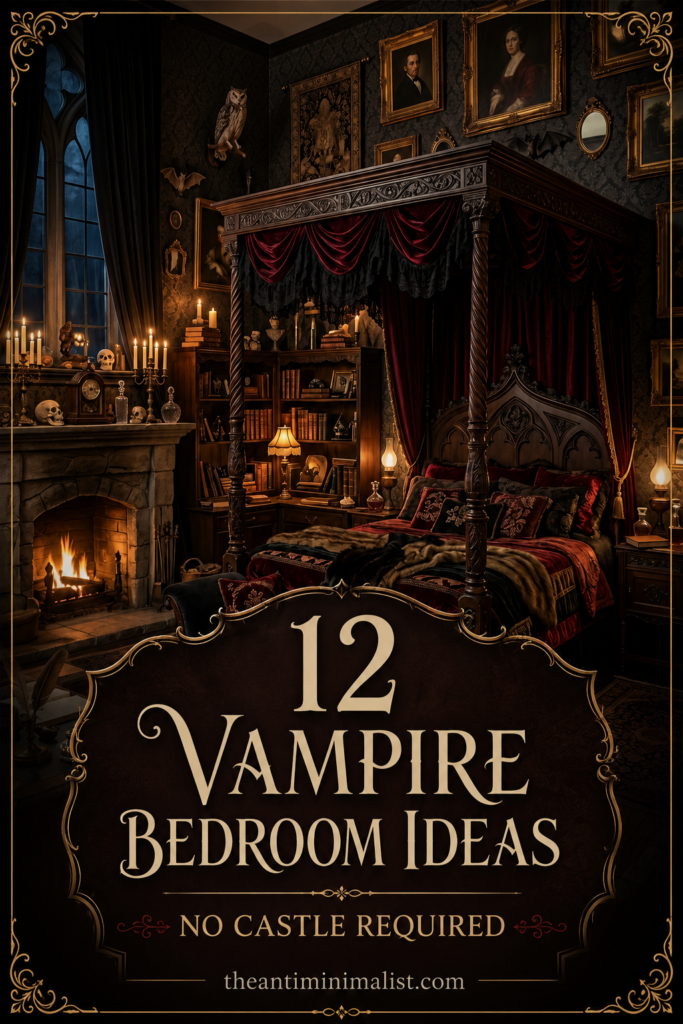
The vampire aesthetic bedroom is not complicated. Velvet duvet in near-black or deep red. Curtains that close completely against the morning. Candles on the nightstand and something wrought iron holding the bed together. The difficulty has always been knowing exactly which products deliver the look without requiring a renovation budget or a centuries-old estate. These 12 are the ones that actually do it — all on Amazon, most under $100, none of them requiring a castle.
12 Vampire Bedroom Ideas
1. Hang Velvet Blackout Curtain Panels That Close the Room Completely Against the Morning
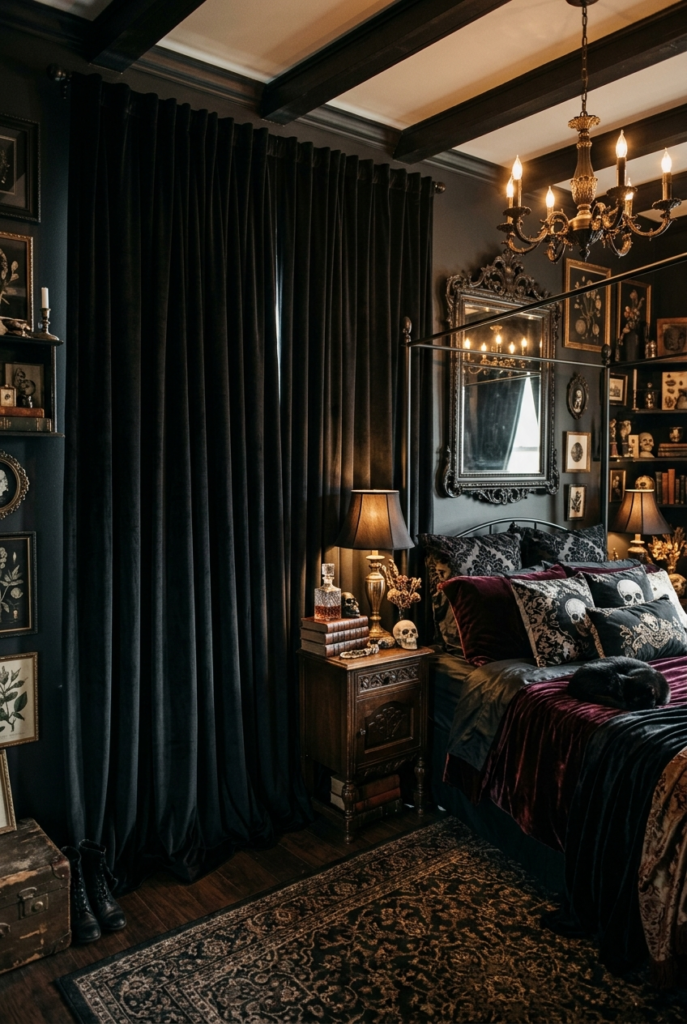
The bedroom starts with the windows. Not the same velvet panels you’d use in the living room — heavier, lined, specifically chosen for their blackout lining that seals the room against daylight entirely when drawn closed. Blood red or near-black, floor to ceiling, pooling slightly on the floor at the hem so they look architectural rather than installed. Layer ivory lace sheers behind them for the hours before you need the room fully sealed — the lace softens afternoon light into something amber and diffuse that the room tolerates without objecting. When the velvet closes, the room becomes a different kind of space entirely: the light quality shifts from whatever the world outside is doing to the specific amber of the candles and the lamps inside. That shift is what the whole room is built around. The curtains make it happen. Everything else follows from them.
Copy this idea:


2. Dress the Bed in Velvet — Deep Red, Near-Black, or Burgundy
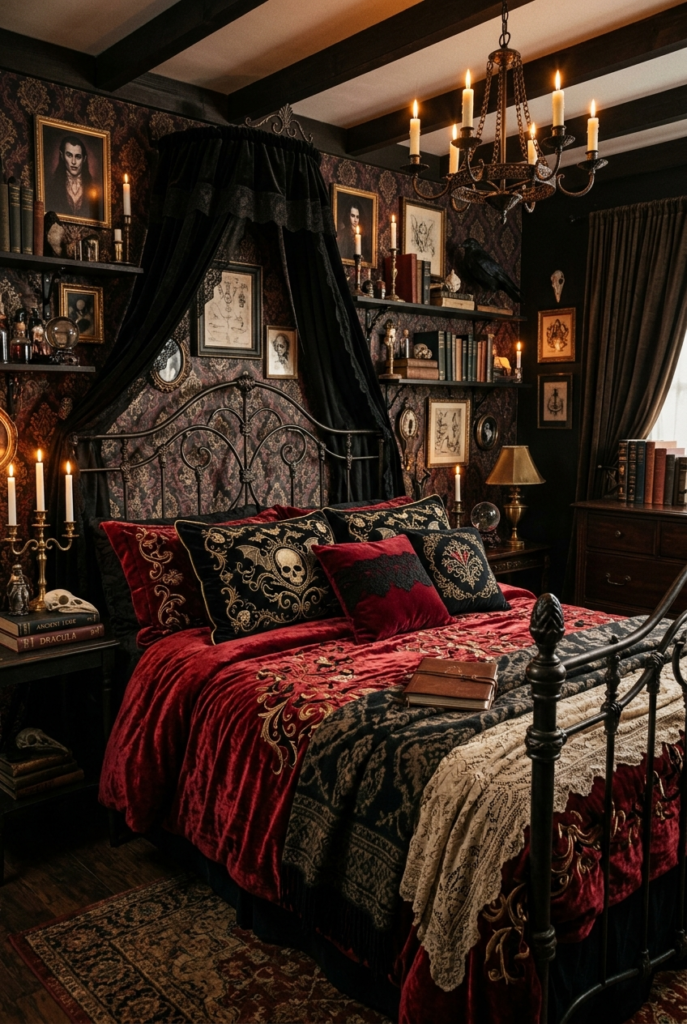
The duvet is the bed’s primary voice. Deep red velvet, near-black velvet, or dark burgundy — any of these, in a duvet cover with enough weight to feel substantial when you pull it over you in the evening. The velvet duvet cover is the most immediate transformation in the bedroom: you put it on an existing bed and the bed stops being an object in a room and becomes the room’s entire purpose. Gothic damask is the alternative for the reader who wants pattern rather than solid velvet — dark design on dark ground, usually in deep burgundy and near-black, with the repeating pattern of a Baroque textile. Both work; the choice is between the room that whispers (solid velvet, absorbed light) and the room that murmurs (damask, reflected light from the pattern). Sleep under whichever version of darkness feels most like yours.
Copy this idea:


3. Lay Silk or Satin Pillowcases Beneath the Gothic Embroidered Shams
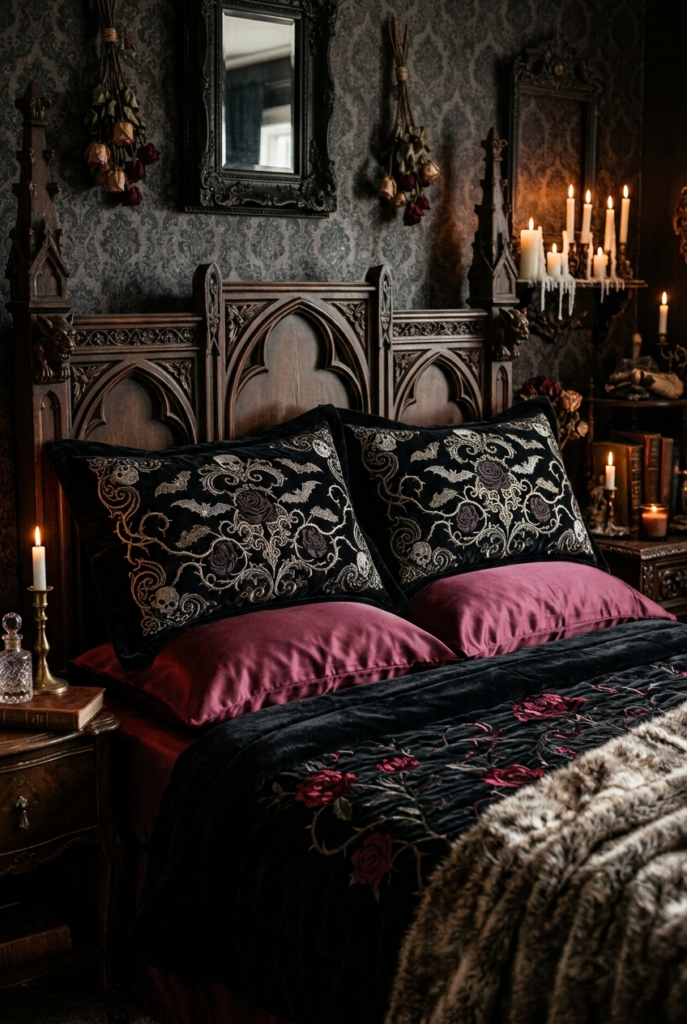
You have been sleeping on silk since silk was an appropriate material to sleep on. The silk or satin pillowcase in deep burgundy — under the gothic embroidered shams that sit in front of them — is the detail your face actually touches at the end of the night, the small luxury that costs $25 and delivers more sensory information than anything else on the bed. The embroidered shams in front: dark florals, crescent moons, gothic rose patterns, whatever motif the bed has decided it belongs to. The silk underneath: purely functional, purely correct, the thing that makes the pillow feel like something the room has always had rather than something you brought home from a department store. The combination of visible embroidery over hidden silk is the bed’s version of the whole apartment’s philosophy — what is on the surface accumulates history, what is underneath provides comfort.
Copy this idea:


4. Layer Velvet Throw Pillows and a Velvet Throw Blanket Across the Foot of the Bed
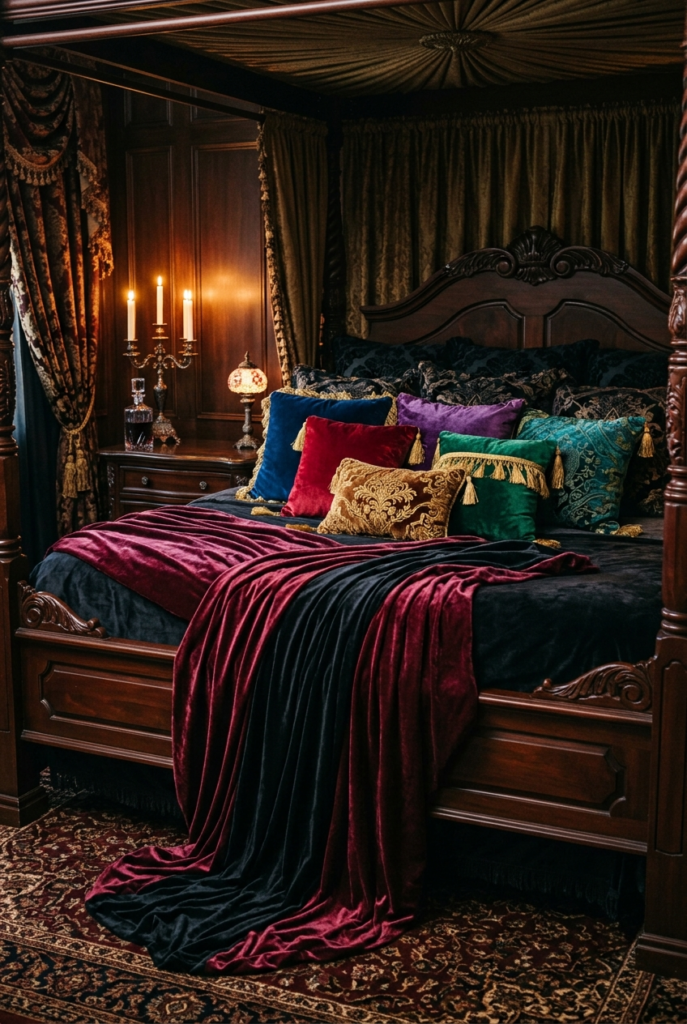
The throw pillows go on before anything else is styled. Four of them in varying sizes — two standard, two smaller accent pillows — in jewel tones: one burgundy, one deep plum, one near-black, one dark emerald or sapphire if the room can hold a contrasting note. Velvet throughout, or velvet mixed with gothic embroidered linen. Stacked slightly in front of the sleeping pillows, not symmetrically arranged, slightly tumbled as though the bed has been read in recently. Across the foot of the bed: a velvet throw blanket in burgundy or deep plum, folded once across the bottom third of the bed and left to drape. Not tucked, not folded into a hotel rectangle. The throw should look like it has been reached for on cold evenings and left where it landed afterward, which is exactly how it has been used for the past several hundred years.
Copy this idea:


5. Choose a Wrought Iron Bed Frame or a Velvet Upholstered Headboard
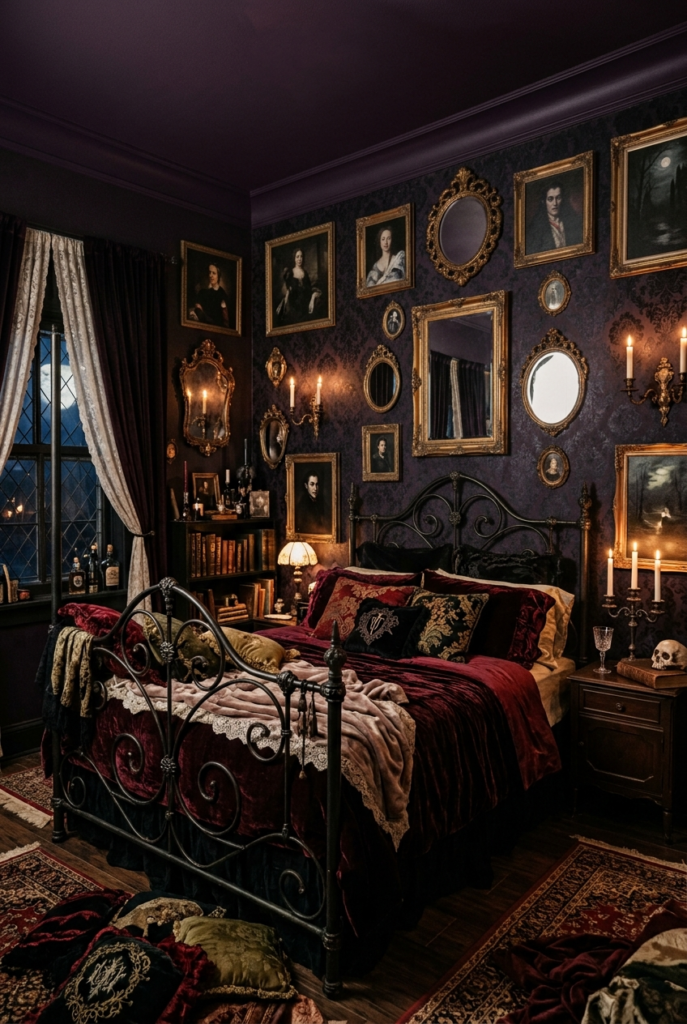
The bed frame is the structural decision that everything else responds to. Two paths, both Amazon-available. A wrought iron bed frame in antique black or dark bronze, with scrollwork along the headboard and footboard — the iron catches the candlelight differently than wood does, adds the weight of old craft, and gives the bed the quality of something that belonged to the building before you moved in. Or a velvet upholstered headboard panel mounted directly to the wall — deep burgundy or near-black button-tufted velvet, tall enough to read against, substantial enough to anchor the whole wall. The wrought iron frame is the more gothic choice. The velvet headboard is the more opulent one. Either is the right answer depending on whether the bedroom is built around drama or around luxury; both are built around the same understanding that the bed is the room’s most important object and should look like it was chosen to last forever. Vampire Romantic Decor
Copy this idea:
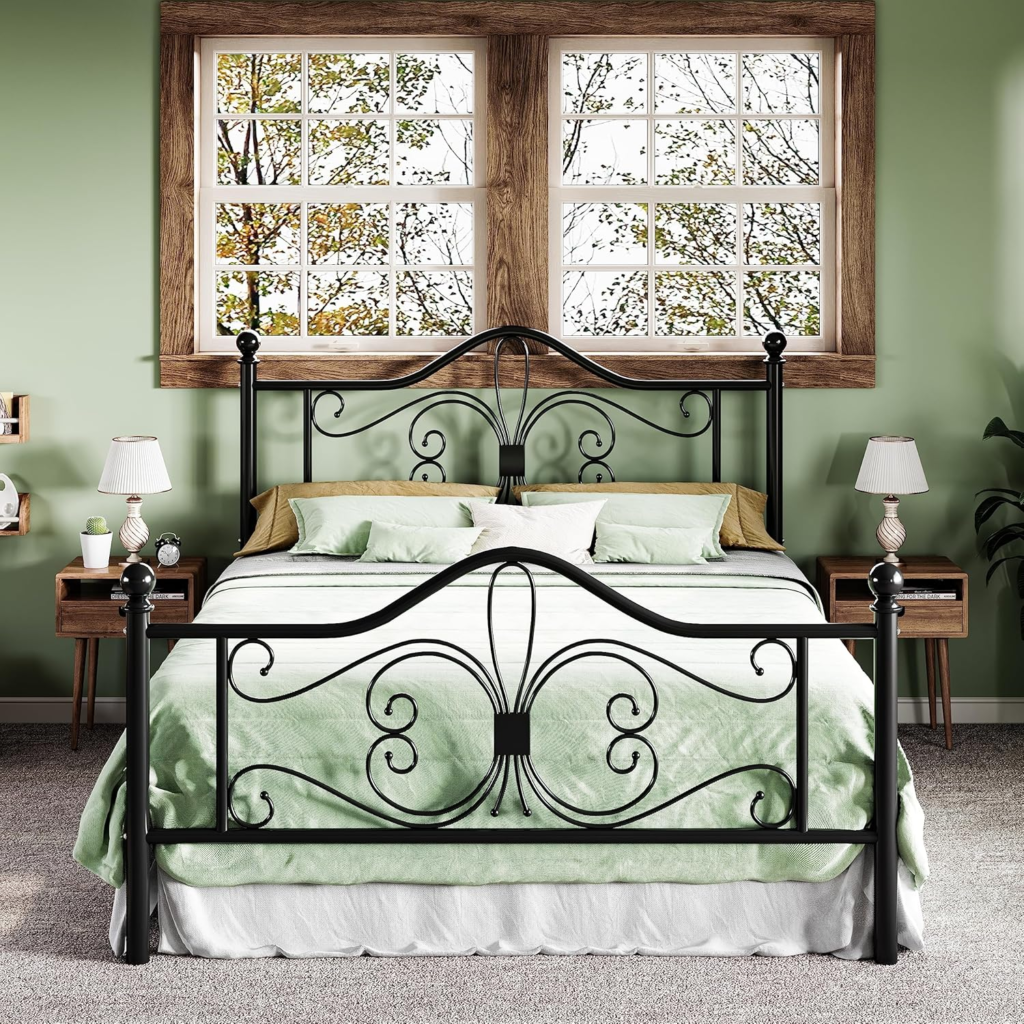
[BUY ON AMAZON — LINK PLACEHOLDER]

6. Create a Canopy Effect With a Double Curtain Rod and Long Lace Panels Above the Headboard
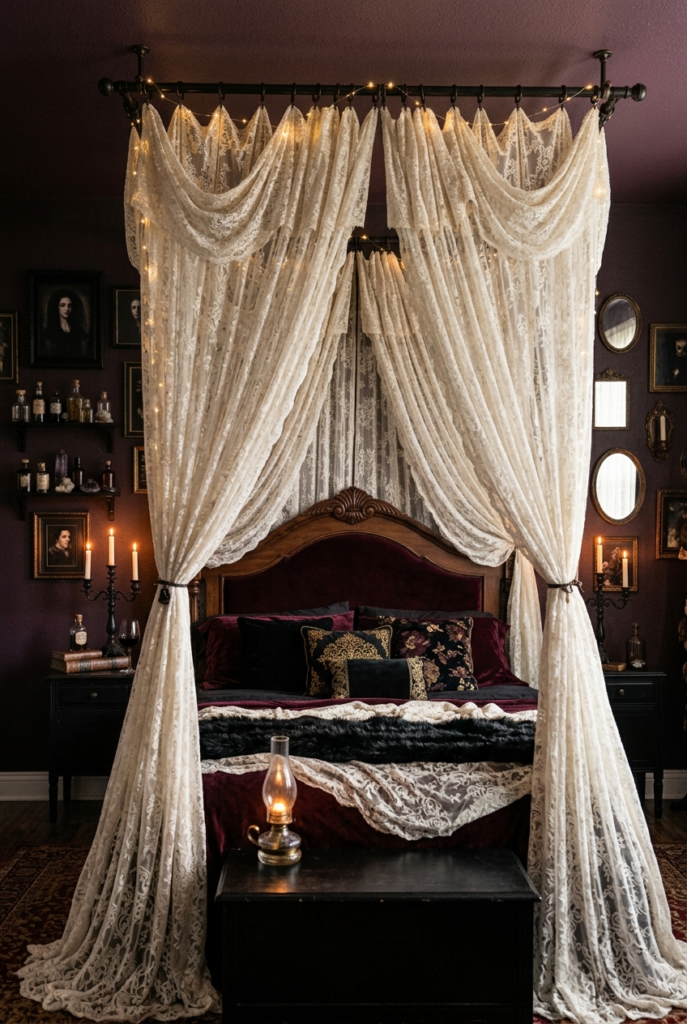
The four-poster canopy bed is the vampire bedroom ideal and the single item most likely to require a budget and a Wayfair cart rather than an Amazon evening. The canopy effect, however, is fully achievable without the frame. A double curtain rod mounted to the wall or ceiling just above the headboard — the front rod holds long lace panels that drape on either side of the bed toward the floor, the back rod holds the wall panels behind. The lace version creates the soft, romantic canopy: ivory or aged white lace falling in loose columns on both sides of the headboard, framing the sleeping space without enclosing it entirely. The velvet version creates the dramatic canopy: long panels of deep red or near-black velvet on either side of the headboard, heavy and deliberate, closing the bed into its own room within the room. Either effect costs under $100 in materials and installs in an afternoon. The result stops visitors in the doorway of the bedroom before they’ve registered anything else in the room.
Copy this idea:


7. Set Brass Tabletop Candlesticks on the Nightstand — Not the Floor Candelabra, the Intimate Version
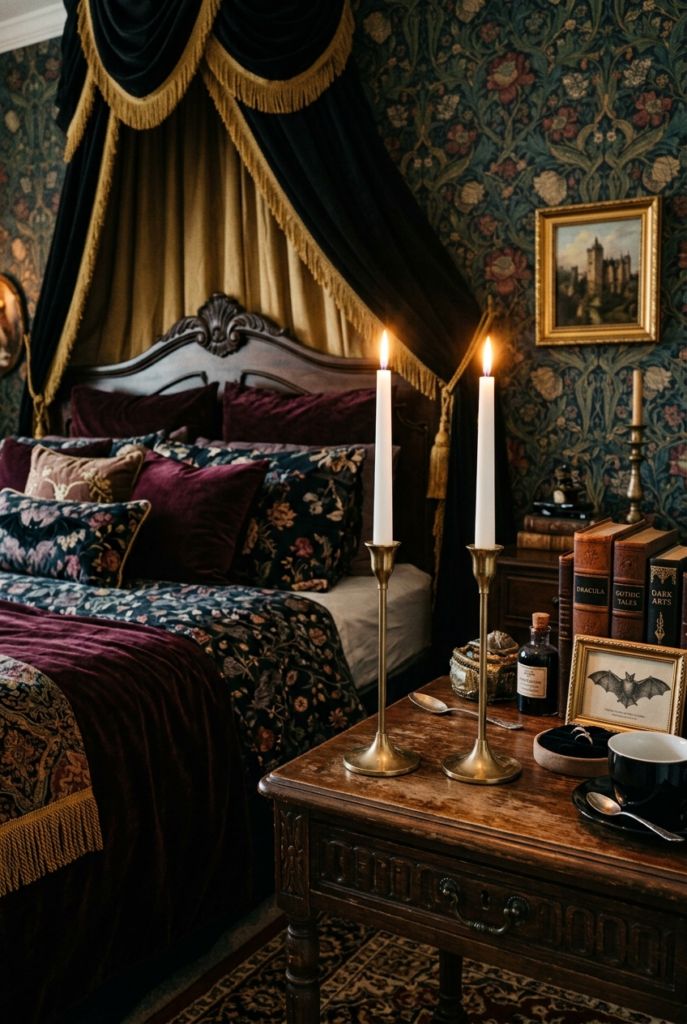
The floor candelabra belongs in the living room — that is the statement piece, the architectural object, the thing that fills the corner of the room. The bedroom gets the intimate version: a pair of brass tabletop candlesticks in varying heights on the nightstand, lit with white unscented tapers, burning through the last hour of reading before the lamp goes out. The candlelight from the nightstand level is the most flattering and most specifically correct light source in the bedroom — it warms the skin, it throws soft shadows across the pillow and the velvet duvet, it makes the room feel sealed and private in a way that overhead light never does. Two candlesticks, not one, not four. Two is the right number for the bedroom: symmetrical enough to feel deliberate, spare enough to feel considered. Let the wax drip. The dripping is the evidence that the candles have been lit on enough evenings to accumulate a history.
Copy this idea:


8. Place a Bedside Lamp With a Deep Red, Black, or Amber Shade on the Reading Side
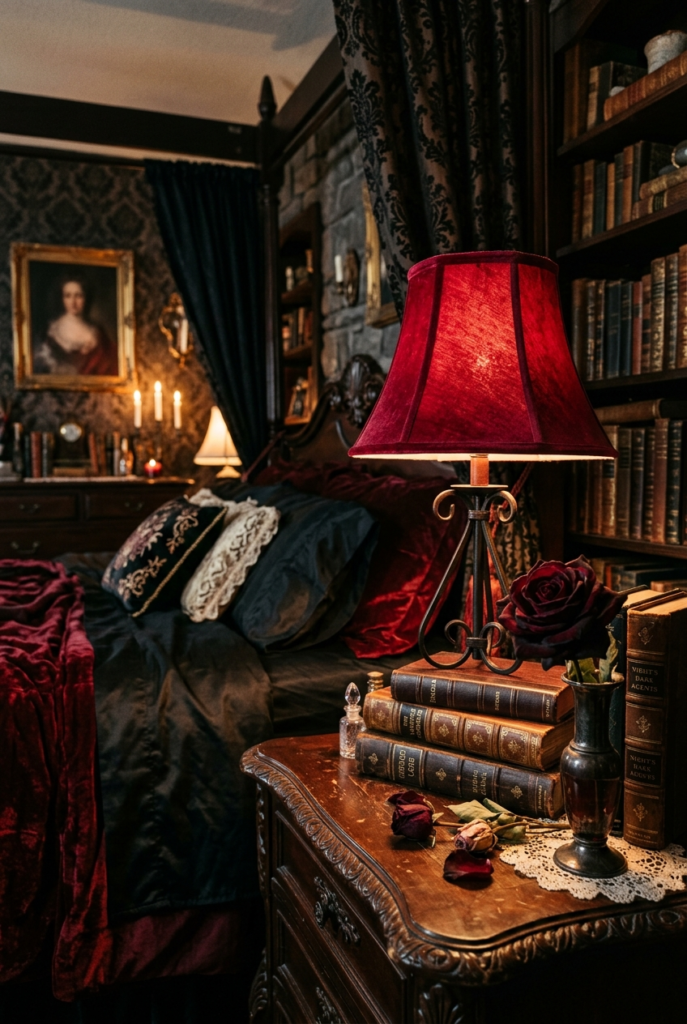
The bedside lamp is the reading light and the last light to go out. Choose one with a deep red, near-black, or dark amber fabric shade — the shade color determines the quality of light the lamp throws, and a red or amber shade turns the bedside circle of light into something warm enough to read by and dark enough to sleep toward. A brass base, or a dark bronze, or a gothic-detailed iron base. Nothing chrome, nothing white, nothing that suggests the lamp was chosen for function rather than character. Position it on whichever side you read from — the nightstand where the leather books live, where the small clock keeps the hour, where the single dark rose in the glass bottle has been sitting since last week. The lamp comes on at sundown. It goes off when the book is closed and the candles have burned low enough to let themselves out.
Copy this idea:

9. Install Brass Wall Sconces Flanking the Headboard for the Ambient Layer
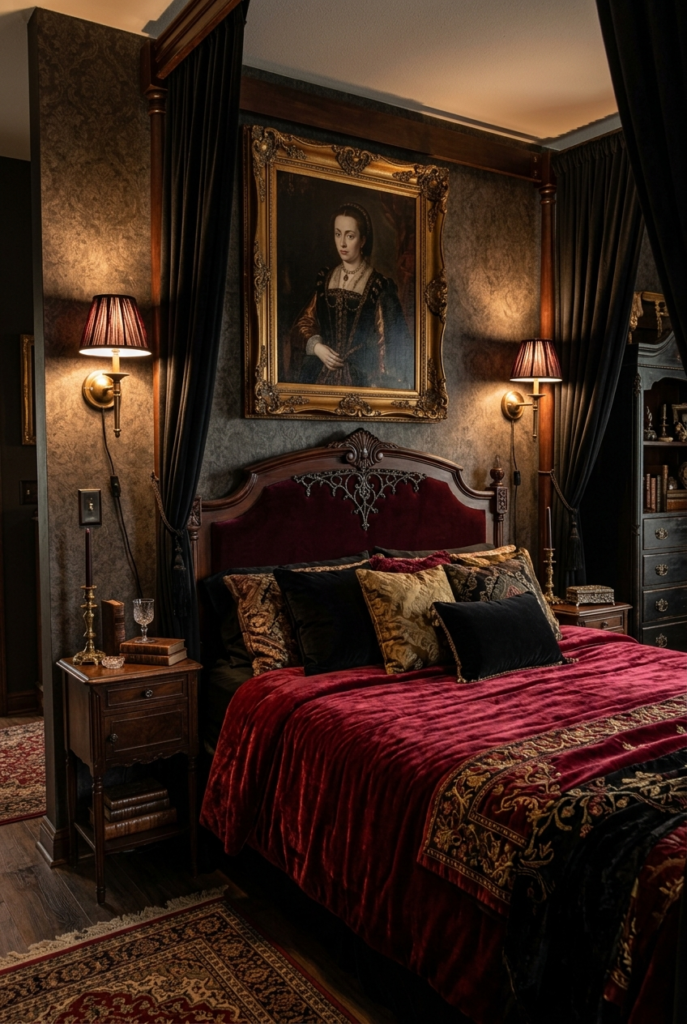
The wall sconces on either side of the headboard are the bedroom’s ambient layer — not the task lighting that the bedside lamp handles, not the accent lighting that the candlesticks provide, but the warm wash of light that makes the wall above the bed and the space around the headboard feel intentional rather than incidental. Brass, plug-in, with a small fabric shade in ivory or amber — mounted symmetrically about eight inches above headboard height on each side. Run them on a dimmer at 20-30% capacity: just enough light to read the portrait above the bed, to see the texture of the damask wallpaper, to give the room its full character. Plug-in versions require no electrical work and route their cords along the baseboard behind the nightstand to the nearest outlet. The sconces should match the brass of the candlesticks and the bedside lamp base — consistent finish across all the metal in the room gives the bedroom the quality of having been furnished deliberately rather than assembled gradually.
Copy this idea:

10. Hang a Single Dramatic Portrait or Gothic Art Print Above the Headboard
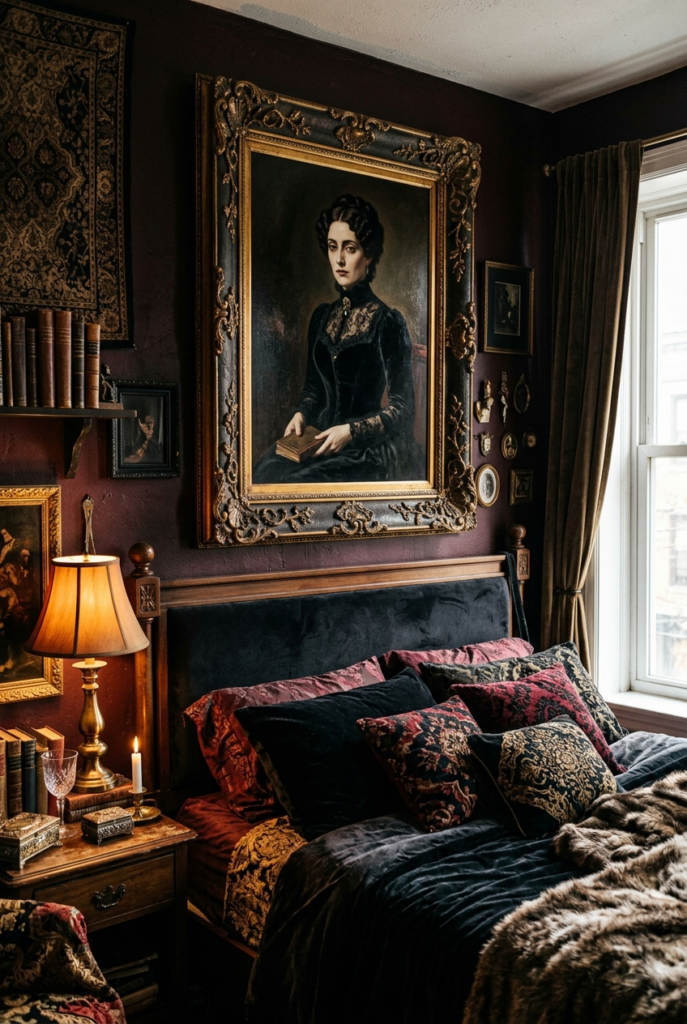
The living room gets the portrait gallery — the cluster of mismatched frames, the accumulation of multiple faces across a full wall. The bedroom gets one portrait, hung above the headboard, centered and deliberate. A single large gothic oil painting print: a Victorian woman in dark clothing with the window behind her, a dramatic landscape in near-black and deep amber, a dark figurative painting with the quality of something old and formally commissioned. Frame it in a single heavy ornate gilt frame and hang it centered above the headboard, high enough that it sits in the space above rather than behind the pillows. The portrait is not decoration. It is the room’s single gaze, the one thing that faces the bed from the wall and makes the space feel like it belongs to someone with a specific taste. Gothic Bedroom Ideas
Copy this idea:

11. Apply Dark Damask Wallpaper to the Wall Behind the Headboard
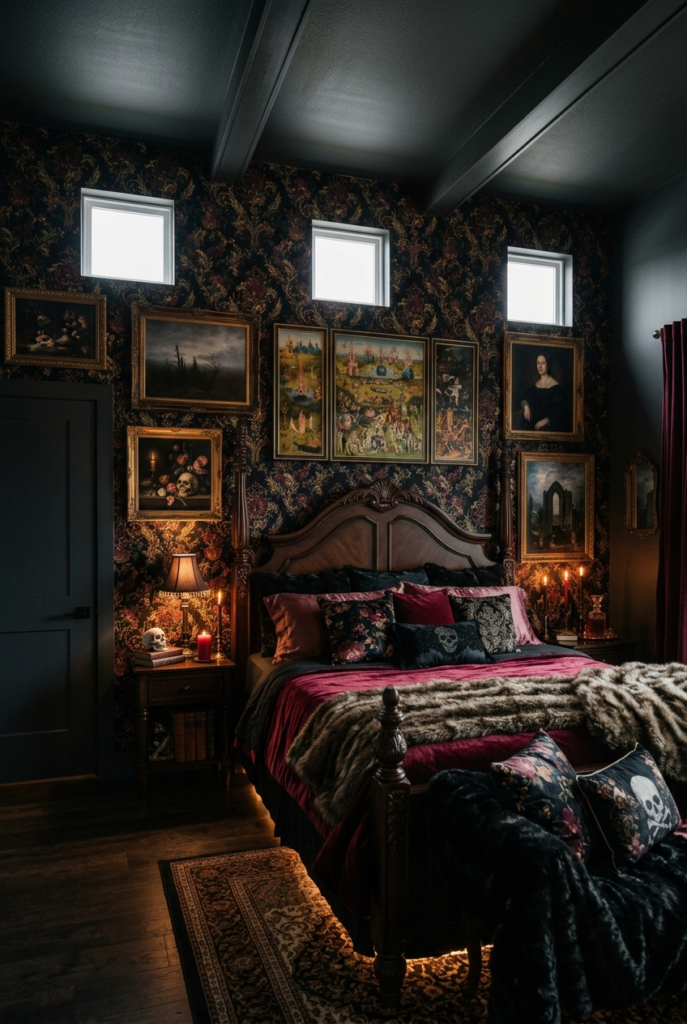
The wall behind the headboard is the bedroom’s single most visible surface — the one the eyes settle on from across the room, the one that frames the portrait above the bed, the one that determines whether the room feels finished or not. Dark damask peel-and-stick wallpaper on this wall only, in deep burgundy and near-black or near-black and antique gold, takes the headboard wall from painted surface to something with texture and pattern and depth. The repeating damask pattern does what paint cannot: it gives the wall the quality of a material that predates the apartment itself. Peel-and-stick versions are renter-friendly, install in one afternoon, and remove without damaging drywall. Cover the headboard wall only — floor to ceiling, edge to edge. The contrast between the wallpapered headboard wall and the painted side walls is correct and intentional: the bedroom is organized around the bed, and the bed is organized around this wall.
Copy this idea:

12. Build the Nightstand — Leather Books, Brass Clock, One Dark Rose, One Crystal Dish
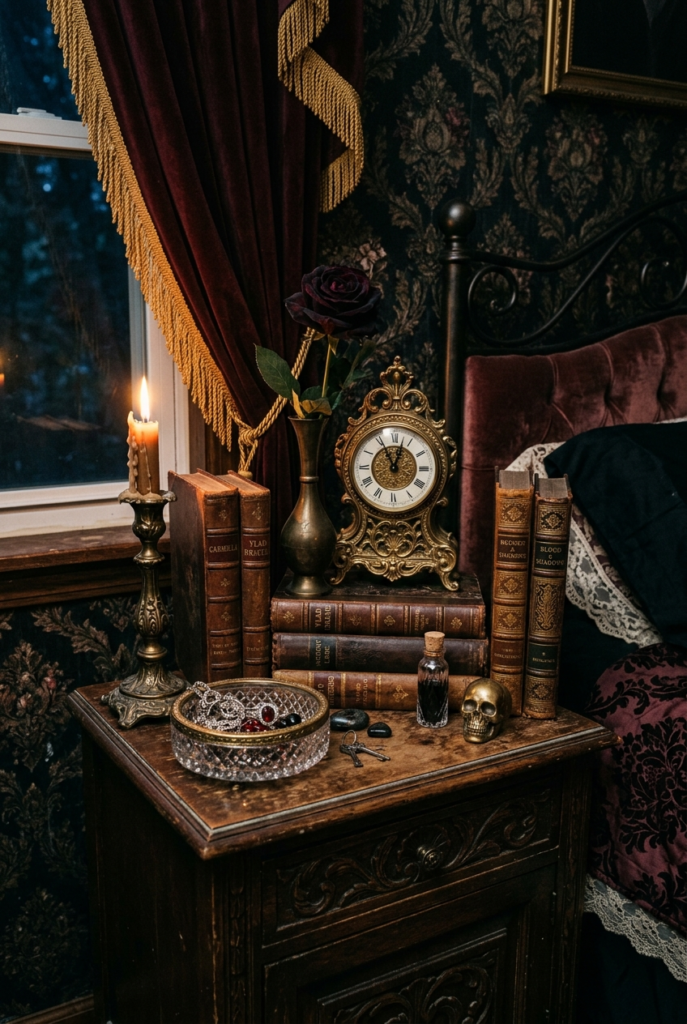
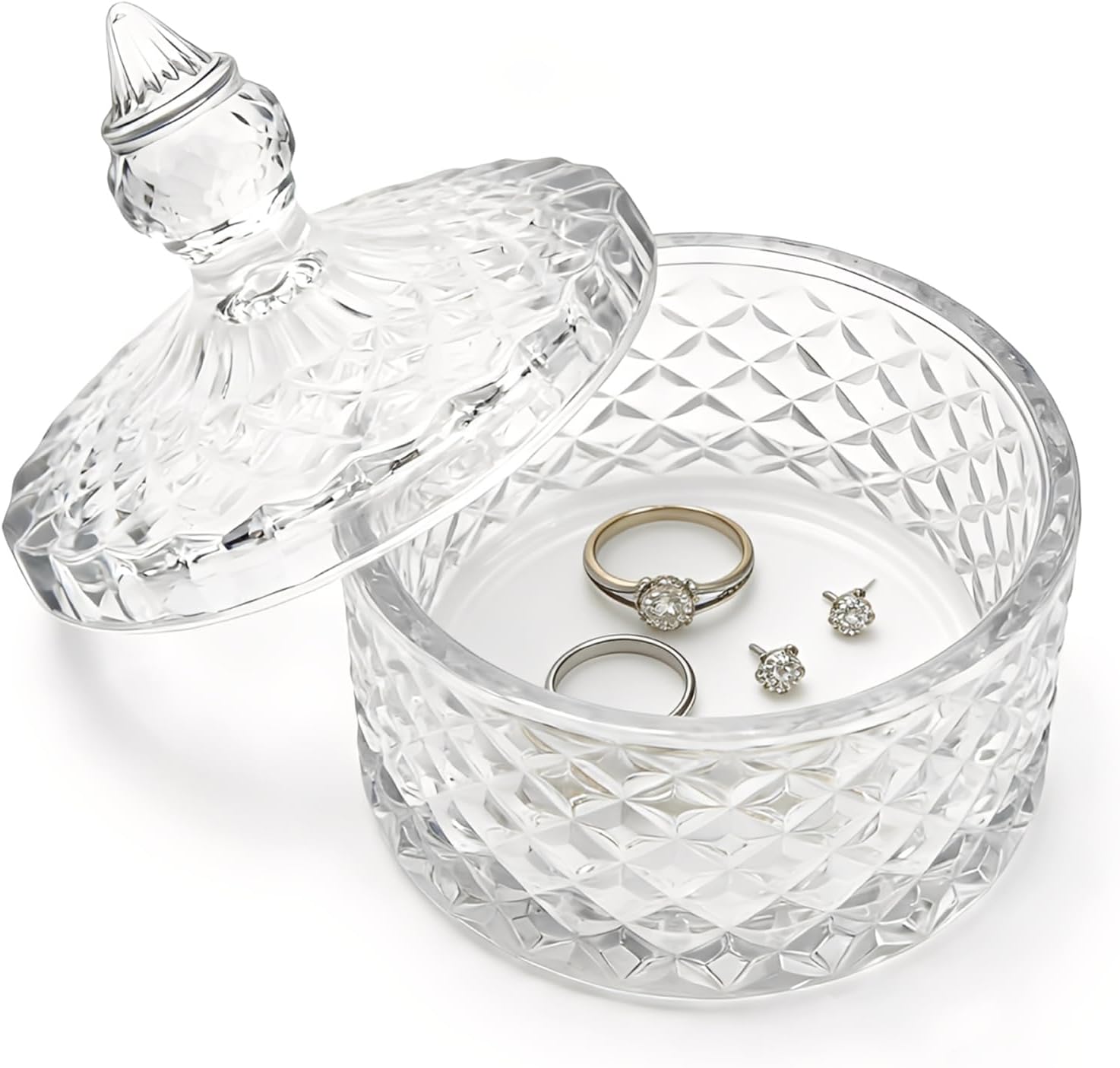
The nightstand is the last thing you look at before the lamp goes out and the first thing you reach toward in the evening. It should contain exactly these things: a small stack of leather-bound books — two or three, the ones currently being read and the ones being re-read, in dark green and burgundy and brown binding; a brass antique-style bedside clock that has kept the same hour in this room for longer than the apartment has had electricity; a single stem of a dark rose — faux or dried, in a small glass bud vase — that has been there long enough to be part of the room’s permanent furniture; and a small crystal dish for the rings and the earrings and the small objects that empty from pockets at the end of the day. Nothing else on the nightstand surface except the lamp and the candlesticks. The nightstand is not a catchall. It is the table of someone who knows exactly what the last hour of the day requires and has been supplying those requirements, reliably, for a very long time.
Copy this idea:

[BUY ON AMAZON — LINK PLACEHOLDER]


Where To Start
The bedding first, tonight. A velvet duvet cover in deep red or near-black transforms an existing bed before any other purchase is made. Put it on tonight and the room shifts into the right register immediately.
The silk pillowcases cost almost nothing and deliver immediately. Under $30, on Amazon, in every dark color the bedroom needs. The moment your face touches them at the end of the day, the bed feels like a different calibration of sleep entirely.
The canopy effect is the single highest-impact visual move after the bedding. A double curtain rod and two panels of ivory lace — total cost under $80 — creates the four-poster canopy effect without the four-poster. Nothing else in this post has the same stop-in-the-doorway quality at that price point.
The wrought iron bed frame is worth saving for. Watch Facebook Marketplace and estate sales — they appear regularly at a fraction of retail. Until one shows up: the velvet upholstered headboard panel does the structural work on the wall while you wait.
The nightstand is last and costs almost nothing. The leather books, the brass clock, the dark rose, the crystal dish — under $100 combined and they represent the difference between a bedroom that looks decorated and one that looks lived in. Dark and Cozy Reading Nook Ideas