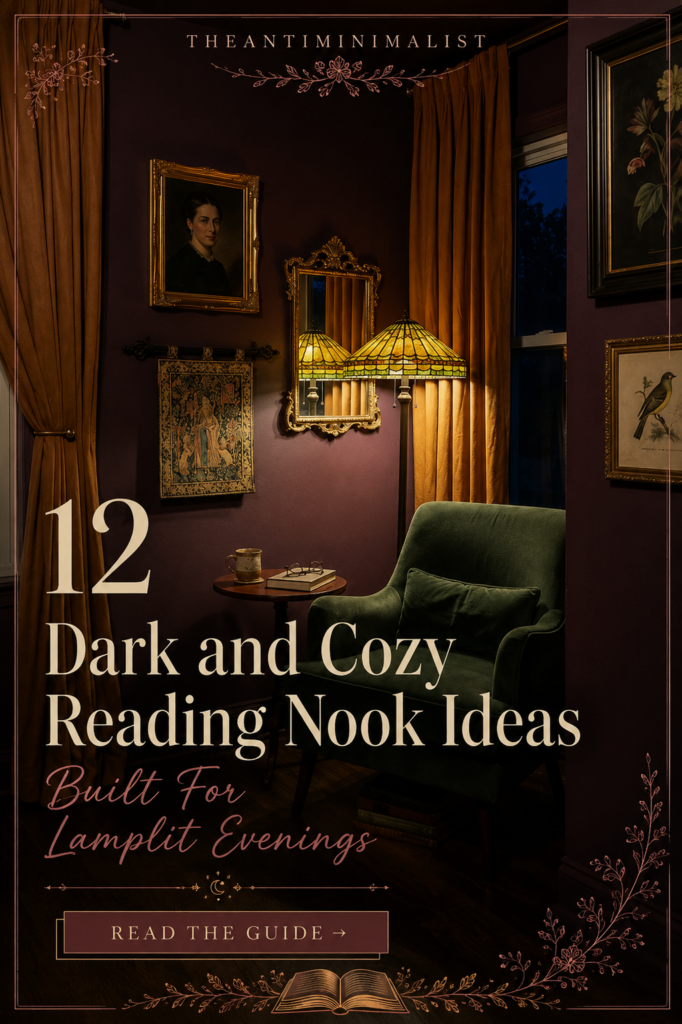
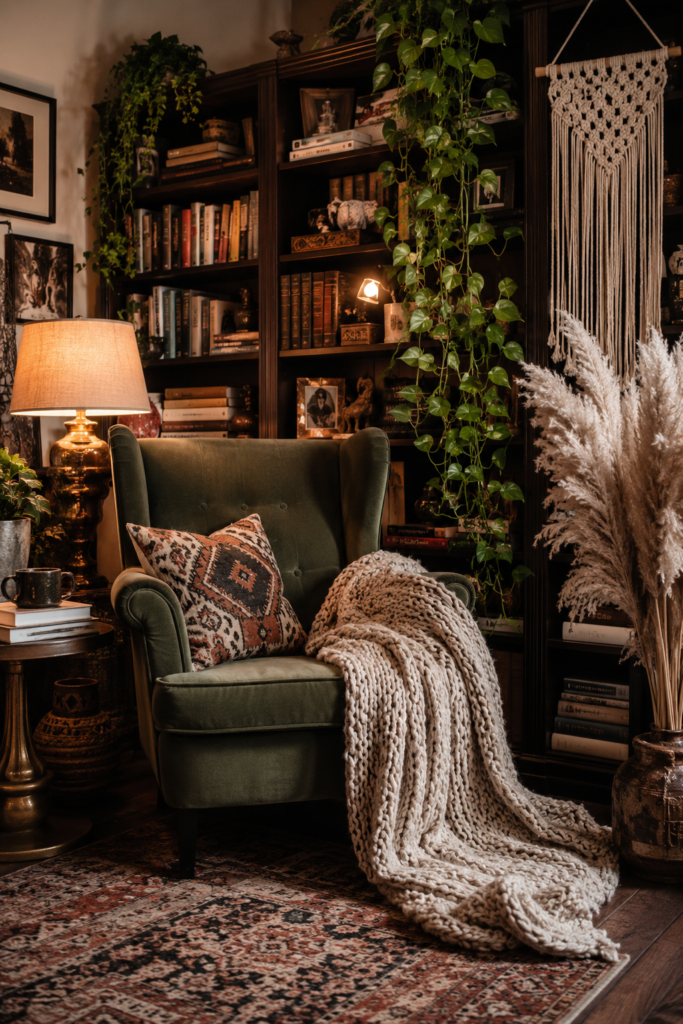
A dark cozy reading nook is the room within the room — the small claimed corner where the overhead light goes off, the lamp goes on, and three hours quietly disappear. It can be any aesthetic, bohemian, dark academia, goth, but what unites them are the same essentials: a chair that holds you, a lamp that throws warm coloured light, a throw heavy enough to drown in and enough books within arm’s reach that you never have to get up.
The 12 ideas below build that corner for maximum cozy.
12 Dark Cozy Reading Nook Ideas
1. Lay a Persian or Vintage Wool Rug Beneath the Chair Before Anything Else
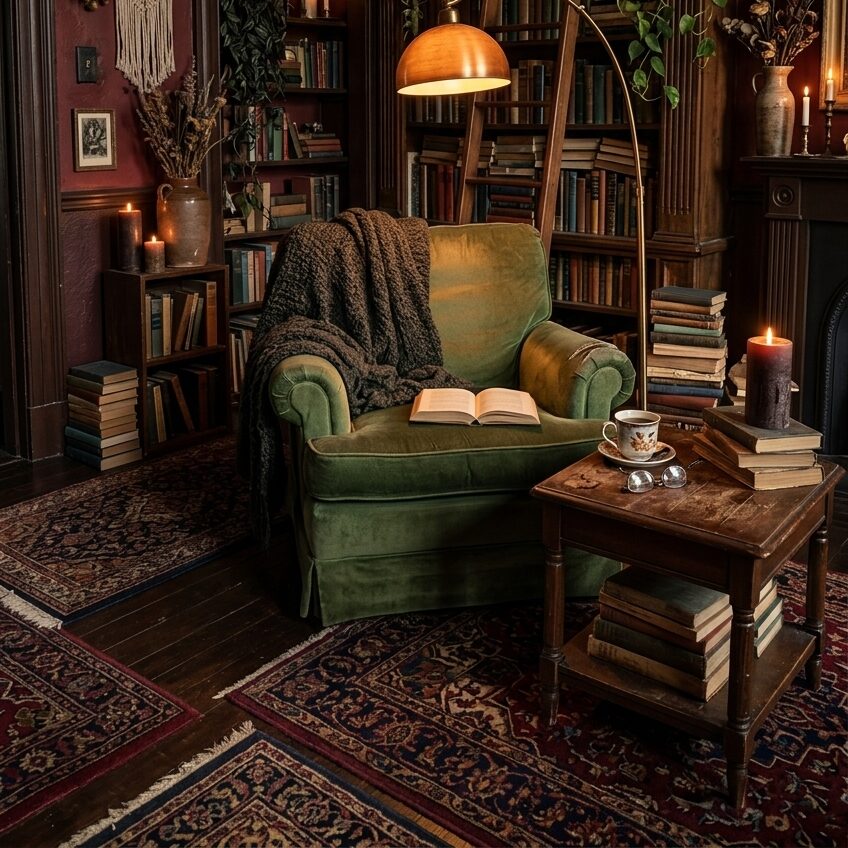
A reading nook needs a defined floor, and the rug is what defines it. A 5×7 or 6×9 Persian in burgundy and navy, or a vintage-style wool rug in cream and dark patterned tones, anchors the corner and tells the rest of the room where the nook ends and the regular living space begins. Even a small rug under the chair and the side table is enough — the boundary is the point. If you’re working in a corner of a room rather than a dedicated alcove, the rug is what turns “a chair in a corner” into “a reading nook” in a single decision.
Copy this idea:

2. Choose a Wingback or Club Chair You Can Read In For Three Hours Without Shifting
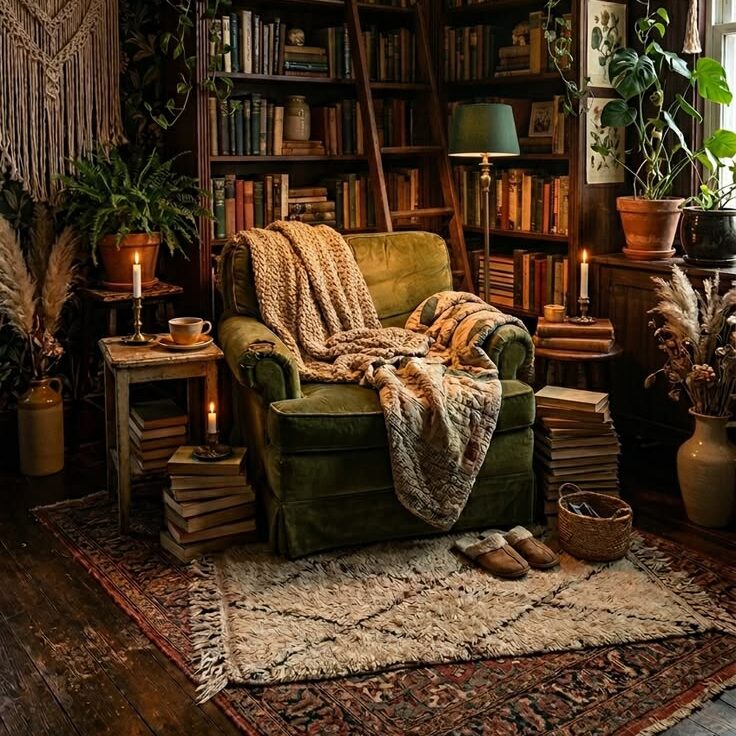
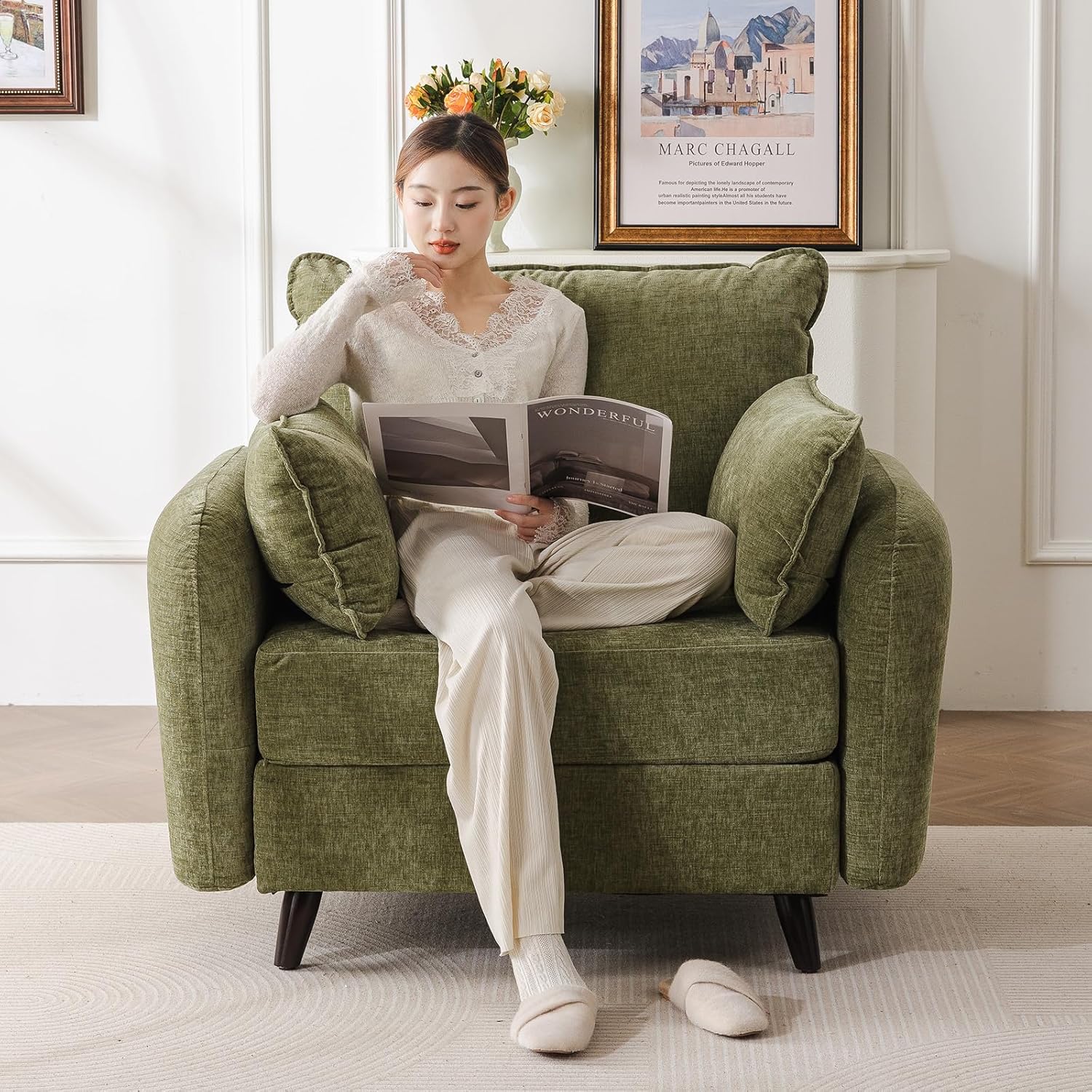
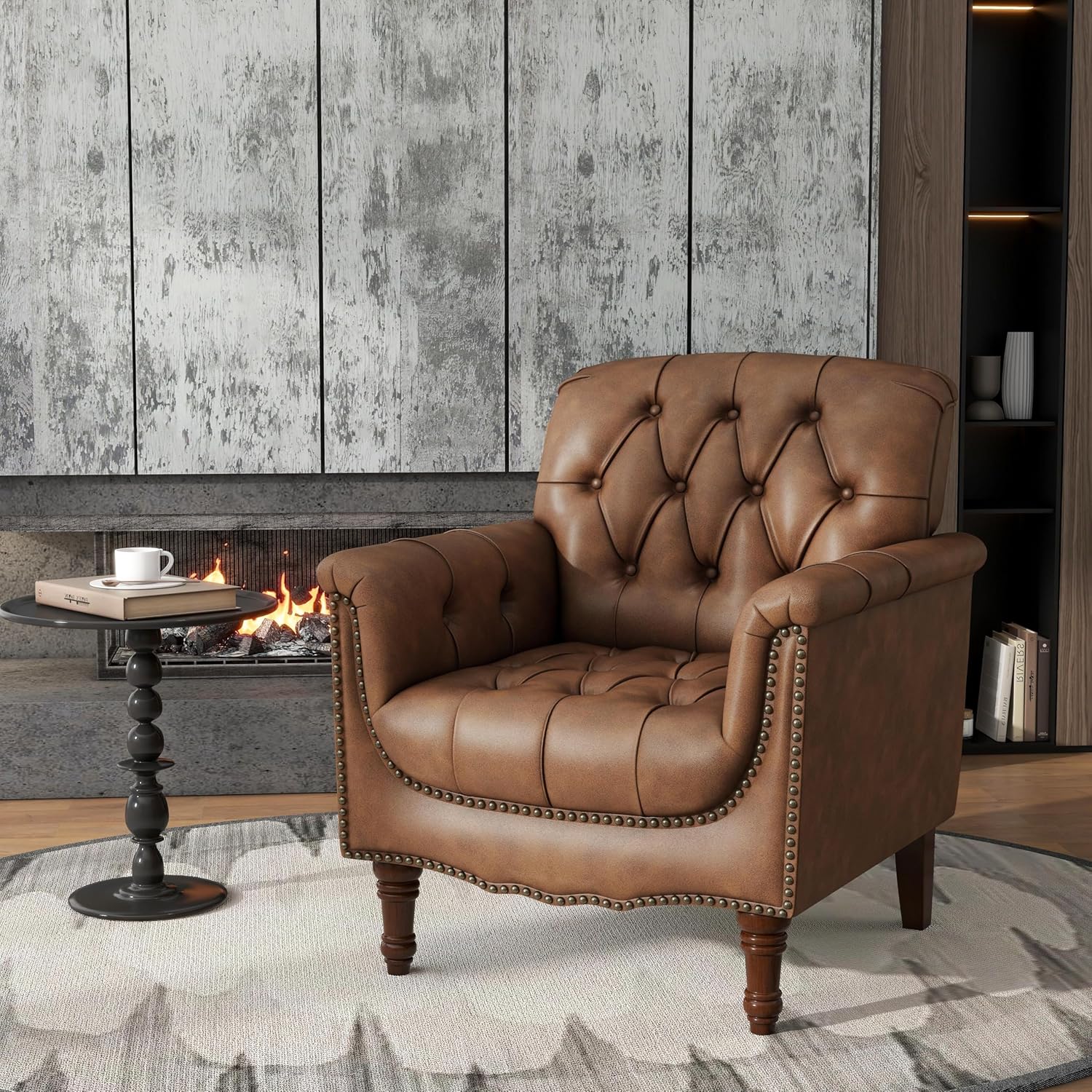
The chair is the room. A deep green velvet wingback, an oxblood or tan leather club chair, a charcoal velvet armchair with rolled arms — the specific finish depends on the rest of your house or what specific vibe you’re going for, but the criteria don’t change. Wide enough to tuck your legs under you. Deep enough to lean back without slumping. Arms tall enough to rest a book against. The best option is to inherit or check out some garage sales, but barring that hassle, there are some great options on Amazon. The chair you buy for the nook is the chair you’ll spend more hours in than any other piece of furniture in the house, and the small comfort decisions matter more here than in any other room. So it’s important to spend a little more to ensure you’re comfortable.
Copy this idea:
3. Build the Nook Into a Bay Window, Alcove, or Built-In If You Have One to Work With
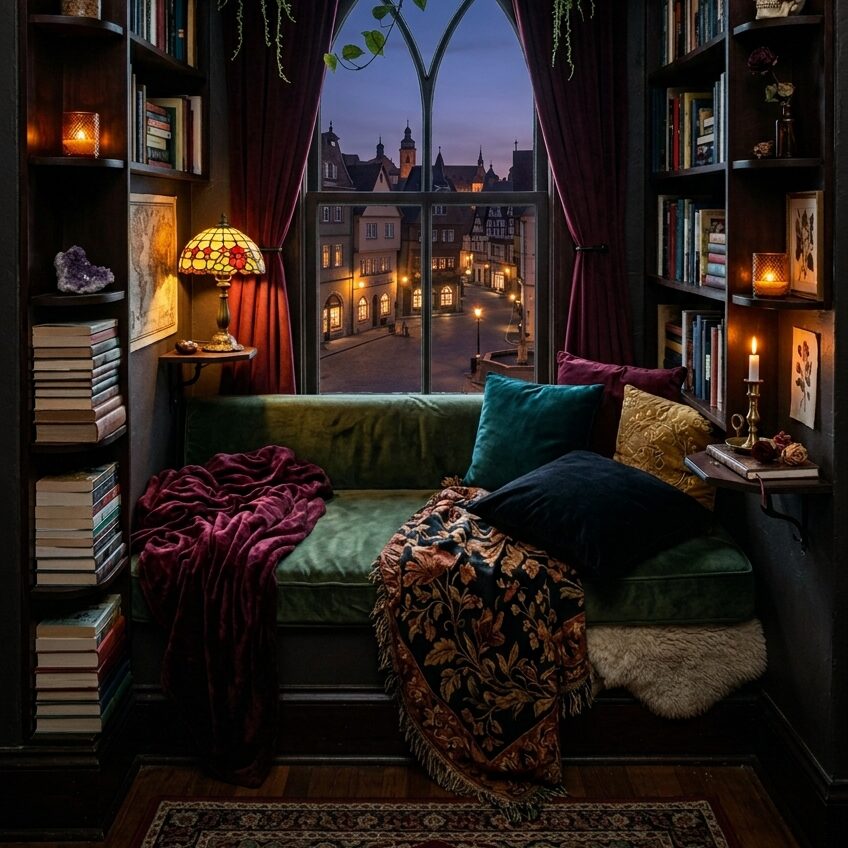
A window seat is the reading nook of best-case architecture, and you don’t need a Victorian house to have one. A bay window, an arched alcove, or a bench beneath a regular window all work. The components are the same: a deep cushion in velvet or heavy linen, three or four mismatched throw pillows in jewel tones — teal, burgundy, mustard, deep green — and a throw blanket folded at one end. If your window seat is short on built-ins, push a small bookshelf against the wall at one end to create the alcove effect. The product below is completely customizable based on your bench or seating area.
Copy this idea:

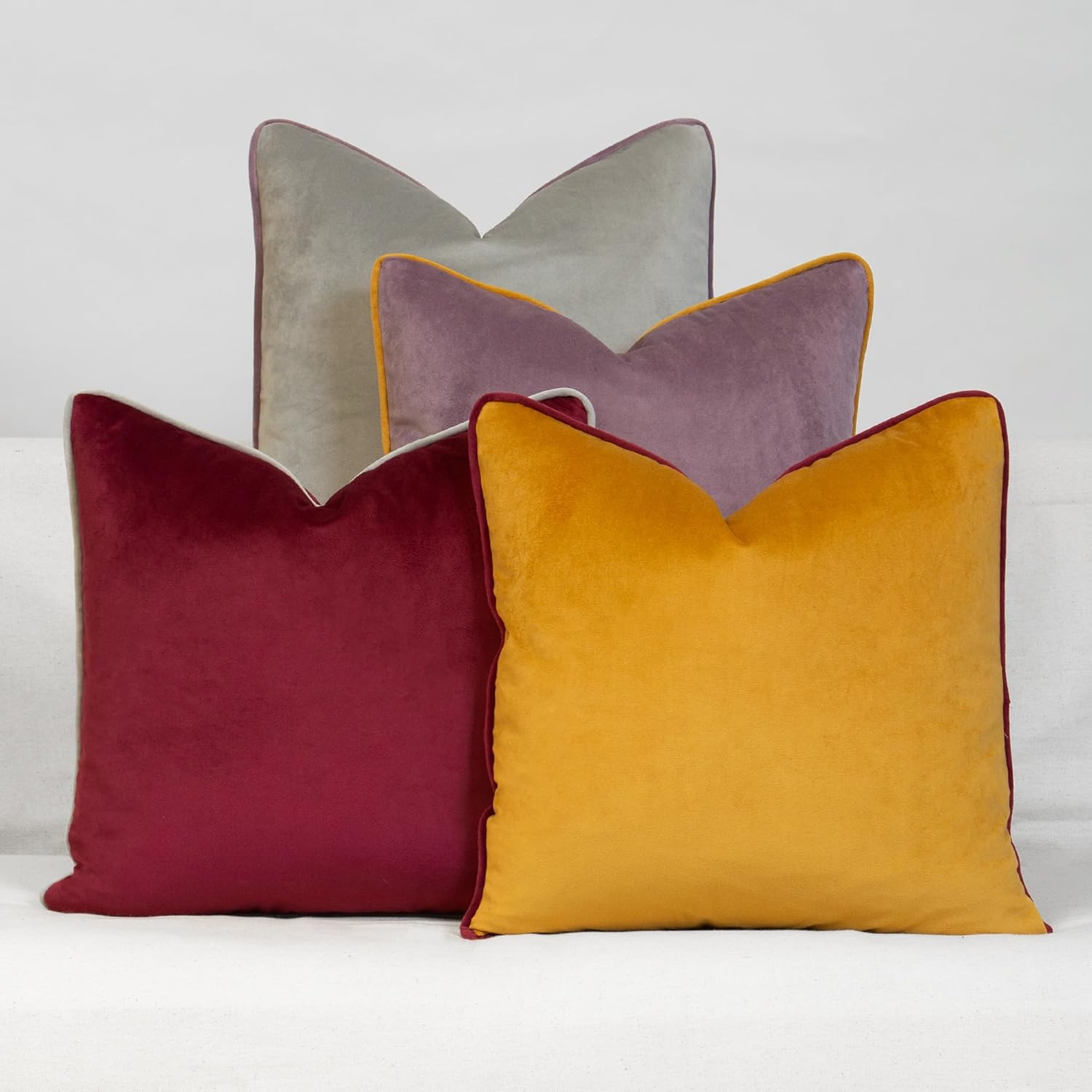
These come in many different patterns and color combos to match your space.
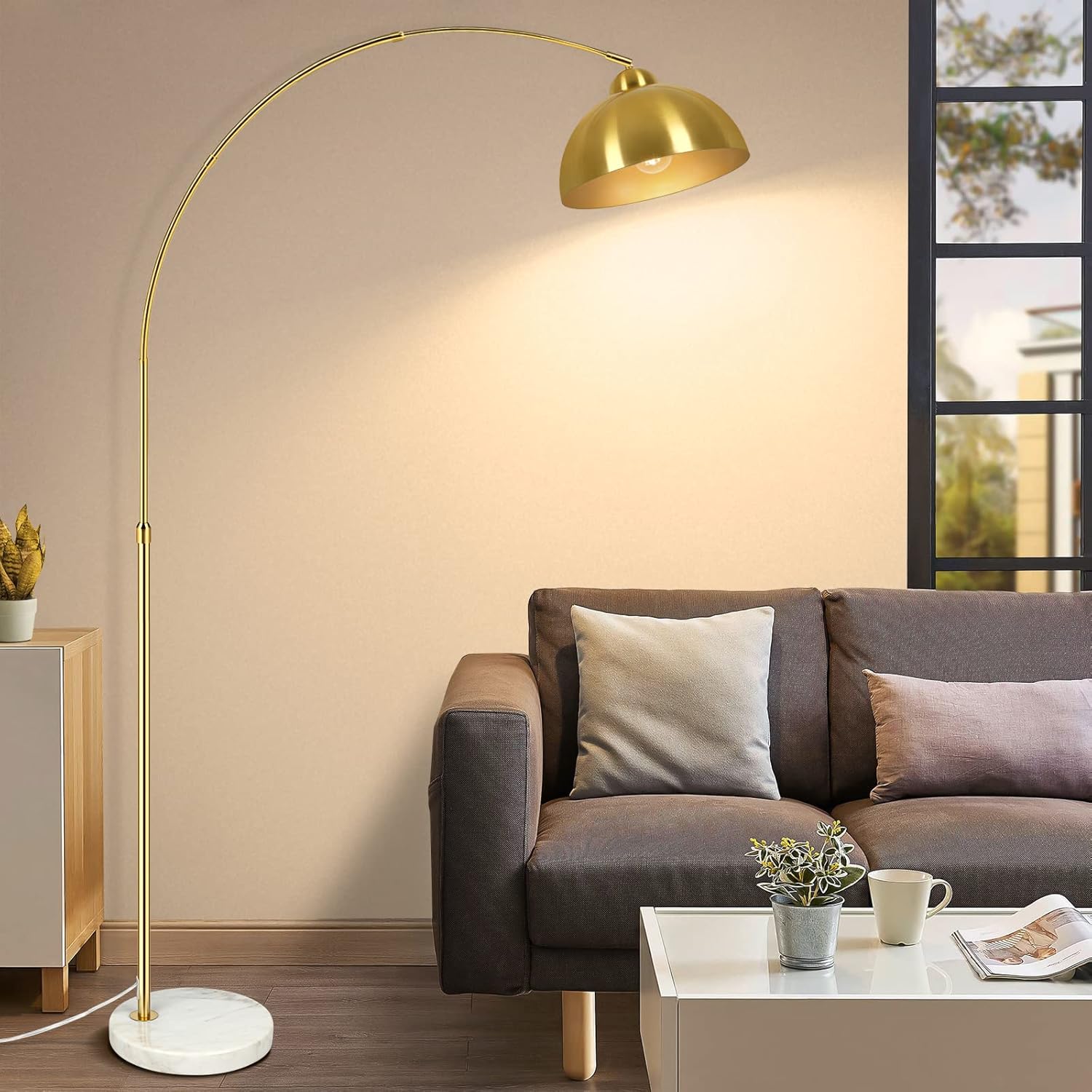
4. Light the Nook With a Brass Arc Floor Lamp That Reaches Directly Over the Reading Chair

The lamp is the single most important object on any dark academia and dark bohemian Pinterest boards, and the reason is straightforward: it puts directional warm light exactly where the reader needs it. The bronze arc lamp reaches out over the chair from a base set behind or beside it, so the light falls onto the page rather than into your eyes. Choose a dome or orb shade in aged brass, fit it with a warm 2700K bulb, and turn off the overhead the moment the sun goes down. The lamp does in one purchase what a ceiling fixture cannot.
Copy this idea:
5. Mount a Brass Swing-Arm Wall Sconce Beside the Seat — Rental-Friendly and Plug-In
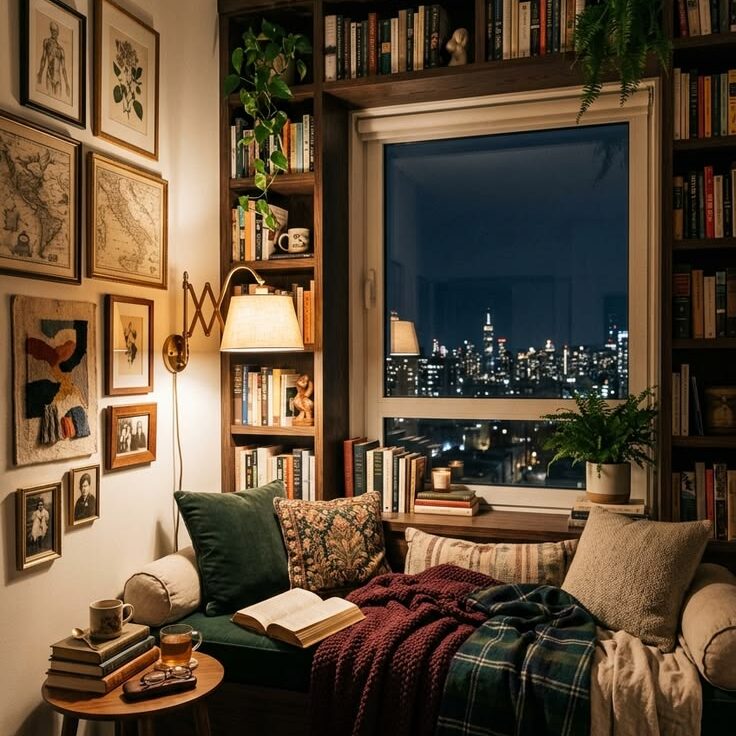
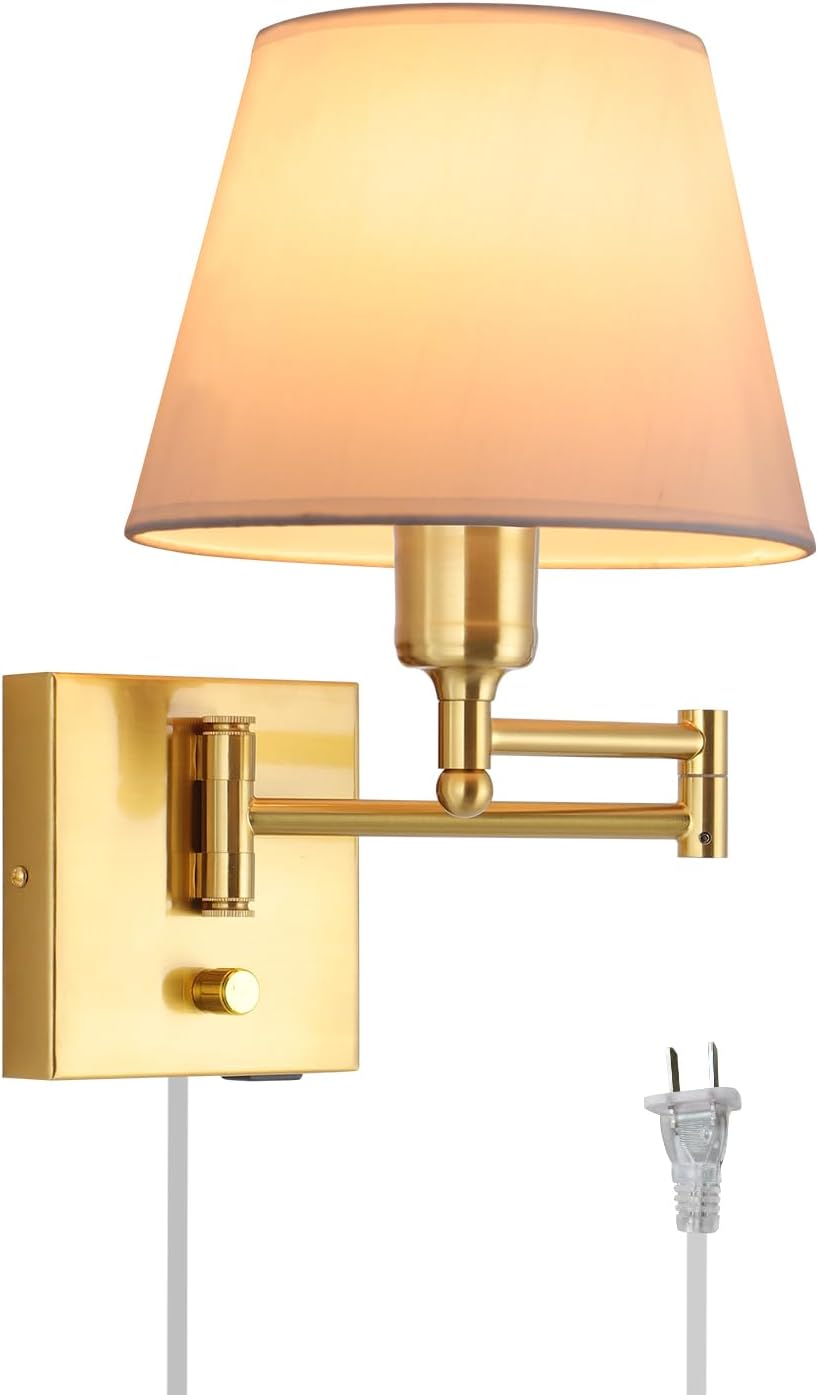
If a floor lamp won’t fit, or you’re working with a window seat or a built-in alcove, a brass swing-arm wall sconce is the better answer. Plug-in versions don’t require electrical work, the arm extends and retracts so you can position the light over your book and out of the way when you stand up, and the brass finish reads as inherited rather than installed. Mount it about 18 inches above the seat height on whichever wall sits beside your reading position. This is one of the highest-impact lighting decisions available to renters, and it costs less than most floor lamps.
Copy this idea:
6. Add a Tiffany Stained Glass Lamp on the Side Table for a Second Layer of Coloured Light
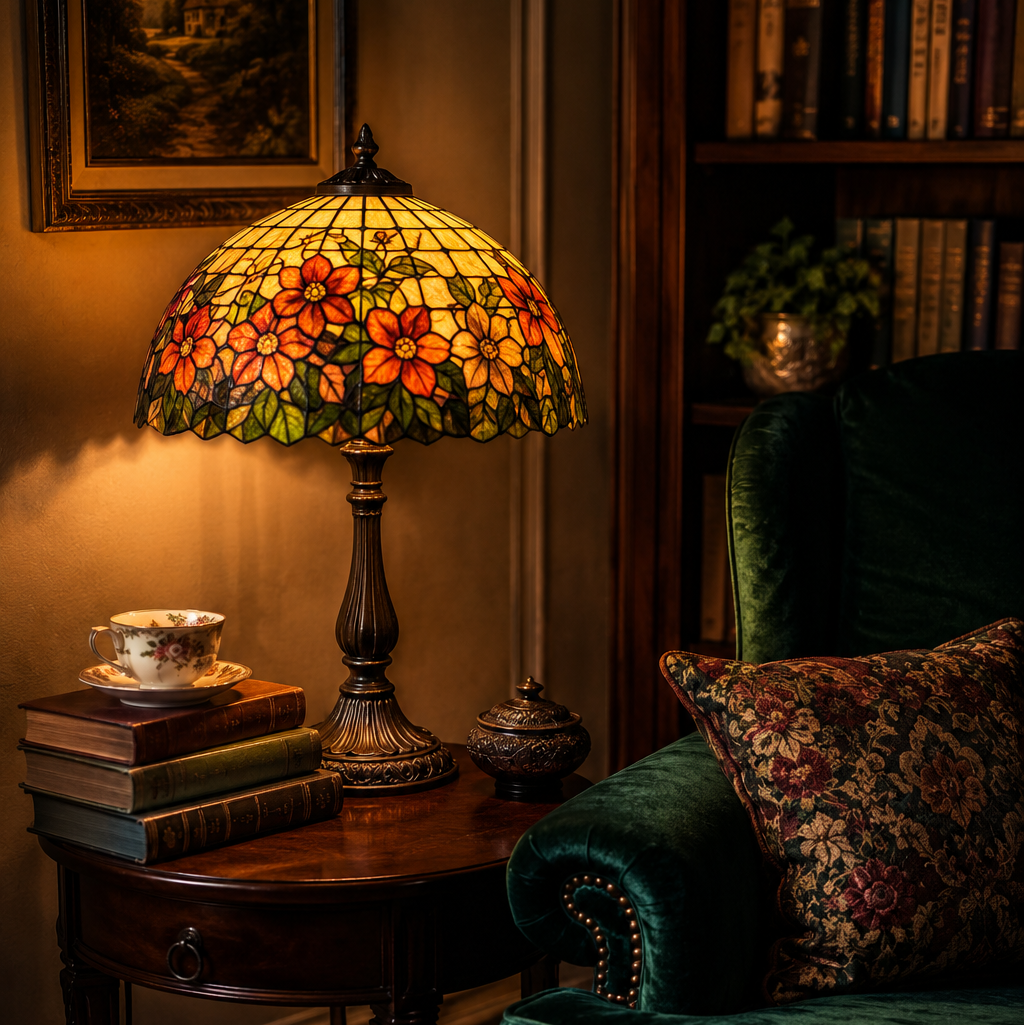
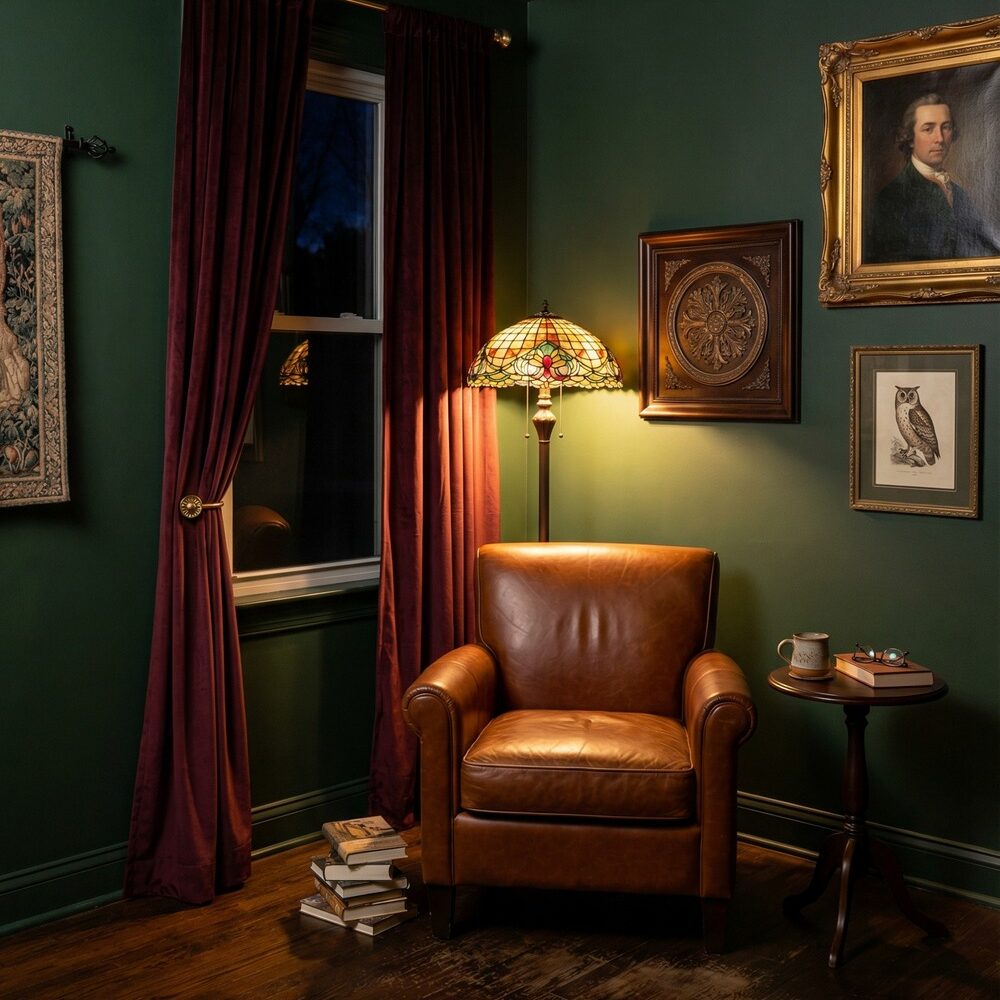
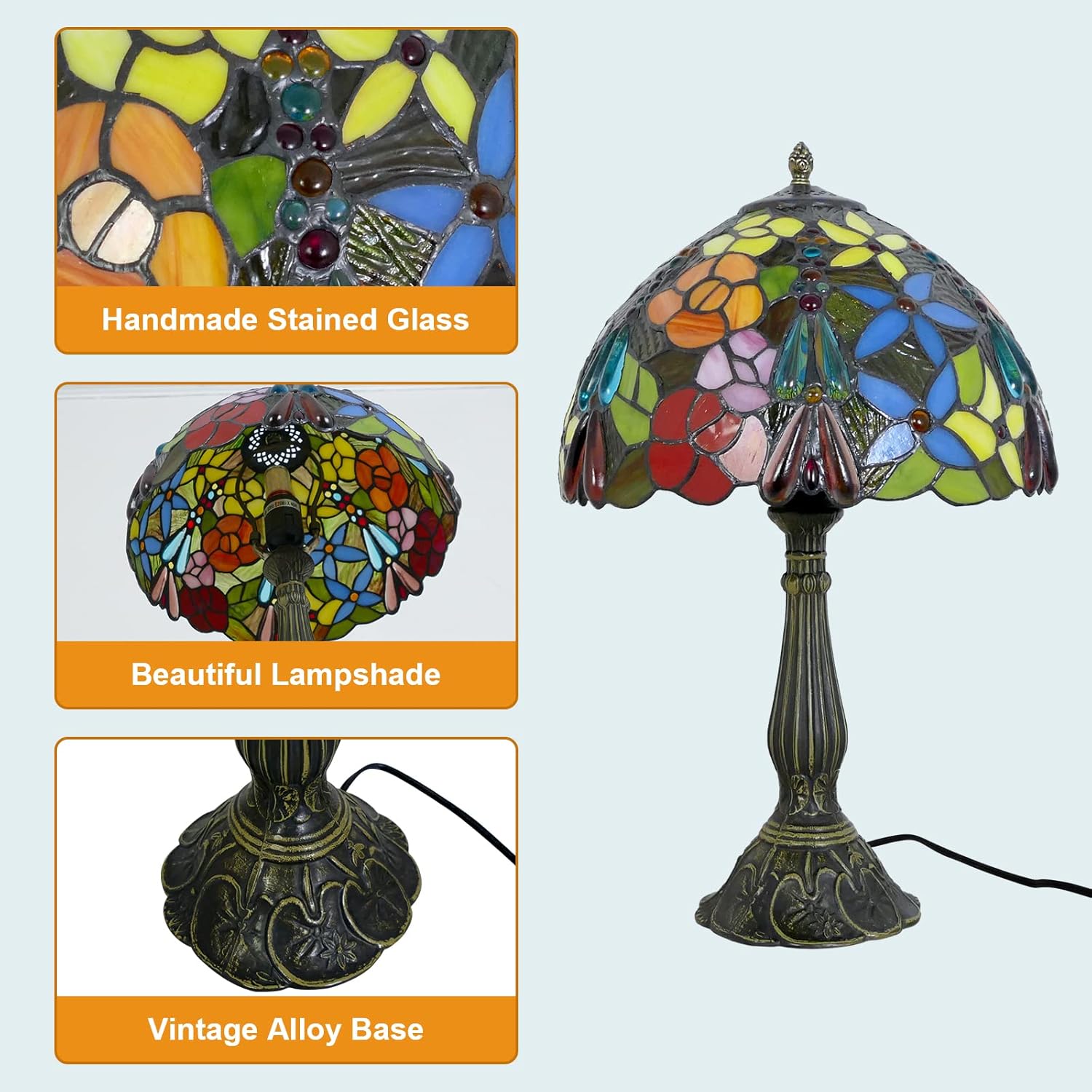
A second light source changes the room more than a brighter single light ever will, and a Tiffany table lamp on the side table beside the chair is the right second layer. The stained glass throws amber, green, and rose across the wall and ceiling — light that no LED bulb can replicate at any temperature — and adds the warm pool of colour that makes the corner feel separate from the rest of the room. Pick a shade that matches the rest of your space: geometric green and amber for dark academia, floral for cottagecore-leaning rooms, deeper jewel tones for goth or vampire romantic. The reproductions on Amazon read identically to vintage in photographs and start around $60.
Copy this idea:
7. Drape a Chunky Knit Throw Over the Chair and Layer a Plaid Wool Blanket Across the Seat
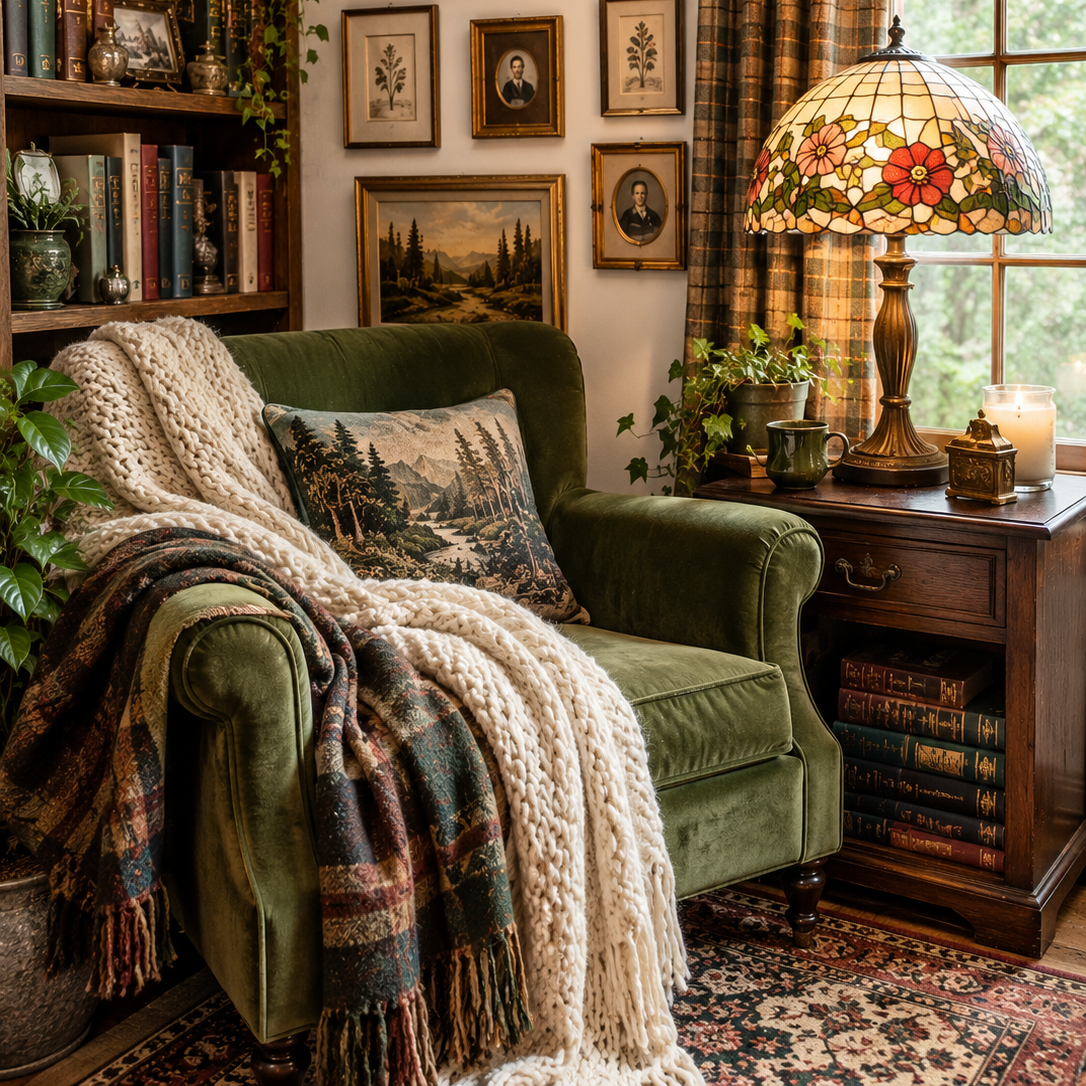
Two throws, two textures, two purposes. The chunky knit — cream, oatmeal, or charcoal, oversized, with a heavy weight — drapes over the back or one arm of the chair and exists to be pulled across your lap the second you sit down. The plaid wool blanket — tartan in dark green, burgundy, and charcoal — folds across the seat or the foot of the window bench. The combination of textures is the thing that lifts a styled corner into one that looks lived in. Real wool, not synthetic. The synthetic versions feel right for about a week and then start to read wrong in photographs and even more in person.
Copy this idea:


8. Anchor the Nook With a Solid Hardwood Bookshelf in a Dark Walnut or Aged Oak Stain
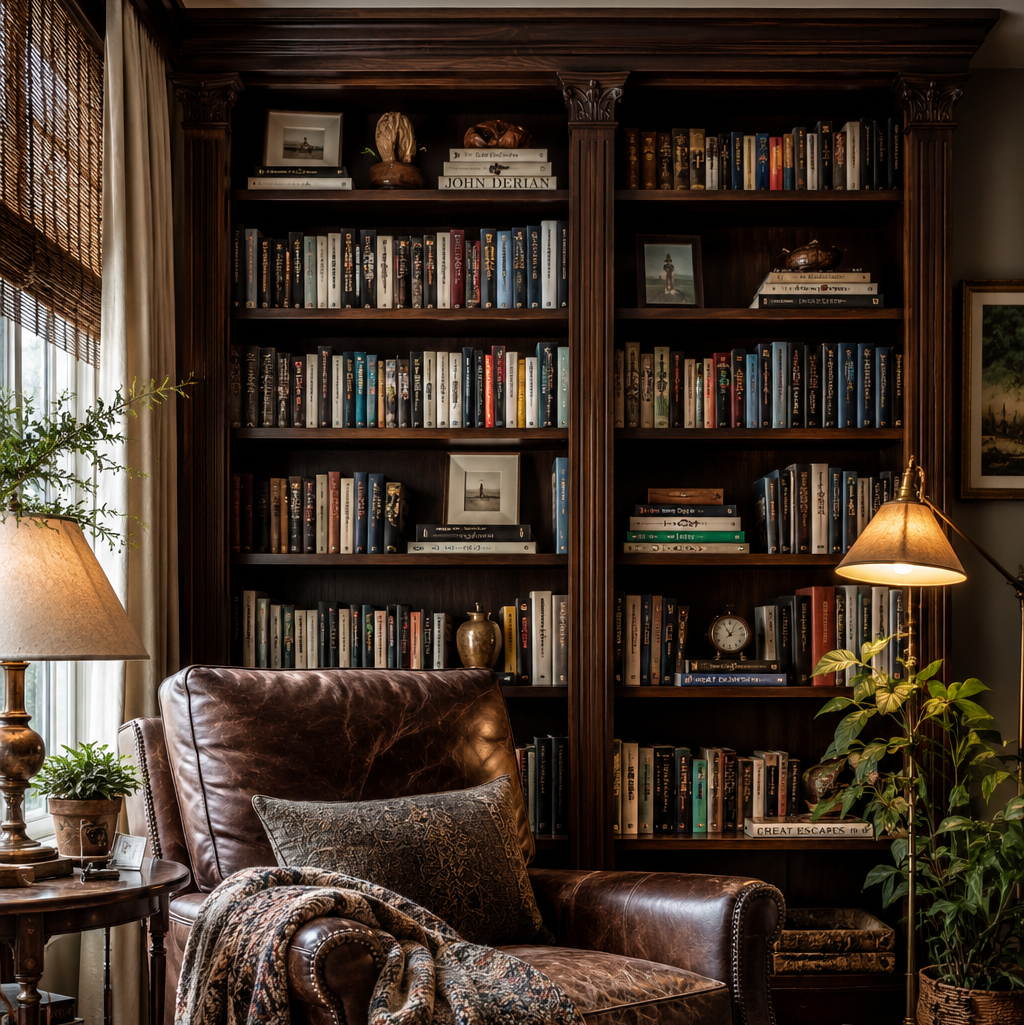
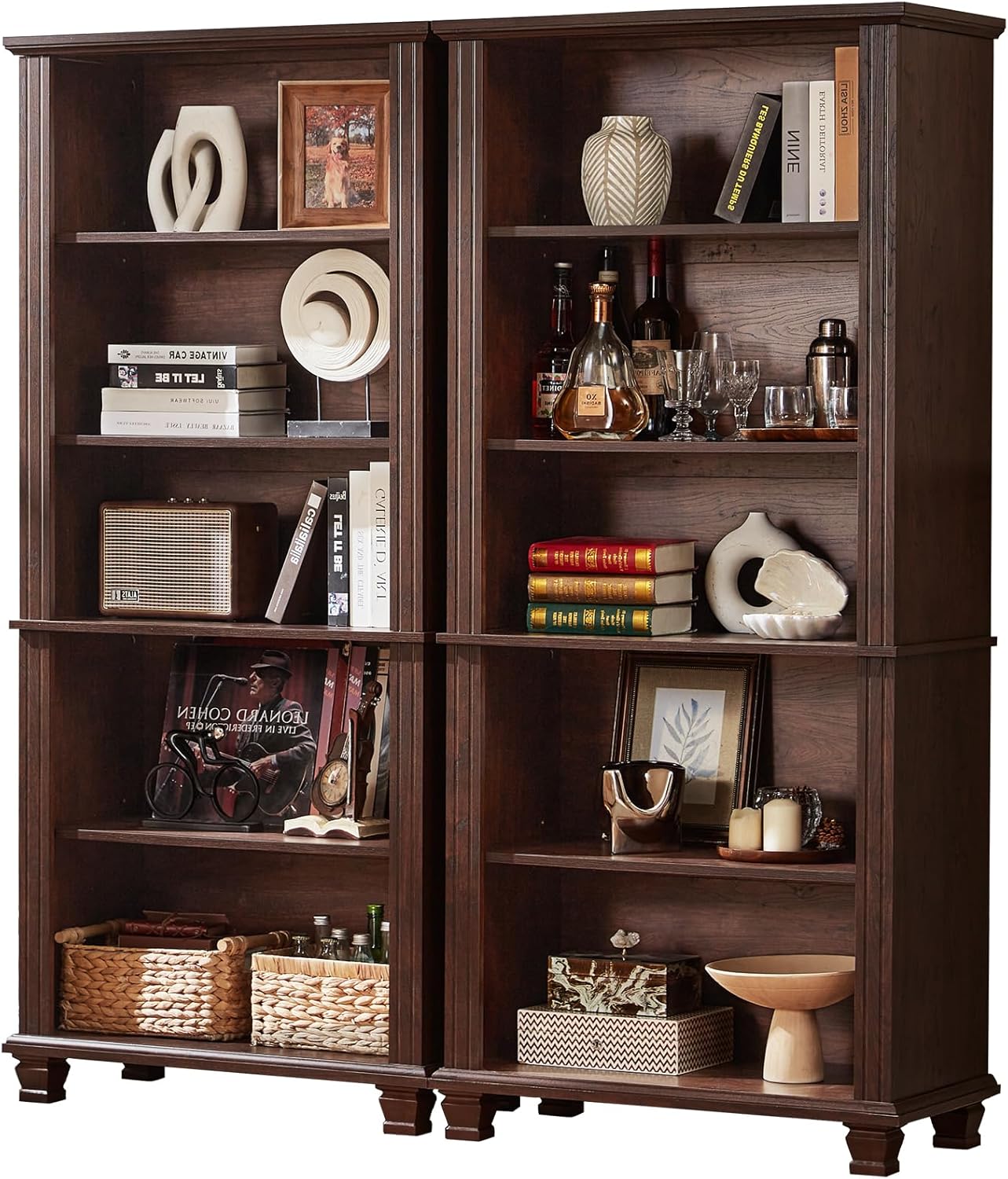
The bookshelf is the visual backbone of the reading nook and the one piece worth specifying carefully. Solid wood — walnut, oak, mahogany, or any hardwood in a dark stain — gives the corner a weight and warmth that engineered wood cannot replicate, and it holds a serious book collection without bowing in the middle after the first year. Position it directly behind the chair or against the wall the chair sits against, choose the tallest version that fits the ceiling, and let it do the work of defining the nook. If you can’t find a good hardwood one at a decent price range, engineered wood will do fine if you get a sturdy model. The dark stain is what matters most: dark walnut, espresso, aged oak, or stained mahogany all read correctly in lamplight.
Copy this idea:
9. Hang an Eclectic Gallery Wall Around the Nook Mixing Portraits, Maps, and Botanical Prints
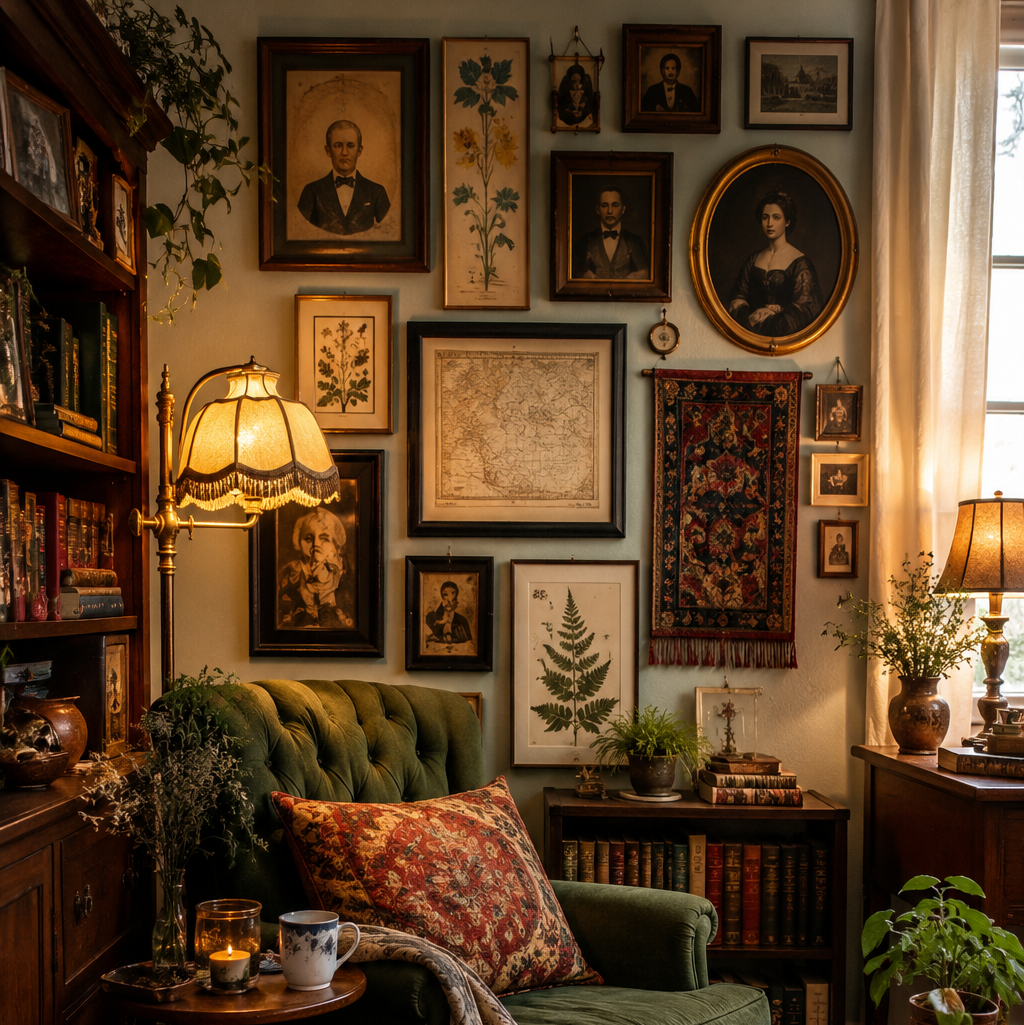
The gallery wall around a reading nook can be more eclectic than the one in a living room — readers tolerate visual density better when they’re sitting still. A Victorian portrait in a heavy gilt frame anchors the wall. Antique map prints in dark wood frames fill the middle distance. Hand-coloured botanical illustrations and anatomical plates handle the lower edges. A small woven tapestry or fabric piece breaks up the rectangles. Frames should not match. The mix is the entire point — the wall should look like it has been assembled by someone whose interests are inconsistent on purpose. [Internal link: Dark Gallery Wall]
Copy this idea:

10. Anchor a Different Wall With a Macramé Hanging, a Tapestry, or a Dried Botanical Bundle
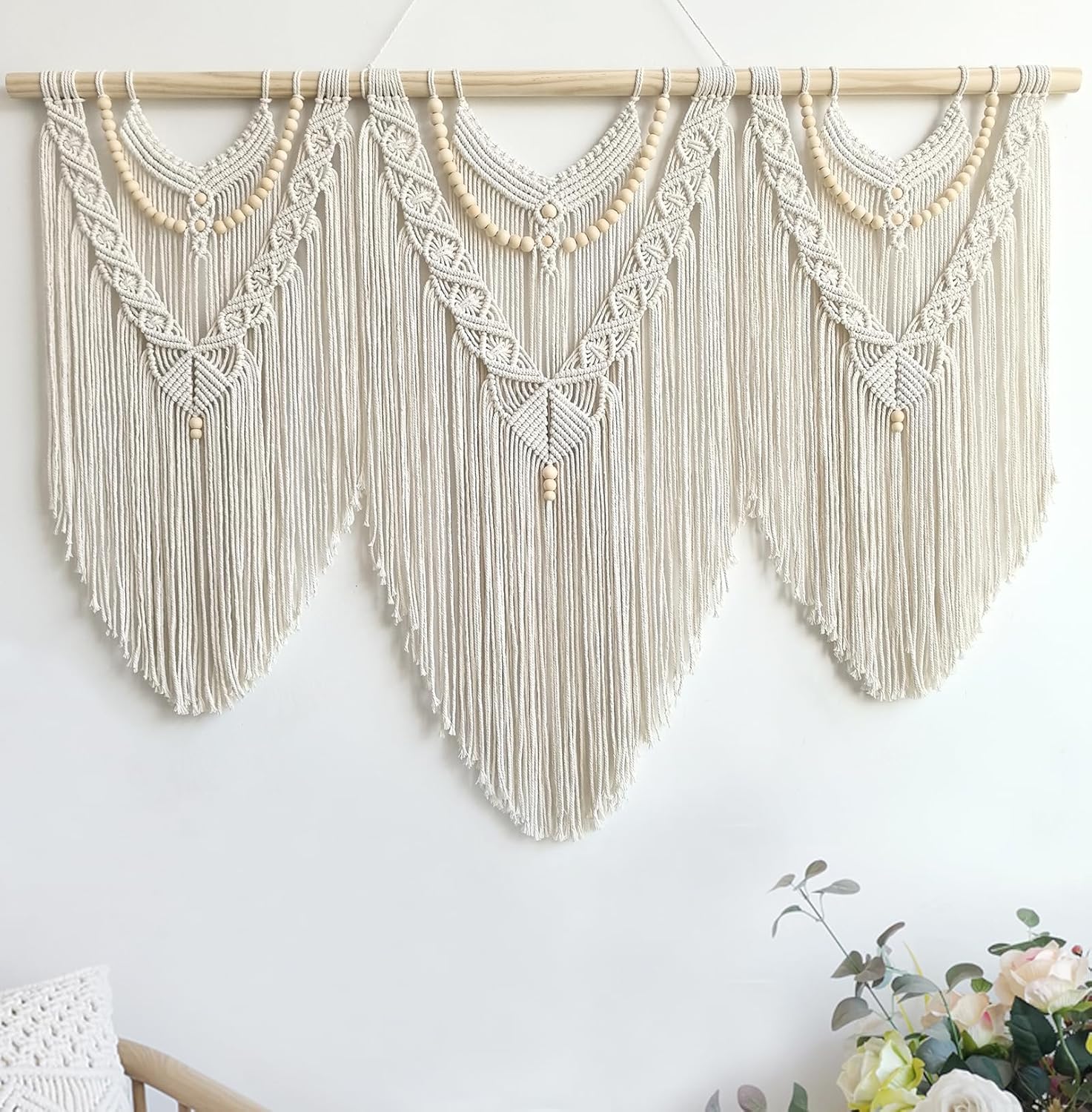
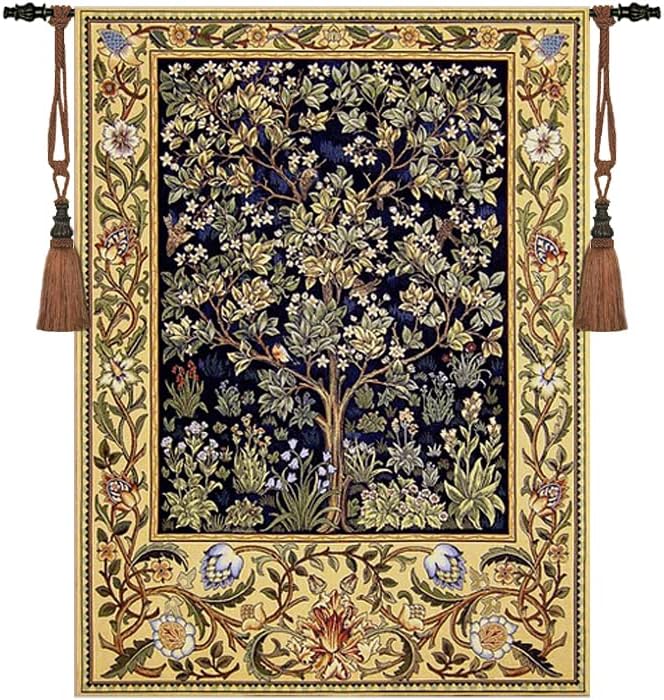
If the gallery wall handles one wall, the other wall asks for texture rather than more rectangles. A large macramé wall hanging in cream or natural cotton — the dark bohemian move. A dried botanical or wheat bundle hung from a brass hook — the cottagecore and witchcore move. A small medieval-style tapestry on an iron rod — the dark academia and vampire romantic move. Any of the three breaks up the flat plane of the wall and gives the corner a textile element that no framed art can provide. Don’t crowd it. One textural piece per wall is enough.
Copy this idea:
11. Let a Trailing Pothos Cascade From the Highest Shelf or Hanging Hook Above the Reading Spot
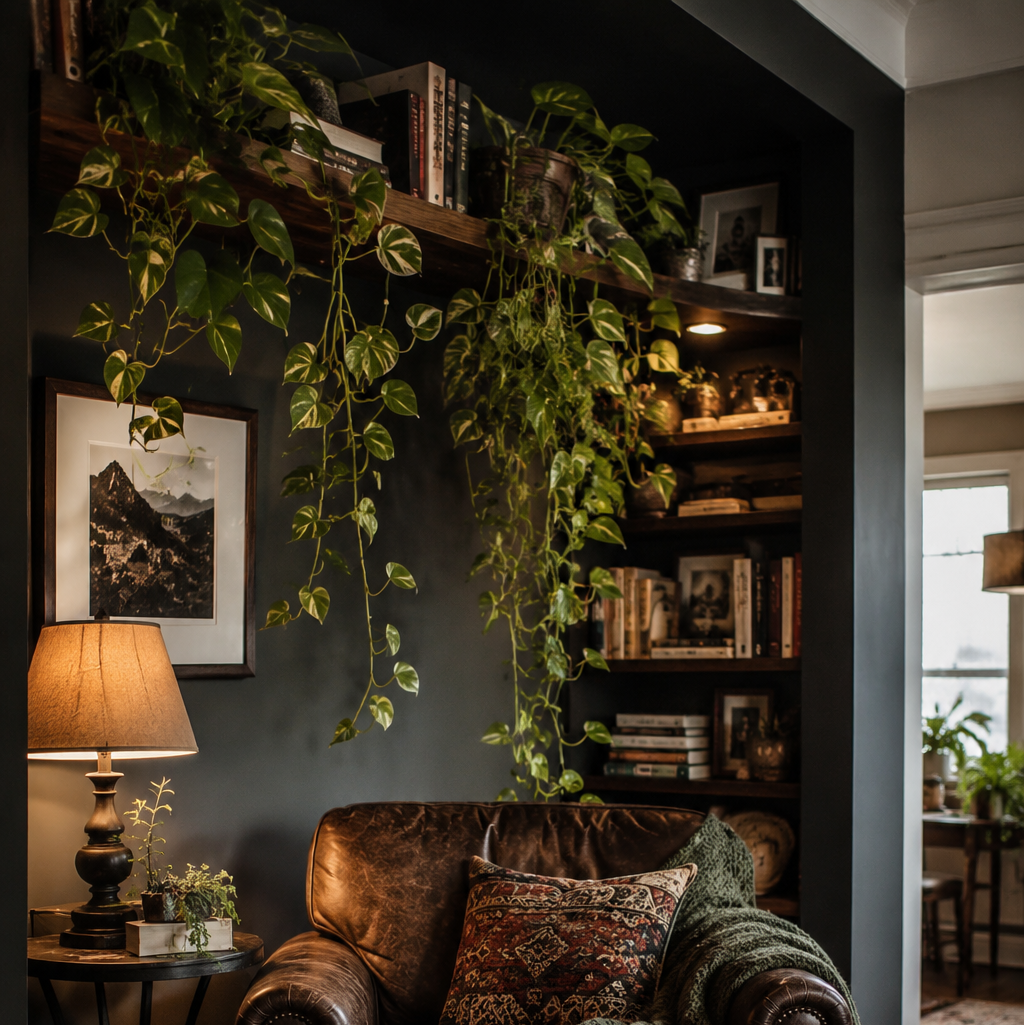
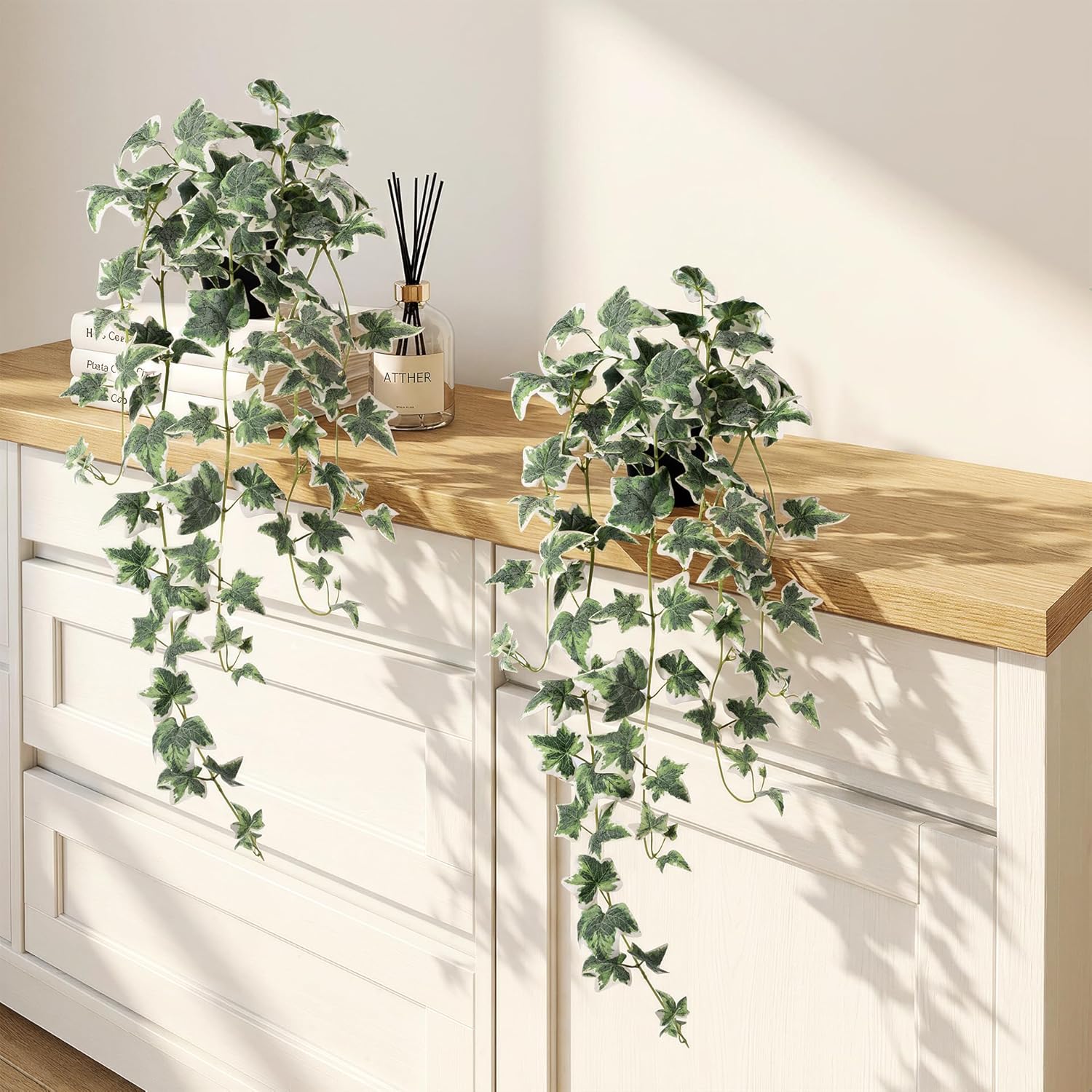
A trailing plant overhead does what no other single decoration can: it makes the corner feel slightly overgrown in the right way, like the nook has been there long enough for something living to start framing it. A pothos on top of the bookshelf with vines long enough to drape down toward the chair. An English ivy on a hanging hook in the corner. A small fern on the side table. The vines should not be pruned tidy. Brass or aged terracotta pots work better than nursery plastic — slipping a plant into a terracotta cover pot takes thirty seconds and lifts the whole corner. Below is an option if you want a real plant, which will grow to great lengths, and a faux one, if you’re like me and don’t want to care of something.
Copy this idea:

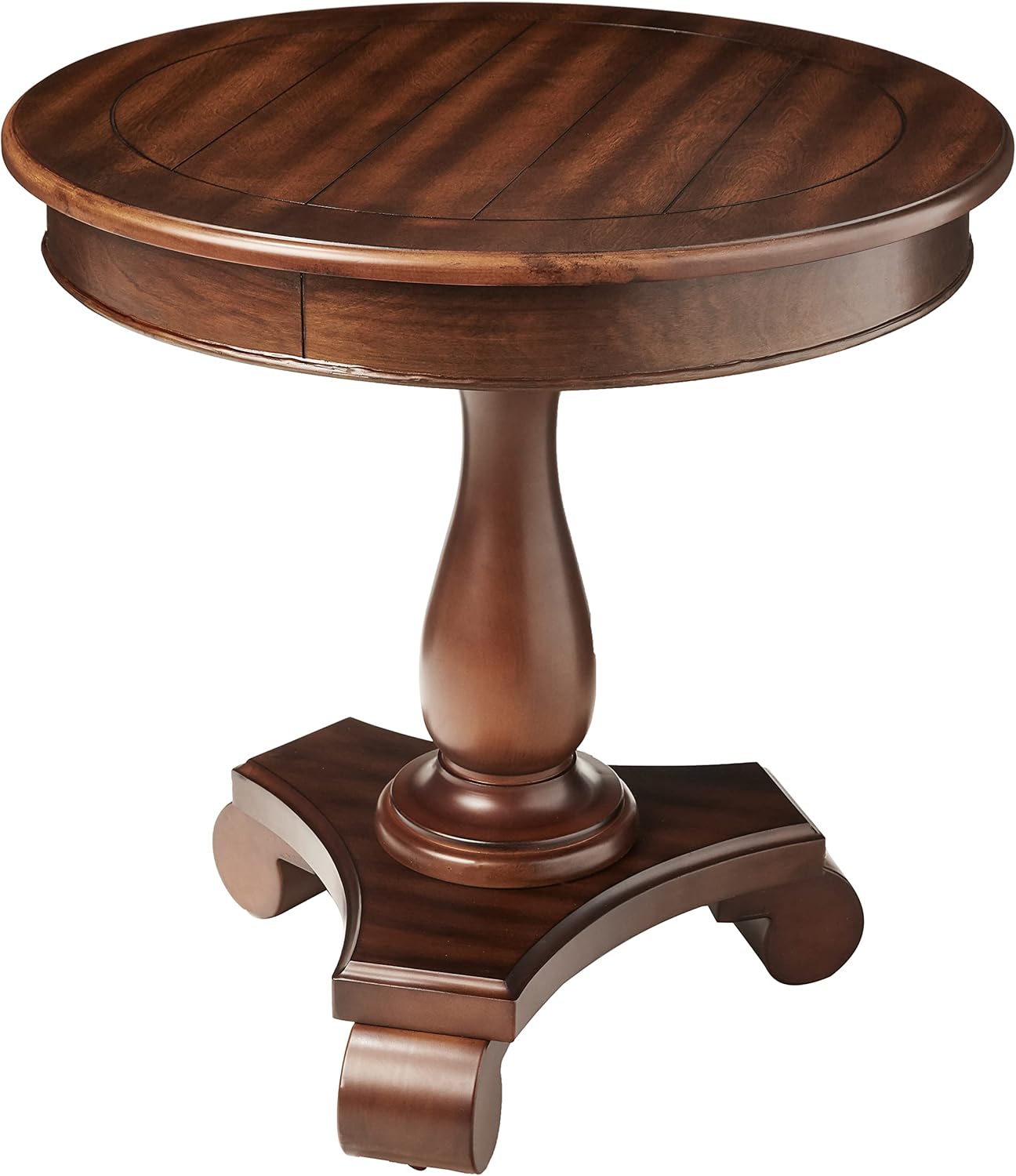
12. Place a Small Round Side Table Within Arm’s Reach For the Teacup, the Book, and the Reading Glasses
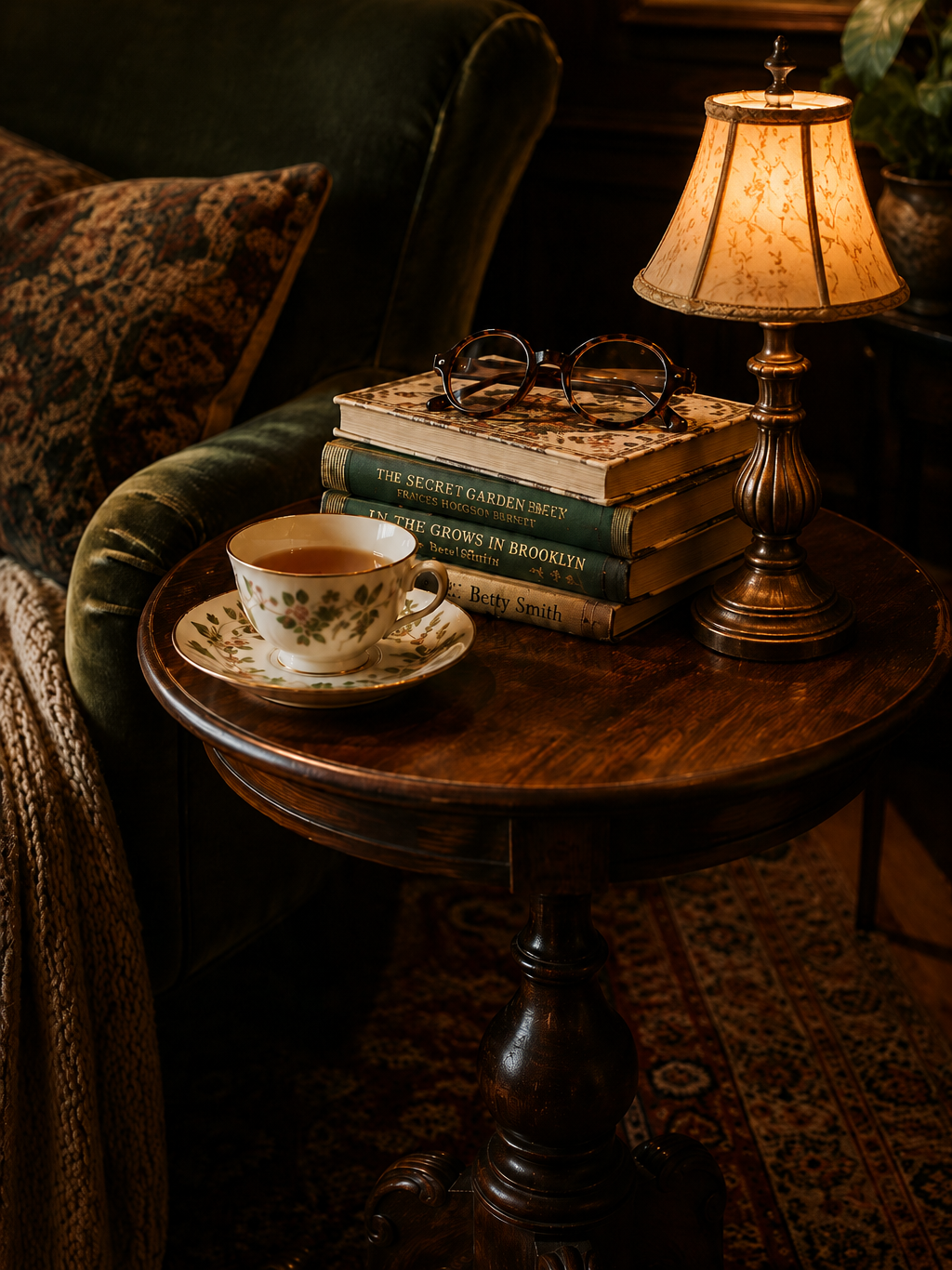
The side table is the working surface of the nook and the place where the reading life accumulates. A small round wooden table on a pedestal base — walnut, oak, or burl wood, no bigger than 18 inches across — fits beside the chair without crowding it and holds exactly what the nook needs: the teacup, the book you’re currently reading, the small candle, the reading glasses, and whatever you’ve picked up at the library this week. The table should be just below the height of the arm of the chair. Anything bigger turns into a coffee table. Anything taller is a desk. The small round side table is the specific, correct piece.
Copy this idea:
Where To Start
Build the lighting before the chair. The chair is the most expensive purchase in the nook, but the lighting is what makes the room feel like the reading nook you want. A $90 brass arc lamp or a $70 Tiffany table lamp transforms an existing chair into a reading nook overnight. The chair upgrade can come later — the moment the warm light goes on, the corner becomes itself.
The textures matter more than the furniture. A chunky knit throw, a plaid wool blanket, two or three velvet pillows in jewel tones, and a small Persian rug under the chair — all of this together costs less than $200 and visibly shifts the room before any major piece arrives. If you’re building slowly, start here. The corner will look 80% done before the chair is even ordered.
Renters can have the whole thing. A plug-in swing-arm wall sconce mounts to drywall with two screws and removes without damage. A freestanding hardwood bookshelf needs nothing more than floor space and two hours of assembly. None of the ideas above require home ownership — they require a corner, a window if you’re lucky, and the willingness to claim the space.
The chair is worth waiting for. A velvet wingback or leather club chair is the single object most worth saving for, watching estate sales for, or finding on Facebook Marketplace for. Used chairs in the right shape and colour appear regularly for a fraction of new retail, and the patina on a real used leather club chair is something you cannot buy new at any price. Be patient on this one. The right chair will turn up.
Books on the floor are a styling move, not a problem. A stack of three or four books beside the chair, on the floor, with reading glasses resting on top, is one of the most photographed details in every reading nook on Pinterest. The pile is the evidence of the reading life. Don’t tidy it. [Internal link: 11 Cozy Reading Nook Ideas]